

A Journey of Challenges and Rewards
Pravin Raman Parajuli, Chief Executive Officer, Nepal Life Insurance Company Limited
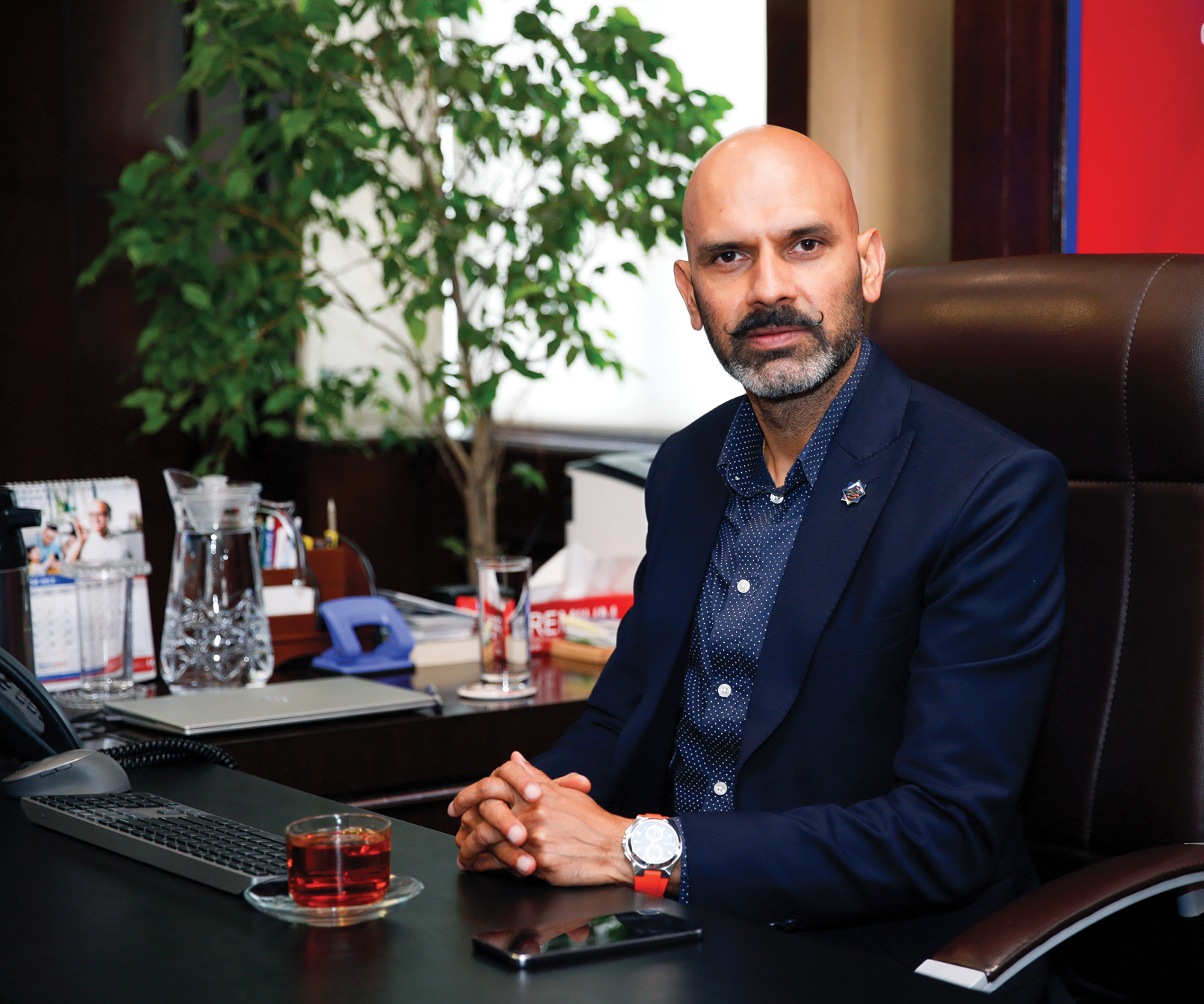 I began my professional journey in 2003. Looking back, the job market was quite different from what it is today. The financial sector, particularly banking, was considered the dominant force in the employment landscape. It was a time when the banking industry was evolving rapidly in the country, opening new avenues and attracting a large number of fresh graduates. For many of us completing our graduation and stepping into the workforce, the aspiration was to join the financial sector.
Beyond banking, opportunities were relatively limited, the market was still maturing. The presence of multinational companies was limited, and while a few domestic manufacturing enterprises were active, they were not as vibrant or diverse in terms of job offerings or organisational structures. Other sectors such as insurance, telecommunications, technology, or services were still in their evolving stages. As a result, with fewer established alternatives, the banking sector naturally emerged as the preferred choice for aspiring professionals.
My professional career also began with the banking sector, which, at the time, offered the most promising path for someone looking to build a stable career in the corporate world.
Skills and knowledge garnered from first job
My professional journey began at NMB Bank, where I joined as a Management Trainee reporting directly to the Department Head. Within three years, I was given the opportunity to lead the same department and with that, my reporting line shifted directly to the CEO. Working closely with the CEO gave me an early exposure to things; the dos and don’ts of corporate life, the importance of ethics, how decisions are made at the top, and what institutionalisation really means. I observed firsthand how transparency, clarity, and consistency were genuinely practiced. It was a rare opportunity to learn directly from someone with deep roots in the banking sector, and I consider myself fortunate to have had that exposure so early in my career.
In my past role, I primarily interacted with corporate clients, which meant I regularly dealt with professionals at the CEO and Company Secretary level. The maturity, confidence, and skills required for those interactions were a challenge to develop. However, I rose to the occasion, and those challenges eventually became my greatest source of growth. That period established a foundation for my professional approach today. It wasn’t simply about acquiring technical skills; it was about understanding the true meaning of handling responsibility with clarity.
Leadership
My first job did play a very crucial role in shaping how I approach leadership even today. What made the biggest difference was the kind of exposure I received early on. Being given the responsibility to lead a department within a few years of joining, and working under a CEO who valued clarity, discipline, and accountability, naturally pushed me to develop those qualities myself. I wasn’t just learning the functional aspects of work, I was slowly beginning to understand what it meant to lead, to take ownership, and to stand by decisions.
One of the key lessons I took from that period was the importance of composure, especially in uncertain situations. These experiences, while challenging at the time, built the foundation for the leadership approach I carry even today. Leadership is something that starts with being placed in situations where your choices have consequences, where your ability to guide others, stay grounded, and deliver results matters. My first job gave me exactly that, a proving ground, and a space to grow into something more than just a functional role.
Switching careers
I’ve consistently challenged myself to move across sectors, roles, and responsibilities even when things were going well for me. From the very beginning, I’ve never been comfortable with status quo. Growth, for me, has always come from the willingness to take risks and challenges.
I began my career with NMB Bank, there I was even involved in investment banking and corporate relationships. I was also part of growing merchant banking unit. In 2009, I made a move to Nabil, looking to establish an investment banking vertical. Around that period, regulatory changes were underway. Banks were no longer permitted to carry out investment banking activities within their division, which led to the creation of separate subsidiary companies. At Nabil, we also ventured into bullion trading, a space only two banks were in at the time. While my role was rewarding, and the trajectory at Nabil was promising, I once again chose to step into something less comfortable, a newly licensed insurance company, Reliance Life (now Sanima Reliance).
Shifting from banking, a mature, well-structured environment to insurance, which was still evolving, was a significant change. I joined just weeks after the licence was issued. We had to build everything from scratch, the policies, operations, culture, governance, strategy. And moving from corporate relationship management to a role that was deeply sales-focused was another transition. After 14 years in banking, the first six months of transition period was challenging. But it was also one of the most enriching phases of my career.
The insurance sector was still finding its footing in terms of governance, human capital, and organisational maturity. Coming from highly structured environments, it took some adjustment. But that’s exactly what made the challenge worthwhile. With a capital base of Rs. 2.5 billion at inception, the stakes were high and so were expectations. Sustaining and scaling that business required balancing new ideas with practical execution. I stayed there for four years, helping to lay the foundation and parallel business growth.
Then came the opportunity to join Nepal Life. After building two new companies from scratch, I saw this as a chance to contribute to a large institution that was already established, but at a crucial turning point. Nepal Life had scale, history, and potential but it also had challenges. There was room to strengthen systems, drive transformation, and build on the investment side. I felt this was the right fit, a platform where I could apply everything I had learned over the years.
For me, switching hasn’t been about leaving something behind, it has been about walking toward something with more responsibility, more complexity, and more opportunity to create impact. The benefits that follow; titles, compensation, recognition are the outcomes. The decision is always driven by whether there is scope to learn, to deliver, and to grow.
Reflections on working in life insurance companies
When I reflect on my journey within Nepal’s life insurance sector, I can’t help but draw comparisons with the banking industry, where I spent a significant part of my early career. By the time I entered banking, the sector was already on a path of growth, the regulatory framework was well-defined, institutions were more structured, and there was a clear sense of direction in terms of growth and governance. It offered an environment that was professionally enriching, with systems and expectations that helped shape one’s approach to work and leadership.
On the other hand, when I stepped into the insurance industry, it felt like a different phase of evolution. The sector was still finding its footing, the regulatory oversight wasn’t as robust, market participants were growing, and there were visible gaps in terms of institutional capacity, governance structures, and human resources. But I saw that as an opportunity. There was so much that could be built, shaped, and improved and being part of that journey was both challenging and deeply rewarding.
While the banking sector had started to plateau in terms of growth opportunities, the insurance sector was still expanding. And when you’re in an emerging sector, the ability to contribute is far greater. You’re not just doing your job, you’re helping define the future of the industry. From bringing in more structured processes to aligning with global standards whether it be Risk-Based Capital frameworks, NFRS, or the rising capital requirements, there was a clear need for professionalisation and corporatisation. Drawing from my past experiences in banking, I was able to see where the insurance sector could head and what needed to be done to get there.
That said, while we’ve come a long way, especially in closing structural and regulatory gaps, there’s still much ground to cover. In areas like human capital development, institutional governance, and aligning stakeholder expectations, insurance companies in Nepal are maturing. But with the pace of change we’re seeing, I’m hopeful that this sector will continue to grow into a strong, professionally driven pillar of the financial system.
Management practices in NLIC
At Nepal Life, we are working towards building a culture rooted in openness and trust. Rather than relying on rigid black and white rules, we follow an open-door policy that encourages communication at all levels. One of the key management practices I believe in is delegation, not just assigning tasks, but genuinely empowering individuals based on their roles and responsibilities. When people are trusted to make decisions and take ownership, they begin to grow, both in confidence and capability. Over time, this creates a stronger organisation, where leadership is distributed and not just concentrated at the top.
Our role as leaders is to facilitate this growth, to support our teams, remove bottlenecks, and ensure they have the environment and resources they need to evolve. Ultimately, we want our people to become the organisation’s strength, not just its workforce.
HRM culture over the years
One major shift I’ve seen in human resource management over the years is how the function itself is perceived and positioned within organisations. Earlier, HR was often treated more like an administrative or operational support unit. It wasn’t really seen as a strategic function. There wasn’t much focus on mapping employee skill sets, identifying capability gaps, or grooming people for future roles. HR was rarely integrated into core decision-making or business planning, it functioned more as a back-end support system.
But over time, that has changed significantly. Organisations have started recognising the importance of HR as a critical driver of growth and culture. Specialised HR departments are now being formed, often headed by professionals with the right domain expertise, people who understand performance management, capability development, and many more.
Today, there’s much more emphasis on aligning HR with long-term business goals, whether it’s through competency mapping, leadership pipeline development, or creating a value- driven culture. HR is no longer seen as a one-time intervention, but as a continuous, evolving process that plays a key role in shaping organisational direction. This evolution, from a support function to a strategic enabler is, I believe, one of the biggest and most important changes I’ve witnessed in the management culture over my career.
Key contributions
Over the past eight years in the insurance sector, I believe my most significant contribution has been in institutionalising the organisations I’ve had the privilege to lead. I strongly believe that an organisation should not revolve around one individual, whether the CEO or the top management but should be built on systems, structures, and capable teams that can sustain and grow independently. My focus has always been on decentralising responsibility and empowering people across levels, so that they don’t just execute but also evolve into future leaders of the industry. I’ve worked to embed a culture of ownership, accountability ensuring that core values, ethics, and professional standards are at the foundation of the business, rather than being person dependent.
One of the things I take pride in is that even after my departure, the institutions I’ve led have continued to perform well, in fact, they’ve grown stronger. That, to me, is a clear indicator that the systems we set in place were not centred around individuals but were rooted in sustainable, institutional frameworks. I think that’s the biggest thing I have contributed to foster maturity, continuity, and resilience in leadership practices. A strong organisation should not fluctuate with leadership changes. Its performance, principles, and values should be steady and scalable and that’s what I’ve always strived to build in the sector.
SWOT analysis of Insurance Sector in Nepal
One of the biggest strengths of the Nepali insurance sector is its consistent growth in terms of market penetration. When I entered the sector, there were around 19 companies in operation and market penetration was just about 7%. Over the years, with new players coming in and adopting aggressive strategies and the older generation of companies responding, we saw substantial expansion in branches and reach. Today, penetration has reached nearly 18% in terms of core insurance, which is a significant improvement. Another positive shift is in leadership. There’s been a change in the profiles of professionals joining the industry, people with diverse backgrounds and skill sets are entering the sector, which is gradually transforming the culture and values of the organisations. These professionals are not only identifying opportunities but are also effectively mitigating risks, contributing to the strengthening and credibility of the industry.
In terms of making insurance more credible, people-centric, and affordable, one of our key focuses is digitalisation. The right use of technology can significantly reduce the cost of operations. When productivity increases and technology becomes an enabler, the overall cost of providing insurance can come down. This directly impacts affordability for customers. We’re working on making processes more efficient, reducing turnaround times, and building systems that support broader digital penetration. This, in turn, helps improve access, increase trust, and reduce the cost of doing business, ensuring the sector grows in a sustainable and inclusive manner.
That said, there are still several challenges that need to be addressed. While the sector shows strong potential, there remains a significant need for further corporatisation and institutionalisation within many companies. Capacity building, particularly in human resources, is another area requiring attention. We need to equip professionals with the right skill sets to support sustainable growth. Similarly, more robust technological integration is essential to drive both efficiency and customer satisfaction.
On the financial side, we face few structural challenges. The corporate tax rate for insurers stands at 25%, but the effective tax burden is much higher. This is because key expenses like bonuses and claims paid to policyholders are not allowed as deductions, pushing the real tax impact beyond what’s intended. Additionally, there is an unfair interest rate differential on fixed deposits, where institutions receive around 100 basis points less than individual depositors. This puts the sector at a disadvantage, especially since insurance companies play a major role in mobilising and channelling public funds.
Despite these hurdles, the sector holds immense promise. With the right reforms, strategic focus, and ongoing digital transformation, insurance can become more accessible, credible, and impactful for the people of Nepal.
The lapse ratio is closely tied to broader economic conditions. When the economy slows down, people’s disposable income declines, making it difficult for them to continue premium payments. Therefore, at a macro level, the revival of economic activity is crucial. Government-led initiatives that support economic recovery can ultimately contribute to reducing lapse ratios across the industry.
At the institutional level, we’re addressing the issue through a multi-pronged approach. First, we focus on awareness, educating policyholders about the long-term value of their insurance and encouraging them to keep their policies active, even during challenging times. One tool we promote is the policy loan facility, which enables policyholders to borrow against the value of their policy instead of allowing it to lapse. This gives them financial breathing room without compromising their risk coverage. Second, we run revival campaigns aimed at reactivating lapsed policies. These often include waivers or rebates on penalty charges for delayed payments, reducing the financial burden on customers and making it easier for them to reinstate their policies.
Overall, our focus is on supporting customers both through practical tools and empathetic communication so they can maintain their coverage. By combining awareness, flexible revival options, and institutional support, we aim to reduce lapses in a sustainable way and improve the persistency.
Significant milestones
To sum up, I’d say there have been a few defining milestones over the years. Starting with my time at NMB, I had the opportunity to be part of the transition of the institution to a full- fledged commercial bank, which was a major transformation. Later, when I took over as Head of Department, I was able to multiply the department’s revenue from Rs. 1 crore to Rs. 7 crores within just two-and-a-half years. By the time I left, this department was contributing nearly 30% to 40% of the company’s overall revenue then, which was a significant achievement.
At Nabil Bank, I was involved in some pioneering initiatives. One of the highlights was the bullion trading, we became the sole bullion supplier, in terms of wholesaler for the industry and at one point were supplying to 14 commercial banks, which was a major milestone. This was a business model that evolved while I was actively involved, working alongside my supervisor. Later, at Nabil Investment, under deputation from Nabil Bank, I led the company from scratch over a span of seven years, helping it grow into one of the leading investment banking companies in the country.
Moving to Reliance, started from scratch with no existing structure or systems in place. We became the first company among 10 in the group to go public through IPO. In just four years, we brought in stronger institutional practices, emphasised digitalisation, instilled a future-centric culture, and reinforced professional values and ethics which became a differentiating factor for the organisation’s growth.
Now, at Nepal Life, I joined an organisation already recognised as a leader in the life insurance industry. While the company was in its growth phase, my focus has been on strengthening its foundation by driving digitalisation, corporatisation, and institutionalisation, key pillars essential for sustainable, future-ready growth. Today, Nepal Life continues to set industry benchmarks and making history with the largest collection of first premium income of over Rs. 10 billion in FY 2081/82, and there is much more to come in the days ahead.
Career tips to fresh graduates
The insurance sector in Nepal is on a growth trajectory, and that growth translates into opportunities for its people. For fresh graduates, it’s important to recognise that being part of a growing sector like insurance gives you a platform to learn, evolve, and build a strong career foundation. The sector is no longer limited to traditional insurance practices; it is gradually embracing innovation, technology, and customer-centric models. So, for anyone starting out, being part of this transformation can be both meaningful and rewarding. I would encourage fresh graduates to stay curious, build a strong foundation in both technical and interpersonal skills, and actively seek exposure across different areas of the insurance industry.
When it comes to talent hunting, I believe in being transparent, creating an open platform where opportunities are visible and accessible. This encourages healthy competition and allows us to bring in the best resources who align with the organisation’s vision. As for retention, it’s essential to have clear role definitions and to map skillsets against expected deliverables, rather than relying on subjective judgements. When people with the right capabilities and mindset are placed in roles with purpose and direction, and when their aspirations are aligned with organisational goals, both the individual and the organisation grow together. Talent stays when they see growth, recognition, and clarity in their career path.

