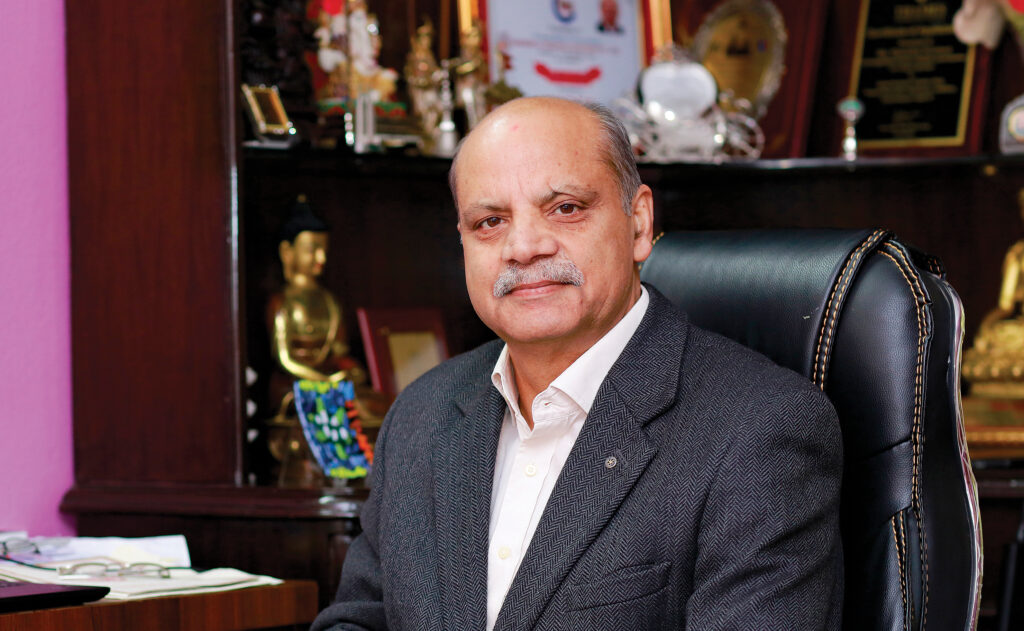
Nabin Shrestha is spearheading the responsibility of Strategist and Creative Head of Water Communication. He carries wealth of experience in his professional career spanning over 15 years in integrated brand management, advertising, and design across various platforms. Not only has he honed his skills through dedicated study and practice, but he has also demonstrably achieved success by managing various brands. His expertise extends beyond brand creation, encompassing the development of effective strategies, content planning, creation, and management of website and social media platforms. He has extensive experience of working as strategy planner, brand manager and creative head for over 100+ local and international brands in the private sector including airlines, automobiles, hospitality, tourism, real estate, pharmaceutical, FMCG and in social sectors especially in tourism, health, environment, education and SME organisations.
His seminal contribution in the domain of advertising, brand and management has been widely recognised by the stakeholders and the fraternity. His passion for knowledge sharing is evident in his regular workshops and seminars for colleges and organisations, where he focuses on brand management, strategy, planning, design, and creative work. In an interview with the HRM Nepal, he speaks about the advertising sector of Nepal. Excerpts of the interview is given below.
 Q: How do you assess the current state of advertising in Nepal compared to where it was a decade back?
A: Today’s advertising landscape is shifting from a one-way monologue to an ongoing dialogue. The line between creators and consumers is increasingly blurred, as people now actively shape the content, they consume rather than passively receiving it. Effective is no longer measured by reach alone, but by real-time engagement and meaningful action, replacing traditional metrics like click-through rates and brand mentions.
Q: What new digital platforms or formats (e.g., short form video, interactive content) are reshaping the ways of brands engage audiences in Nepal today?
A: Short-form video has made the biggest impact, especially on TikTok and Instagram Reels. People now prefer content that feels real and relatable instead of overly polished ads. TikTok and Reels are reshaping engagement, authentic, low-production content outperforms polished ads, aligning with global Gen Z preferences. I’ve also noticed more travel, food, tech, culture, and satire content because they feel like everyday conversations we’d normally have in courtyards or tea shops, just moved online.
Q: With the rapid rise of social media and mobile usage, how do you see the role of traditional advertising evolving in Nepal’s media landscape?
A: Traditional advertising still matters, but its role has changed. TV, radio, and print are still good for mass reach, while digital helps brands listen and interact. Instead of competing, they now work best together. Traditional media creates awareness, and digital media builds connection and response.
Q: How important is data driven advertising (analytics, behavioural targeting, predictive modelling) for Nepali brands, and what barriers exist to full adoption?
A: Data-driven advertising is very important because it helps brands be more relevant instead of just being loud. Even simple data like knowing what time people engage most or what type of content works can improve results a lot. The main problem is that data is scattered across sectors like banks, telecoms, and e-commerce. There is also a shortage of people who can properly analyze and use data. Nepal lags in adoption compared to regional markets like India or Bangladesh. Many clients still trust instinct more than numbers. As awareness grows, rising privacy concerns and stronger regulations will increasingly shape how data is used in ethical and responsible ways.
Q: Personalisation and AI are major global trends. How are Nepali agencies using AI tools (e.g., for audience targeting or content optimisation) to enhance campaign performance?
A: Right now, AI is mostly used for research and support work, like collecting information, generating insights, or helping with basic creative tasks. But I strongly feel that real creativity, emotions, humor, and cultural understanding must come from humans. AI can help with speed and scale, but the main ideas and storytelling still need human thinking. Human insight remains irreplaceable for cultural nuance a global best practice.
Q: Influencer marketing continues to grow. In your experience, how should brands balance influencer partnerships with long term brand building?
A: Influencer marketing works well for visibility, but it can become too transactional. The better approach is to build long-term relationships with influencers who genuinely match the brand’s values. Short campaigns are useful for launches, but for long-term growth, brands should work with influencers as partners.
Q: As Nepal’s advertising ecosystem grows, what capabilities and skills are most urgently needed among creative and media professionals?
A: Today’s industry demands T-shaped professionals: individuals with deep expertise in one area, supported by a broad understanding of the wider, interconnected ecosystem. This includes data literacy where creatives understand performance metrics and media planners can draw creative insights from data. Need for hybrid skills (data + creativity + strategy) is urgent, matching global advertising talent trends. It also requires strong storytelling skills, with the ability to adapt a single core idea across formats, from a 30-second TVC to a 15-second Reel.
I feel Apps will increasingly replace websites as they offer superior personalization, offline functionality, and deeper integration with device features, aligning with the global shift towards mobile-first, AI-driven, and frictionless user experiences. Modern talent must embrace tech-enabled creativity, applying basic UI/UX principles and developing content tailored for emerging platforms. Above all, strong strategic business acumen is critical shifting the focus from producing “cool work” to solving real business problems by understanding clients’ profit and loss, distribution realities, and market dynamics.
Q: How has the integration of ‘social commerce’ and shoppable ads (direct purchase within social platforms) changed campaigns and client expectations?
A: I see social commerce as a powerful evolution that closes the loop between inspiration and purchase. Shoppable ads reduce customer journey friction; clients now demand sales-linked metrics, following global social commerce growth trends. The journey now moves seamlessly from noticing that something looks good, to understanding what it is, to buying immediately all within a single scroll or under 15 seconds. As a result, clients increasingly expect a clearer and more direct connection between agency investment and actual sales.
Because of this, we approach every assignment with a strong call-to-action mindset whether it’s a social media post, website, Reel, or documentary. For example, instead of static promotion, we developed a WhatsApp-based event promotion where program details were directly linked to speaker profiles and a payment gateway, significantly reducing drop-off. Today, the expectation goes beyond engagement; it is conversion.
Q: Given the challenges around digital access, infrastructure, and literacy in Nepal, how should campaigns be tailored to bridge urban–rural divides effectively?
A: I believe effective communication must respect different levels of access and literacy. Example, using full funnel digital strategies for urban audiences, rely on WhatsApp and simple formats for urban communities, and still trust local FM radio and on ground engagement for rural areas. Also adapt the creative itself, faster, global tones for urban audiences, and local language, familiar stories, and practical benefits for rural communities.
Q: What strategic role does content localisation (language, cultural context, local narratives) play in advertising effectiveness in Nepal?
A: Localization isn’t just a strategy it’s the essential foundation for building trust and relevance in a country as richly diverse as Nepal. The social and cultural context, humor, aspirations, and pain points differ vastly from the Terai, mid hills to the Himalayas and from east to west.
Using the Nepali language is only the starting point; true localization goes much deeper. It requires placing the brand within cultural context by authentically connecting with festivals like Dashain and everyday rituals, rather than using them as superficial backdrops. It also means telling local stories that reflect Nepali resilience, ambition, and community such as a campaign showing a student studying by solar light in a remote village, which feels far more relatable than imported glamour imagery. Effective localization depends on understanding social nuances, including family dynamics, community hierarchies, and aspirations, because the same message must be framed very differently for a young professional in Kathmandu than for a farmer in Janakpur.
Q: In an environment where Return on Investment scrutiny is increasing, how should agencies demonstrate value to clients beyond impressions and likes?
A: We must become business outcome partners. Embracing mixed funnel attribution means showing how a brand TV ad builds search interest, a performance campaign captures that interest, and retargeting ultimately converts it into a sale.
Focusing on lifetime value means demonstrating that building an engaged community through social media leads to repeat purchases and long term customer advocacy, not just a one time transaction. Providing strategic insights means using campaign data to uncover new understanding about the market, competition, and consumer behavior where the real value lies in the intelligence generated.
Q: What impact has the recent regulatory changes affecting digital platforms and social media had on campaign planning and execution in Nepal?
A: Recent directives on social media registration and content regulation have introduced a necessary layer of caution. Legal and compliance reviews are now a more integral part of planning. We need to spend more time evaluating content for sensitivities, ensuring claims are properly substantiated, and confirming that influencer partnerships follow clear disclosure standards. Also, key objective of the Nepal’s Advertisement Board is to regulate, manage, and standardize the advertising industry, focusing on enforcing codes of conduct.
While this may appear restrictive, it ultimately strengthens accountability and supports more ethical communication. It also encourages brands to invest in their own platforms websites, apps, and email lists creating a more sustainable long-term strategy than relying solely on social media.
Q: Looking at industry collaboration, what models of partnership are emerging as most effective?
A: The traditional siloed model is breaking down, and effective partnerships are now open, collaborative, and non territorial. Some agencies are increasingly forming creative–tech integrations by working with local startups and developers to build custom digital experiences that may fall outside their in house capabilities. They are also embracing co creation with creators, from the ideation stage rather than using them only as distribution channels at the end. These partnership models succeed because they combine diverse expertise to solve problems in more innovative and meaningful ways.
Q: What advice would you give to the next generation of advertising leaders in Nepal about building internationally relevant creative work while staying grounded in local insights?
A: Be a cultural bridge. Immerse yourself in the local stories, streets, and sounds of Nepal, and deeply understand the local bhaasha (language) and bhaav (emotion), this is your true source of strength. I also strongly believe in the power of research. In our agency, we dedicate over 60% of our time to research before arriving at clarity and strategic direction. At the same time, look outward by studying global trends, award winning work, and technological shifts. Your unique value lies in filtering global innovation through a local lens. Do not copy blindly; adapt, reinterpret, and create. Build work that is rooted in Nepali soil yet expressed in a language the world can appreciate. Take pride in your context, it is your greatest creative asset.