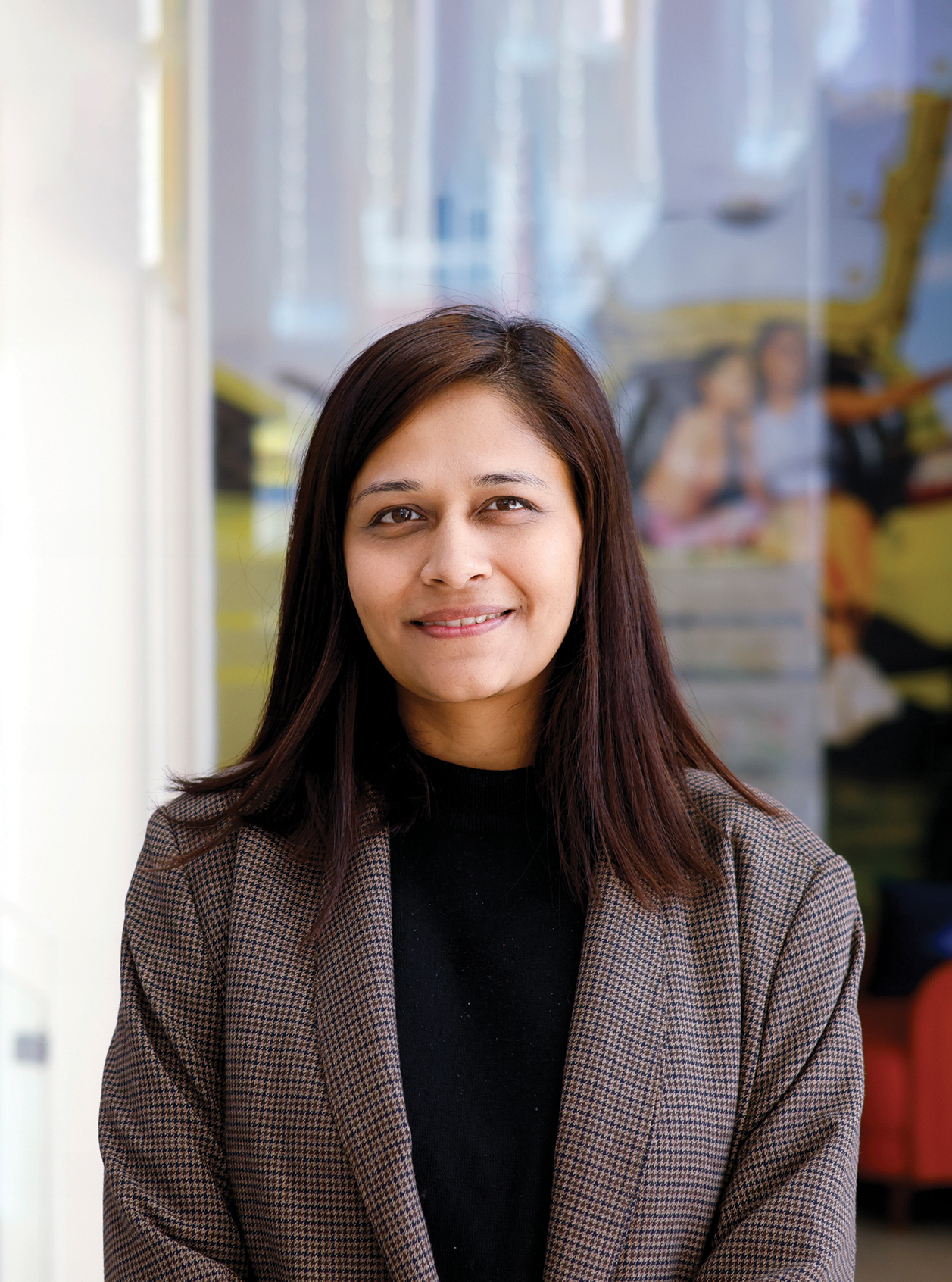
Aviruchi Giri serves as the Marketing Manager at Sipradi Trading Pvt. Ltd. From the early stages of her academic journey, she has been deeply committed to marketing and communication, pursuing A-levels with a focus on marketing, followed by both a Bachelor’s and a Master’s degree majoring in the field. This strong academic foundation provided her with a comprehensive theoretical and practical understanding of consumer behaviour, brand management, and strategic communication.
Her professional career began as a content writer before transitioning into social media management during the formative years of digital marketing. This early exposure allowed her to build brands in the digital space and develop hands-on skills in crafting campaigns that connect with audiences through a distinct brand tonality.
Giri later transitioned into corporate branding, a move that deepened her understanding of positioning, brand identity, and the role of a consistent brand story in driving business growth. Following this, she spearheaded responsibilities within the Business Strategy and Excellence department, which enabled her to align marketing initiatives with broader business objectives and measure their impact on organisational performance.
This trajectory eventually led Giri to Tata Motors Nepal, where she currently leads the marketing department. In a recent conversation with the HRM Nepal, she shared her insights on branding, marketing, and strategic communications. Provided below are the excerpts from that conversation.
 Q: You have led branding initiatives as Brand Manager at Sipradi Trading Pvt. Ltd., a company widely recognised for its strong branding strategy. How do you reflect on your role and experience in contributing to this success?
A: I consider myself fortunate to have been part of Sipradi Companies’ corporate rebranding journey in 2018, which was a pivotal moment in strengthening the company’s brand presence. Reflecting on my role as a Brand Officer at the time, it was where I learned, early in my career, the critical importance of internal branding, and how it ultimately amplifies overall brand strength.
Being part of a team that transformed market perception of the company was deeply fulfilling and reinforced my belief that strong brands are built from the inside out.
Q: What do you think are the critical factors that make a branding strategy effective and sustainable?
A: In my view, the critical factors that make a branding strategy both effective and sustainable are patience, consistency, and a focus on organic growth. Strong brands are built over time. It’s not about chasing quick Returns on Investment (ROIs) but creating meaningful connections with customers and consistently delivering on the brand promise.
Q: How do international brand values of Tata Motors translate into local relevance in the Nepali market, particularly in terms of trust, affordability, and after-sales service?
A: The international brand values of Tata Motors have been trust, innovation, and reliability, which translate very strongly into the Nepali market. In Nepal, we know a person’s biggest investment after their home is their car, so trust and reliability are paramount.
Affordability is another critical aspect. Our range, from the Tiago.ev starting at Rs. 27.49 lakhs to our Punch.ev – CUV starting at Rs. 37.99 lakhs, ensures that customers can access suitable vehicles for our terrain at competitive price points.
When it comes to after-sales service, Sipradi has built the largest EV ecosystem in Nepal, covering 18+ sales point, 16+ EV dedicated service network, and 185+ charging infrastructure. This ensures that customers not only feel confident at the point of purchase but continue to experience convenience, reliability, and peace of mind throughout the ownership journey.
Q: Is branding treated as a strategic priority in senior management deliberations, including at the level of management? If so, how is it integrated into high-level decision-making?
A: Yes, branding is absolutely treated as a strategic priority at Tata Motors Nepal, including at the management level of Sipradi. Even long before I joined Sipradi, the company was working on establishing a Uniform Brand Experience, with a clear objective – a customer should receive the same superior brand experience across every touchpoint and location. Whether it is the Dhangadhi branch or the Naikap branch, the experience must be consistent.
This philosophy was truly fascinating to me, and it continues to guide our strategic choices today, reinforcing Tata Motors’ reputation for trust, consistency, and reliability across all touch points of Nepal.
Q: What would you identify as your most significant contributions and achievements in the field of branding to date?
A: One of my most significant achievements in branding has been organising the Tiago.ev Interschool cARTnival, recently held at my alma mater, Budhanilkantha School. The event brought together a mix of private and community schools, creating a truly inclusive platform. What made this particularly rewarding was seeing community school students nearly sweep one of the contest groups, highlighting the event’s inclusivity and impact.
This initiative was more than just a brand activation as it created meaningful engagement, strengthened Tata Motors’ presence among younger audiences, and reinforced our commitment to making an impact where it matters most. Seeing the joy, creativity, and enthusiasm of the participants truly made me feel that the brand experience was both authentic and purposeful.
Q: Which tools, platforms, or channels do you primarily rely on for branding and brand communication, and why?
A: For branding and brand communication, we rely on a balanced mix of tools and channels to ensure maximum reach and impact. Internal stakeholders are a critical starting point, engaging and aligning them ensures that the brand message is consistently represented across every touchpoint. Externally, we focus on a strategic balance between ATL, on-ground activations, and digital platforms. ATL channels help us build broad awareness, on-ground initiatives create meaningful, tangible experiences with our audience, and digital platforms allow us to share stories, engage interactively, and build long-term brand relationships.
The combination of these approaches ensures that our brand is not only visible but also relevant, relatable, and trusted in the market.
Q: How brand-conscious do you believe Nepali consumers are today, and how has this awareness evolved over time?
A: Nepali consumers have become increasingly brand-conscious over time, and this trend is particularly strong in the automobile industry, where reliability, safety, and after-sales service are top priorities. Again, cars are often a person’s biggest investment after their home, so trust in the brand plays a critical role in purchase decisions.
With the easy access to information through digital platforms, consumers today are more aware than ever, they can research, compare, and share opinions. This has made them more discerning, evaluating brands not only on their strengths but also on perceived weaknesses.
Q: How do you position your brand in the Nepali market to ensure differentiation and long-term relevance?
A: In the Nepali market, we position Tata Motors as a brand that combines trust and reliability, values that resonate with local consumers. Differentiation comes from a clear focus on product, safety, and affordability, ensuring that our vehicles meet both functional and emotional needs of our customers.
Q: What are the key unique selling propositions that have enabled your brand to maintain a dominant market position?
A: Tata Motors’ USPs in Nepal are trust, reliability, robustness for Nepali terrains, and affordability. It is our diverse product portfolio, from the Tiago.ev at Rs. 27.49 lakhs to Safari at Rs. 1.31 crores backed by the largest after-sales support. In core, Tata Motors combines durable, functional vehicles with strong local support and smart pricing, making it a trusted name in Nepal’s competitive automotive market.
Q: As a market leader, how challenging is it to defend and sustain brand leadership amid increasing competition, and what strategies are most critical from a branding perspective?
A: Defending and sustaining brand leadership in a competitive market like Nepal is certainly challenging, but the key lies in staying true to your brand values rather than getting caught up in short-term fads. For Tata Motors, this means consistently delivering on trust, reliability, affordability, and durability, which are core to our brand promise.
By focusing on these principles, Tata Motors maintains strong differentiation, customer loyalty, and long-term leadership in the Nepali market.
Q: What brand-related risks keep you most concerned as a market leader, and how are you proactively addressing them?
A: As a market leader, one of the biggest brand-related risks is getting pulled into the vicious cycle of FOMO – Fear of Missing Out. With multiple viewpoints and constant noise, it’s easy to get caught in that whirlpool. The real challenge lies in filtering what truly aligns with the brand’s core values and long-term strategy. This is where the experience in Business Strategy and Excellence becomes especially valuable. We rely on data and consumer insights to guide decisions rather than opinions alone. This approach encourages structured brainstorming, while maintaining clarity on what genuinely supports and strengthens the brand promise.