Keeping Nepal’s Youth at Home
 Nepal is at an important point in its economical journey. We have made progress and are in continual process in reducing poverty, expanding infrastructure, increasing access to education and improving connectivity. Remittances from Nepali citizens working abroad have also played a major role in supporting millions of households and maintaining economic stability. Yet, I believe that there is a reality that we cannot ignore, many of our younger generation still are believing that their future lies outside Nepal.
Remittances have undoubtedly been a lifeline. They have supported families, reduced poverty and strengthened our foreign exchange position. But in my view a country cannot build its long-term prosperity by exporting its most productive population and future of this nation. Our objective should not be to stop Nepalis from leaving our nation. Foreign employment will remain an important part of our economy. Our objective should be to ensure that going abroad is a choice, not a compulsion, and that returning home is an attractive option.
For this, we must first create an economy in which young Nepalis can see a future. Ultimately, retaining our younger generation is about more than creating jobs. It is about creating hope.
Young Nepalis want fair opportunities, decent incomes, professional growth, modern workplaces and the confidence that merit will be rewarded. They want to build businesses without unnecessary obstacles. They want access to technology and global markets. They want a society where hard work can translate into a better quality of life.
The private sector has been playing a central role to minimise the unemployment rate. Businesses are the primary creators of employment and Nepal needs an economical strategy that puts private-sector-led growth at its centre. This means creating an environment where businesses can invest, expand and hire with confidence.
We must focus on sectors capable of creating employment at large scale. I think tourism is one among them. Nepal has enormous potential in adventure, nature, culture, wellness and religious tourism. A stronger tourism ecosystem can create jobs not only in hotels and airlines but also in transport, food production, handicrafts, agriculture, entertainment and digital services, among others.
Information technology is another major opportunity. Unlike many traditional industries, IT and digital services can generate employment without requiring large physical infrastructure. Nepal has a young, educated population and a growing pool of talented digital workers. With better internet infrastructure, digital skills, international payment systems and a predictable policy environment, Nepal can become a competitive destination for technology and business-process services.
Agriculture must also become more commercial and technology-driven. Nepal cannot retain young people in rural areas by asking them to continue traditional subsistence farming. We need modern agriculture, better irrigation, storage, processing, cold chains, market linkages and access to technology. Young people should be able to see agriculture as a business rather than merely as a traditional occupation.
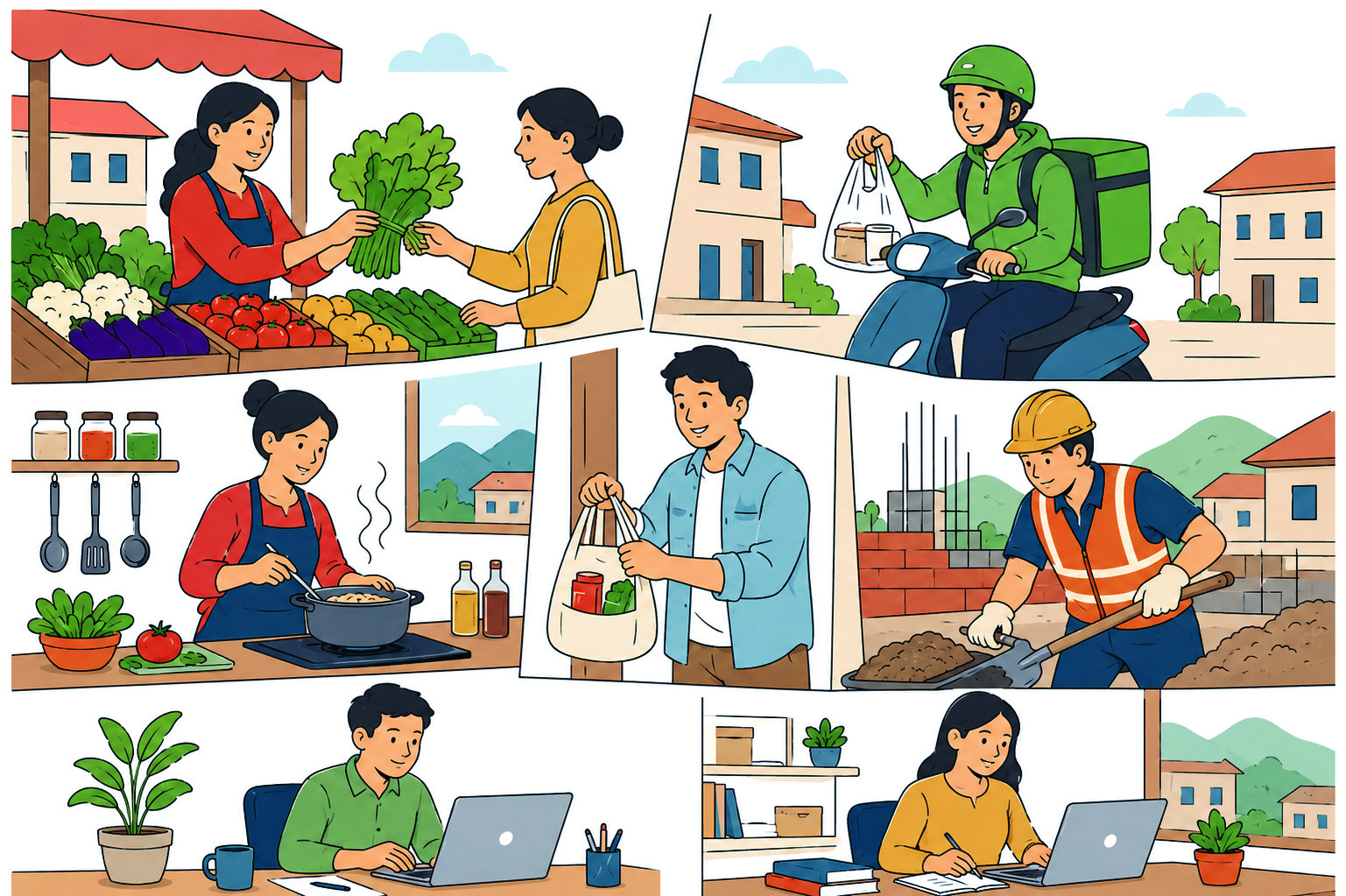 Hydropower and manufacturing can create another layer of opportunity. Nepal has immense hydropower potential but the real economic benefit will come when electricity is used to expand industries, support electric mobility, develop data centres, promote green production and increase exports. Manufacturing must also become more competitive through better infrastructure, technology, logistics and access to markets.
The World Bank has similarly identified hydropower, tourism, digital services and agribusiness as sectors with significant potential to generate income and employment opportunities, while emphasising the need for a better business environment, infrastructure and private finance.
Access to finance is equally important. Many young people have ideas for startups but lack the capital to turn those ideas into businesses. Banks and financial institutions should be encouraged to increase productive lending, while government programmes providing concessional finance and start-up support must become easier to access. Financing should be linked not simply to collateral but also to the viability, innovation and employment potential of a business.
We also need to change how we think about skills. Nepal should not continue producing graduates without sufficiently connecting education with the requirements of the economy. Industries should have a stronger role in designing vocational and technical education and training programmes. Young people need practical skills in areas where Nepal has genuine growth potential, including tourism, information technology, digital services, construction, manufacturing, agriculture, hydropower and other emerging industries.
This is particularly important because many Nepali citizens are already acquiring valuable skills overseas. The challenge is to bring those skills back into the domestic economy.
Returnee migrants should not be treated simply as people who came back from foreign employment. They should be seen as a pool of human capital, experience, knowledge, networks and savings.
We should also make better use of remittances. For years, remittances have primarily supported household consumption, education, housing and basic needs. This has been important but a larger share should gradually be channeled towards productive investment.
We need financial products designed specifically for migrant families and returnees, with incentives for investment in productive sectors. Remittance-linked investment funds, diaspora investment mechanisms, local enterprise funds and partnerships between financial institutions and businesses can help convert individual savings into productive capital.
Nepal needs a national framework for returnee entrepreneurship. A migrant returning with savings should be able to access business registration, finance, skills certification, mentoring and market information through a single, coordinated system. We should make it easier for returnees to invest in agriculture, tourism, manufacturing, construction, services and digital businesses.
The government has already introduced programmes for returnee entrepreneurship and concessional finance. What is needed now is stronger implementation, coordination and measurable outcomes. The private sector should also be actively involved in this process. The Federation of Nepalese Chambers of Commerce and Industry (FNCCI) and its member organisations can help connect returnees with industries, employers, mentors, investors and markets. Our recently developed work on gender-responsive migrant reintegration also recognises the important role of the private sector in supporting the economic reintegration of returnee migrants.
The immediate priority must be to improve the investment climate. Policy uncertainty, complicated regulations, lengthy approval processes, high compliance costs and inconsistent implementation discourage investors. A young entrepreneur should not have to spend months navigating government procedures before being able to start a business. Starting, operating and closing a business must become simpler, faster and more predictable.
 Unfortunately, reintegration remains difficult. The Nepal Labour Migration Report 2024 notes that many returnees struggle to translate their overseas experience into sustainable livelihoods. Nearly half of returnees covered by a ReMi study planned to pursue livelihood activities after returning but many lacked finance, networks and other resources. The report also found that fewer than 3% of surveyed returnees had invested their overseas earnings in a business after returning.
This represents major missed opportunities. Nepal’s economy has not been able to create enough quality employment opportunities for its growing workforce. The World Bank has noted that Nepal’s economy had grown at an average real rate of around 4.2% annually between 1996 and 2023, but this growth has not generated sufficient quality jobs outside agriculture. More than 7% of Nepal’s population had migrated abroad by 2021, mainly in search of employment, while remittances reached around one-quarter of gross domestic product (GDP) by 2023.
This is not simply a migration issue. It is an economical issue, a social issue and, ultimately, a national development issue.
We should not fear migration. We should manage it better. Those who leave should be able to earn safely and return with skills and capital. Those who want to stay should have meaningful opportunities at home. And those who return should find an economy ready to absorb their experience and ambition.
The government and private sector must therefore work together with a shared objective: to make Nepal a place where young people can build their future.
Nepal’s greatest resource is not its natural resources alone. It is its people. If we can create the right environment for our young population to work, innovate, invest and build businesses in Nepal, migration can become a source of strength rather than a symptom of economic weakness. The question before us is not whether Nepalis will continue to seek opportunities abroad. They will. The real question is whether we can build a Nepal to which they will want to return, and in which the next generation will choose to stay.
That must be at the heart of Nepal’s economic strategy.
(Shrestha is President of Federation of Nepalese Chambers of Commerce and Industry)