

Innovate and blend business elements to create a disruptive and unique enterprise.
Developing vital infrastructure in least developed and developing nations can drive substantial economic growth by attracting large-scale investment, elevating service quality, boosting personal incomes through job creation, and fostering an environment conducive to entrepreneurship. These developments can subsequently stimulate consumption, reinforce productive capacity, and ultimately propel export growth.
As economies progressively transition toward greater sophistication, sustaining further growth becomes far more complex. Economic advancement thus demands continuous cross-sector innovation. Enterprise can no longer afford to operate idiosyncratically or rely exclusively on traditional avenues for generating sales and revenue. Instead, businesses increasingly seek to optimise resources, diversify revenue streams, and enhance returns. One emerging practice is adopting multi-business models, also commonly known as hybrid business models.
This practice is by no means unprecedented. Globally, major hotels have long combined guest accommodation with restaurants, retail spaces, conference facilities, entertainment venues, rental areas, and additional services. What has grown increasingly significant, however, is the deliberate integration of these diverse activities within a single business ecosystem to maximise the value derived from identical assets and customer bases.
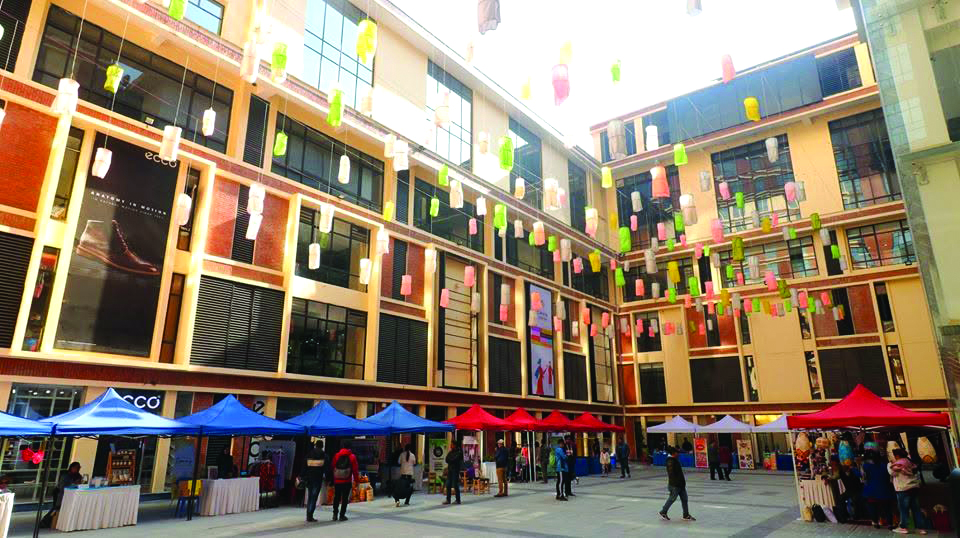 The Chhaya Devi Complex at Amrit Marga, Thamel, in Kathmandu offers a compelling example from Nepal. A single facility houses a shopping complex, multiplex cinema, restaurants, coffee shops, rentable spaces, and the Aloft Kathmandu Hotel. Rather than operating strictly as a hotel or a retail complex, this integrated development generates multiple revenue streams from a shared physical asset and customer ecosystem.
This dynamic reflects a core characteristic of a multi-business-model venture. Such an approach allows a firm to diversify revenue, optimise asset utilisation, deepen customer engagement, and cultivate resilience by leveraging shared capabilities, infrastructure, and ecosystems.
Crucially, this model must be distinguished from the traditional practice of founding multiple businesses under a single holding company. A diversified holding company often owns enterprises operating in entirely unrelated sectors, such as banking, manufacturing, hospitality, and hydropower. Multi-business-model ventures, conversely, focus on identifying complementary activities that seamlessly integrate within the same venture or ecosystem. The objective extends beyond simply owning diverse businesses. It centres on optimising resource allocation, unlocking latent value, and extracting new revenue opportunities from existing assets and capabilities.
The core principle is the effective utilisation of available resources. A physical property, digital platform, customer relationship, distribution network, or technological infrastructure can potentially support several complementary business activities. The
ability to identify and exploit these opportunities is becoming an essential element of business-model innovation.
The newly reconstructed Bhat Bhateni Supermarket at Koteshwor offers another familiar example. Customers visiting the store encounter not only retail outlets, but also food courts and children’s recreational facilities. These complementary offerings can increase the time customers spend on the premises, enhance the overall shopping experience, and encourage
additional purchases. For the businesses operating within the food court, the presence of a large and regular customer base creates a prime opportunity to generate sales.
Traditionally, market research has focused on understanding customers within a relatively defined and conventional framework like what they want, how much they are willing to
pay, and where they prefer to buy. As economies and consumer behaviour become more sophisticated, however, businesses increasingly need to ask a broader question. How can existing customer traffic, assets, and capabilities be combined to create additional value?
This shift requires moving beyond simply developing new products and toward business-model innovation, finding new ways of creating, delivering, and capturing value. Combining complementary businesses can increase customer engagement, optimise asset
utilisation, and improve overall returns.
The conventional wisdom of risk diversification is captured in the familiar saying, “Don’t put all your eggs in one basket.” Diversifying revenue sources can certainly reduce a firm’s
dependence on a single product, market, or customer segment. But the logic of a multi-business-model venture goes a step further. Its objective is not only risk diversification, but also optimization like making better use of existing assets, capabilities, customer relationships, and infrastructure to generate additional value.
This emerging practice can also be observed in Nepal’s hydropower sector. Some hydropower projects have begun exploring the installation of solar photovoltaic systems on available land around project facilities. Where suitable land exists, solar generation can
complement hydropower generation, particularly during daylight hours. Such hybrid renewable-energy configurations can improve the utilisation of available land and grid infrastructure while increasing the overall energy output from an existing project ecosystem.
The underlying principle is therefore broader than simply combining two businesses. It centres on asking how existing resources can be deployed more intensively and intelligently. A hotel can combine accommodation with restaurants, retail, and events; an e-commerce platform can combine direct sales with a marketplace for third-party sellers; a mixed-use property can integrate hospitality, retail, and entertainment; and an energy project can combine different generation technologies.
End-to-end alignment: the architecture behind multi-business model ventures
Structural shifts, technological advances, and evolving monetisation models have disrupted traditional backward and forward linkages, reshaping how businesses connect across the value chain.
In each case, the central question remains the same: How can a single venture create greater value from its existing resources while developing complementary revenue sources? That is the essence of multi-business-model innovation.
Integrating multiple businesses within a single venture goes beyond placing several revenue-generating activities under one corporate roof. Its success relies on end-to-end alignment, the strategic integration of activities across the value chain so that each function complements and reinforces the others.
In a traditional business model, functions are typically organised linearly like sourcing, production, marketing, sales, and after-sales service. Each function performs a defined role, creating value through the sequential movement of products or services toward the
customer.
Multi-business-model ventures reshape this linear progression. Interconnecting different businesses and functions across the value chain enables resources, customers, data,
infrastructure, and capabilities to flow dynamically between them. The outcome is not merely a collection of businesses but an integrated architecture where one activity systematically generates opportunities for another.
This end-to-end alignment becomes particularly vital when a venture merges several businesses within the same ecosystem. A hotel, for instance, can combine accommodation, dining, events, retail, wellness, and entertainment. Accommodation drives customer traffic
to the restaurant; events, clubs, and casinos generate lodging demand; dining and retail enrich the guest experience; and a single customer relationship yields revenue across multiple channels.
Such integration creates a distinct multiplier effect. The value generated by one business is not confined to that unit alone. It spills over to enrich other businesses within the same ecosystem. This represents a major departure from conventional business diversification, where enterprises may coexist under a shared holding company yet operate largely independently. In a multi-business-model venture, the focus shifts to interdependence, coordination, and optimisation. The individual businesses are deliberately aligned so that their combined output exceeds what each could achieve in isolation.
 At this stage, the organisation moves beyond simply managing separate businesses. It actively manages the connections between them. This structural evolution also opens the possibility of developing a new organisational function. As multiple business models integrate, traditional departmental boundaries can prove insufficient. An organisation requires core capabilities to manage shared customers, data, platforms, assets, supply chains, technology, and revenue opportunities across business lines. Consequently, what was once treated as separate operational activities can evolve into a strategic integration function.
Technology further accelerates this transition. Shared customer analytics, digital platforms, enterprise systems, unified payment infrastructure, and data management enable businesses to coordinate activities in real time. As a result, the competitive advantage of a multi-business-model venture increasingly depends not on the individual enterprises it owns but on how effectively it connects and orchestrates them.
End-to-end alignment serves as the backbone of multi-business model innovation. It ensures that diversification does not degenerate into fragmentation, and that multiple ventures do not operate as disconnected activities beneath a shared corporate banner. Instead, they function as dynamic components of an integrated system designed to maximise resource utilisation, customer value, revenue generation, and organisational resilience.
The fundamental shift moves from managing businesses in isolation to managing the value generated between them. That structural synergy is what transforms a standard diversified enterprise into a truly integrated, multi business-model venture.
The Dusit model: pooling assets to create a hospitality ecosystem
The investment and operating model associated with Dusit offers an instructive example of how hospitality enterprises can transcend the conventional hotel paradigm. Rather than requiring the operator to hold full ownership of every accommodation unit, this model effectively separates property ownership from hotel management and operations. Dusit International, for instance, entered into a management agreement with Omstone Asia Capital Nepal to operate the Dusit Thani Himalayan Resort Dhulikhel, with Dusit’s corporate reporting classifying the property as a managed hotel (franchise).
The resort features private villas alongside conventional hotel accommodations, with Dusit actively marketing one-, two-, and three bedroom villas as part of its core lodging
offerings.
The broader significance of this framework rests in the clear division between asset ownership, operation, and utilisation. When individually owned villas or residences are integrated into a professionally managed hospitality structure, owners can utilise their properties for agreed-upon periods while making them available for commercial guest bookings during remaining periods, governed by specific ownership and management terms.
This structure creates an effective system of resource pooling. Individual investors contribute capital through the ownership of accommodation units, while the professional operator supplies its brand equity, hospitality expertise, global distribution networks, reservation infrastructure, marketing reach, and operational oversight. Consequently, the collective hospitality inventory can be marketed and managed within a unified resort cosystem rather than as fragmented, independently managed properties.
For the property owner, this framework can convert an otherwise underutilised private real estate asset into a steady income stream while preserving personal use rights. For the operator or developer, it mitigates the need to sink vast capital into direct property acquisition, enabling the business to leverage a broader pool of privately funded assets.
This dynamic aligns directly with the mechanics of multi-business-model ventures. The enterprise no longer relies strictly on selling traditional hotel rooms. Instead, it seamlessly blends accommodation management, villa and residence operations, food and beverage,
wellness, event hosting, recreational activities, and ancillary hospitality services within a singular, integrated ecosystem.
The model demonstrates an essential principle of modern business-model innovation. Value can be generated not only by expanding asset ownership but by coordinating and pooling assets held by different entities.
In this respect, the approach blends asset sharing, professional management, and revenue generation. It can diversify the investment base, enhance asset utilisation, and establish more resilient cash-flow opportunities for owners and operators alike.
However, the specific financial terms, including compensation structures for villa owners, permitted days of personal use, and the allocation of rental or occupancy revenues, depend entirely on the contractual framework of each development. These operational details should consequently be verified through the project’s official ownership or management agreement before being presented as definitive features of the Dusit Thani Himalayan Resort.
CG Industrial Park’s convergence with tourism
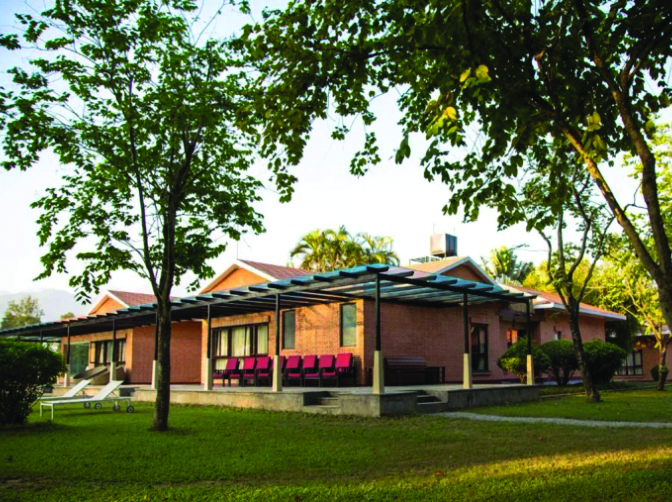
The CG Industrial Park (CGIP) in Devchuli, Nawalpur offers another compelling example of the convergence of seemingly distinct business activities within a single ecosystem. While the industrial park houses a range of manufacturing operations, the broader development has progressively incorporated tourism, leisure, spirituality, and wellness.
A golf course situated within the industrial park adds a recreational dimension to an otherwise industrial setting. Adjacent to the park stands Shashwot Dham, a prominent religious and cultural landmark designed to cater to pilgrims and visitors. More recently, the establishment of Miraaya Wellness has introduced an additional facet to this emerging tourism and wellness ecosystem.
The Chaudhary Group itself describes CG Retreat, located inside CGIP in Devchuli, as an exclusive boutique resort and a premier weekend destination for wellness, spirituality, and relaxation. Its promotional materials emphasise the integration of golf, wellness, and leisure set against the backdrop of the Shashwot Dham Temple and the area’s natural environment.
“Located inside CGIP in Devchuli, Nawalpur, CG Retreat is an exclusive boutique resort, a great weekend destination for wellness, spirituality and relaxation. You can enjoy golf, wellness and relaxation away from the hustle and bustle of the city life, amidst the chirping
sounds of exotic birds with the grand backdrop of auspicious Shashwot Dham Temple,” according to the Chaudhary Group.
The significance of CGIP therefore extends beyond the traditional concept of an industrial estate. It illustrates how industrial, hospitality, recreational, spiritual, and wellness activities can coexist within and around a shared geographical and corporate ecosystem.
From the perspective of multi business-model innovation, the noteworthy feature is the opportunity to cross-utilise infrastructure, location, visitor traffic, and organisational capabilities. An industrial hub can establish the foundation for tourism oriented ventures, while tourism and wellness facilities extract additional value from land and infrastructure that would otherwise serve purely industrial functions.
This model further highlights the distinction between traditional diversification and an integrated multi-business-model venture. While individual manufacturing units within the park may operate under distinct business models, the addition of hospitality, golf, spiritual, wellness, and leisure facilities transforms the location into a comprehensive destination with multiple streams of economic activity and revenue generation.
In this sense, CGIP demonstrates an important principle of business-model innovation. The value of an asset is not necessarily confined to its original purpose. Strategic integration can unlock additional value by connecting complementary activities around the same location, infrastructure, and ecosystem.
The evolution of CGIP, from a conventional industrial park toward a broader ecosystem incorporating industry, tourism, spirituality, golf, and wellness, raises a critical question for future business strategy. Can industrial infrastructure itself serve as a platform for multiple, complementary businesses rather than remaining restricted to its traditional industrial function?
If designed and managed effectively, such convergence can increase asset utilisation, diversify revenue opportunities, attract different categories of visitors and customers, and generate synergies among otherwise distinct businesses.
The Daraz example: from retailer to marketplace
E-commerce provides an even clearer illustration of multi-business model innovation. A conventional online retailer purchases goods, holds inventory, and sells those products directly to consumers. Its revenue depends substantially on the margin between acquisition and selling prices.
A marketplace operates differently. It provides the digital infrastructure through which independent merchants reach customers. The platform can earn commissions, service fees, advertising revenue, or other income streams without necessarily owning the underlying inventory.
E-commerce platforms like Daraz offer an important example in Nepal. Daraz explicitly clarifies that its platform facilitates transactions between buyers and sellers rather than simply purchasing all products outright to resell them. Its terms describe the site as an online platform and facilitator, while its merchant agreements establish a structured marketplace relationship with participating sellers.
This creates a fundamentally different business architecture. Instead of purchasing, holding stock, selling goods, and earning a markup, the platform model functions on entirely different mechanics.
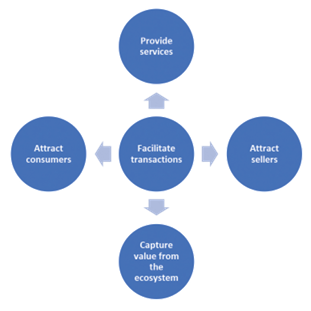
Daraz has developed seller-support mechanisms, logistics services, and other complementary activities. Its earlier Seller Summit, for instance, highlighted specialised tools for sellers, seller performance management, Daraz Express logistics, and physical Daraz Hubs for pickup, delivery, and returns.
It also operates DarazMall for authorised brands and resellers, while its affiliate programme creates another mechanism through which external content creators can direct customers to products and earn fees on qualifying purchases. The resulting model is far more complex than simply “an online shop.”
It functions as an e-commerce ecosystem comprising marketplace transactions, retail and brand relationships, logistics, seller services, marketing, affiliate partnerships, and customer service operations.
Direct selling plus platform selling
The distinction between direct selling and platform selling is particularly important.
“Suppose an e-commerce company sells 10,000 products that it owns. Its capital is tied up in inventory. Unsold inventory creates working-capital pressure, storage costs, and inventory risk,” according to experts. “Now suppose the same company allows 100,000 independent sellers to list products on its platform. The company can dramatically expand product variety without necessarily financing the entire inventory itself.”
The platform thus converts an inventory-intensive model into an ecosystem model. This does not eliminate risk. Instead, it fundamentally shifts its nature. While inventory risk may decline, issues of platform governance, seller quality, customer protection, logistics, fraud, reputation, and regulatory compliance become far more critical.
The business model consequently becomes more complex, yet substantially more scalable.
Airlines: from transportation to an integrated travel experience
The airline industry also provides compelling examples of how a traditional business model can extend beyond its core function. An airline’s conventional business model is straightforward: transport passengers from one destination to another and earn revenue primarily from airfares. Increasingly, however, airlines are seeking to monetise the broader travel experience by introducing complementary products and services.
Some international airlines have long offered in-flight retail, allowing passengers to purchase duty-free goods and other products during their journeys. Others have expanded their hospitality proposition through premium dining, lounges, entertainment, and special on-board experiences. Digital platforms and airline e-stores have further enabled carriers to sell products beyond the conventional flight ticket.
This represents an important shift in business-model thinking. The passenger is no longer viewed merely as someone purchasing a seat. The passenger becomes a customer within a broader travel ecosystem. The airline can potentially generate value before, during, and after the flight through food and beverage, retail, loyalty programmes, travel-related services, digital commerce, and other ancillary offerings.
The same customer relationship can therefore support multiple revenue streams. The significance of this model becomes clearer when viewed from the perspective of asset utilisation. An airline has already invested heavily in aircraft, digital platforms, customer databases, airport relationships, loyalty programmes, and distribution systems. Extending the business model allows the airline to leverage these existing capabilities to capture additional value.
It also illustrates the difference between selling more of the same product and innovating the business model itself. Increasing the number of seats sold reflects conventional revenue growth. Creating additional revenue from retail, dining, entertainment, loyalty, and digital commerce represents a broader approach to value creation.
Recognising hybrid business models
This issue is particularly relevant when sector-specific incentives or financing facilities are involved. For example, businesses that combine agriculture with tourism may encounter questions regarding whether they qualify for agriculture-related credit or other sector-specific facilities. A facility designed specifically to support agricultural production may not automatically apply to the tourism component of an agro tourism enterprise. Such cases require clear eligibility criteria rather than blanket restrictions or inconsistent interpretations. Where allegations arise regarding the misuse of priority-sector lending or other targeted financial facilities, these should be assessed against applicable regulatory provisions and the actual use of funds.
The role of public policy, therefore, should be to facilitate responsible convergence and partnerships among complementary businesses while preserving regulatory integrity. The objective should be neither unrestricted deregulation nor rigid adherence to traditional sectoral boundaries. Instead, regulation needs to evolve alongside business innovation.
Though not a new concept, the emergence of bancassurance illustrates another form of business-model convergence. Banks and insurance companies, both highly regulated sectors, can establish partnerships through which insurance products are distributed through banking channels. Under such arrangements, the insurer remains responsible for designing and underwriting the insurance products, while the bank provides access to its branches, digital platforms, customer relationships, and distribution network. Depending on the regulatory framework and contractual arrangement, bank employees or other authorised representatives may facilitate the sale of insurance products.
Customers can consequently access products such as life, health, or property insurance through banking channels, including branches and digital platforms. For the insurer, the partnership expands distribution and customer reach. For the bank, it creates an additional service and potential source of fee income. And for customers, it offers greater convenience by bringing complementary financial services together.
Bancassurance demonstrates that multi-business-model innovation does not necessarily require a single company to own every component of the value chain. Strategic partnerships can achieve the same effect by combining the complementary capabilities of different organisations.
This leads to a broader understanding of emerging business architecture. The future enterprise may not necessarily be defined by what it owns but increasingly by what it can integrate, coordinate, and orchestrate. Businesses can combine their own assets with those of partners, platforms, and ecosystems to create new value propositions, diversify revenue, improve asset utilisation, and enhance the customer experience.
The challenge for policymakers and regulators is to recognise this transformation. Business models are evolving faster than many regulatory classifications. A regulatory system designed around rigid sectoral boundaries may struggle to accommodate enterprises that operate across those traditional divisions. The task, therefore, is to create a policy and regulatory environment that protects consumers, maintains market integrity, and ensures the prudent use of public resources, while leaving sufficient space for legitimate business-model innovation.
Ultimately, the convergence of businesses is shaping a new form of corporate architecture, one in which integration replaces isolation, partnerships complement ownership, and optimisation becomes as vital as diversification.
Some models and benefits of pursuing multiple models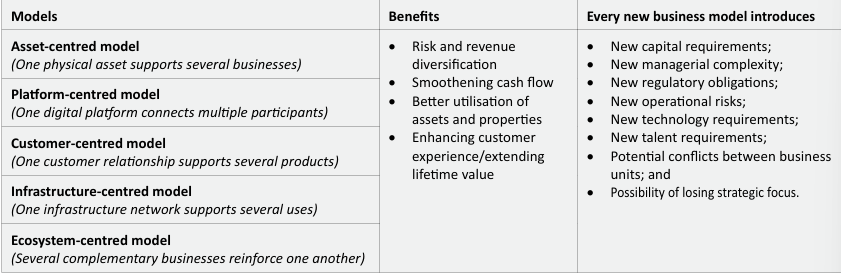
Optimising Assets Through Energy Integrati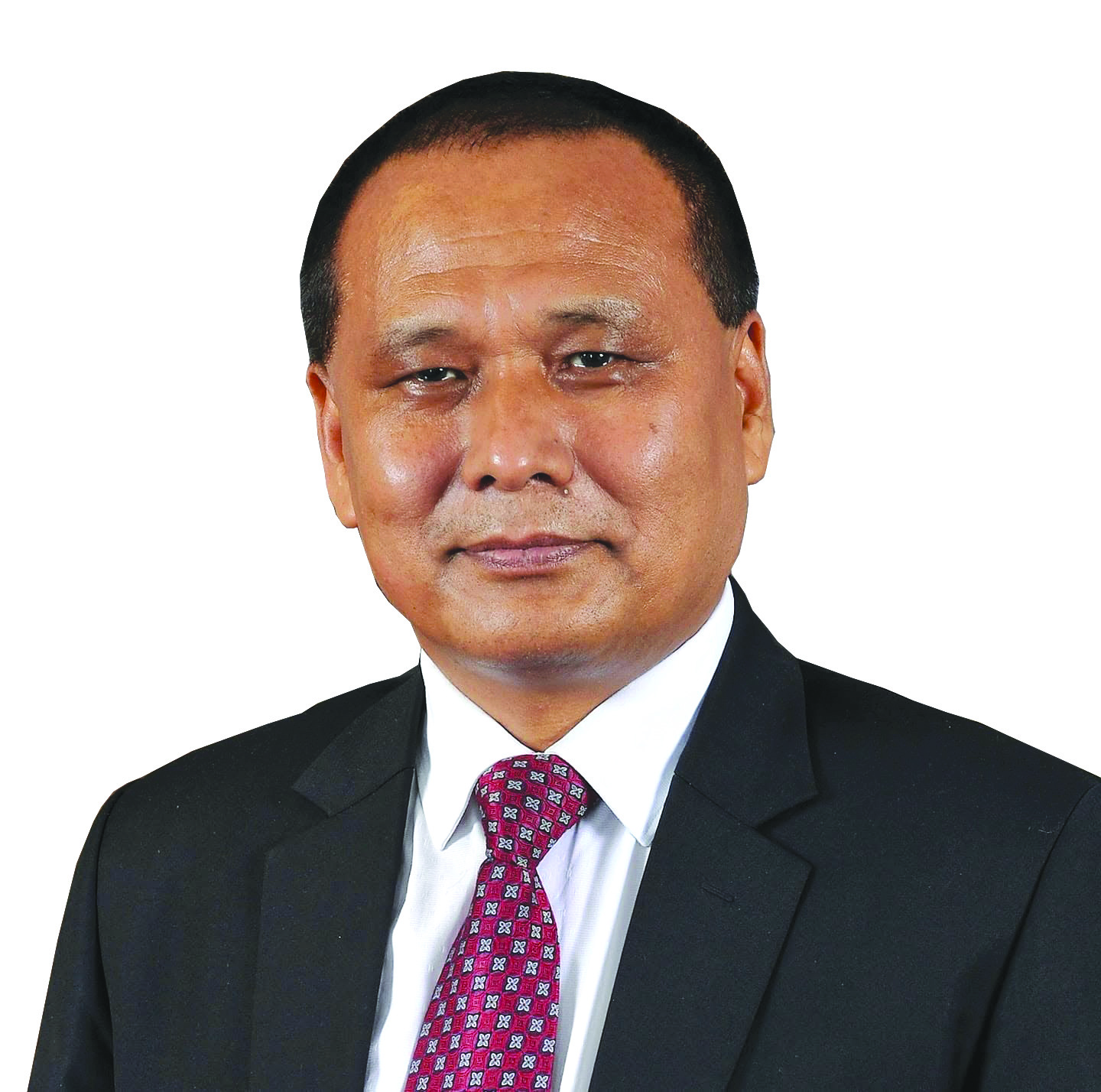 on – best fit for Nepal
Kulman Ghising, Former Managing Director, Nepal Electricity Authority
Resource optimisation is not a new concept. However, for a state-owned entity such as the Nepal Electricity Authority (NEA), adopting new approaches can be more complex. At the same time, volatile solar prices made it difficult for the NEA to determine appropriate power purchase agreement (PPA) rates for solar projects proposed by independent power producers (IPPs).
Against this backdrop, the NEA itself took the initiative to optimise its existing infrastructure and introduce the concept of an energy mix. It decided to instal a 25 MW solar power plant within the powerhouse area of the Devighat Hydropower Plant in Nuwakot. The project was completed and connected to the national grid in September 2022. The initiative was successfully implemented, demonstrating how existing hydropower infrastructure and solar generation could be combined to create additional value from the same asset base.
The initiative not only supported the optimisation of the power plant and its surrounding infrastructure but also reinforced the concept of an energy mix in Nepal. At a time when the country was experiencing an electricity supply deficit, combining different generation sources provided an opportunity to increase energy availability while making more efficient use of existing infrastructure.
From the perspective of emerging business models, the Devighat experience illustrates the value of recombining existing assets and complementary technologies rather than treating them as separate systems. Instead of viewing hydropower and solar as competing generation models, the NEA demonstrated how they could be integrated to improve asset utilisation, diversify the generation mix, and strengthen energy security.
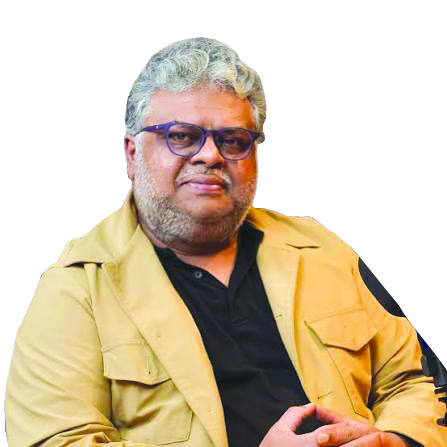 Recombining Capabilities to Create New Value
Rajendra Khetan, Chairperson, Khetan Group
When Laxmi Bank introduced bancassurance in 2006, we were essentially bringing together two traditionally separate businesses, banking and insurance, to create greater value for customers. The idea was to leverage the bank’s customer relationships, branch network, and distribution capabilities alongside the insurance sector’s products and risk management expertise.
This experience demonstrated that business-model innovation does not always require creating an entirely new product or business. Instead, it can stem from recombining existing capabilities, resources, and distribution channels in a way that benefits all parties. Customers gained easier access to insurance, insurers reached the bank’s customer base, and the bank offered a broader range of financial solutions.
Bancassurance also showed that businesses do not need to own every component of the value chain. By partnering with organisations that possess complementary capabilities, they can expand their offerings, optimise existing resources, and create new revenue opportunities. In this sense, the model served as an early example in Nepal of how collaboration across traditional industry boundaries can build an integrated customer proposition.
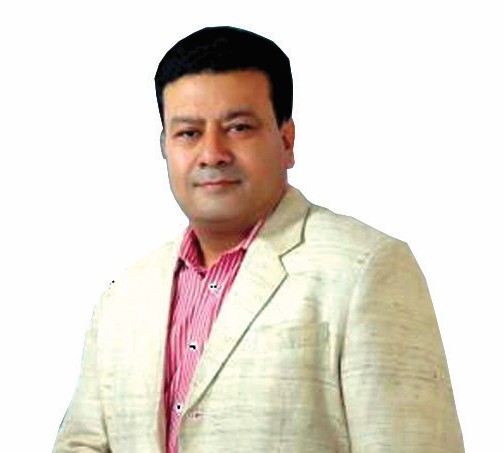 Unlocking Value Through New Business Models
Suman Pandey, Marketing and Board Director, Chhaya Centre
The emergence of new business models is a natural consequence of innovation, infrastructure development,
and technological advancement. As markets, consumer preferences, and technologies evolve, businesses continuously search for new ways to create, deliver, and capture value. These emerging models are increasingly designed around their value-adding potential, efficient utilisation of resources, enhanced customer experience, and the creation of new revenue streams.
The transformation of physical infrastructure also creates opportunities for businesses to rethink how assets can be utilised. The Chhaya Devi Complex in Thamel, Kathmandu, serves as an illustrative example of this approach. Rather than limiting the property to a single commercial purpose, the significance of such a model lies not simply in housing several businesses in one location but in creating additional value through their interaction. Footfall generated by one business can create demand for another; customers attracted by entertainment or retail can become potential customers for restaurants and hospitality services; and the same infrastructure can support multiple revenue-generating activities.
In this sense, the Chhaya Devi Complex demonstrates how effective property management can go beyond maintaining and leasing physical space to actively creating value from the asset. It illustrates a broader principle of multi-business-model innovation. The objective is not merely to add businesses but to identify complementary activities that can collectively maximise the utilisation, productivity, and revenue generating potential of an existing asset.
Pooling Resources, Reimagining Business Models
Ramesh Hamal, Founding Partner and
Managing Director, Omstone Asia/Omstone
Hotels Limited (developer of Dusit Thani
Himalayan Resort in Dhulikhel)
The Dusit Thani Himalayan Resort illustrates how a new business model can emerge by combining different forms of capital, expertise, and capabilities rather than relying solely on conventional ownership and operations. Innovation, access to finance, managerial expertise, and strategic guidance are critical to enterprise development. In this sense, the Dusit experience demonstrates how diverse resources can be pooled and strategically orchestrated to create a business that would be difficult to develop through a single capability or conventional business model.
The broader view is that businesses should look beyond their conventional boundaries and ask how their existing assets, relationships, and capabilities can be recombined with those of others to create new value. Increasingly, competitive advantage will come not only from what a business owns, but from how effectively it can connect, integrate, and orchestrate complementary capabilities.
 Recombining Business Models Through Strategic Partnerships
Rupesh Joshi, Director, Marketing, Sales and Ground Handling Department, Buddha Air
Competitive advantage will come not only from what a business owns, but from how effectively it can connect complementary
capabilities. The Buddha Air-Soaltee partnership illustrates how established businesses can recombine complementary capabilities to create a broader customer proposition. By integrating air travel, hospitality, loyalty rewards, and digital services, the partnership extends customer value beyond the traditional boundaries of an airline or hotel. Buddha Air contributes its flight network, customer base, and booking capabilities, while Soaltee brings its hospitality network, brand, and loyalty platform.
This model demonstrates that business-model innovation does not always require the ownership of new assets or capabilities. Strategic partnerships can enable companies to share customers, platforms, distribution channels, and expertise, thereby reducing the cost and time involved in entering adjacent markets. Digital platforms further facilitate this integration by connecting complementary products and services within a single customer ecosystem. The broader lesson is that emerging business models are increasingly defined by what businesses can connect and orchestrate, rather than simply what they own.

