

A utumn in Nepal is synonymous with the festive season, highlighted by massive national celebrations like Dashain, Tihar, and Chhath along with vibrant cultural events. In fact, cultural events such as Gaijatra and festivals like Haritalika Teej fall within this season. Just before Dashain, Indra Jatra (Yenya), celebrated especially in the Kathmandu Valley for eight days, features the famous chariot procession of the Living Goddess (Kumari) and energetic masked dances (Lakhey).
Haritalika Teej, observed by Hindu women, is celebrated grandly with rich cuisines, singing, and dancing at venues like banquets and hotels, where women dress in new attire and fine jewellery. The styles and traditions of observing these festivities have continuously evolved with new trends. Furthermore, as the whole nation celebrates
throughout the autumn season during Dashain and Tihar, economic activities receive a major boost.
This festive period primarily drives consumer spending, as people invest in celebrating with their families and relatives. Preparing delicious dishes, wearing new clothes, travelling, spending time with loved ones, and enjoying entertainment fill people’s lives with joy during the holidays.
Beyond bringing fresh vibes and excitement, festivals offer a welcoming break from professional duties, routine pressures, and business responsibilities. Above all, these occasions serve to exchange harmony, love, and care while strengthening the bonds between family, friends, and relatives.
As Nepal’s total final consumption expenditure remains extremely high, accounting for 90% of its Gross Domestic Product (GDP), spending spikes during festivals. Since Dashain
is the primary festival, it stimulates the economy by boosting consumption. According to seasoned economist Dr. Shankar Prasad Sharma, former vice- chairperson of the National Planning Commission and former ambassador, the share of Dashain and Tihar-related consumption is estimated at around 20% of Gross National Consumption.
With the country’s economy experiencing a slowdown due to plummeting aggregate demand, these festivals are expected to provide a needed boost. Festive consumption expenses are mainly directed toward food, travel, garments and footwear, gadgets and electronics, jewellery, and home appliances, among other categories.
Driven by these consumer expenses, sectors such as wholesale and retail trade, travel, and tourism experience a major surge during the festival period.
Business events and schemes
The festive season extends far beyond cultural events, as festival-oriented business events, auto shows, home appliance expos, and other consumer goods fairs take place prior to major celebrations. These exhibitions aim to attract consumers and boost sales, operating on the belief that major festivals provide the most opportunistic time for selling products.
According to retailers, festive season sales surge three- to four-fold compared to standard merchant trade. To maximise sales volume, providers of both goods and services, ranging from automobiles to banking products, and internet services to insurance, announce various promotional schemes. Festival-centric sales tactics have gained significant traction in recent years, featuring highly appealing packages for consumers.
For instance, the country’s largest automotive show recently concluded with grand fanfare. Meanwhile, several other exhibitions, trade fairs, and promotional campaigns continue to be organised to draw in shoppers.
Major season in tourism industry
The autumn season is the primary tourist season in Nepal. Most tourists prefer visiting during this period, which offers a perfect transition from summer to winter, featuring steadily dropping temperatures, clear skies, shorter daylight hours, and cooler, crisper air. Pristine natural beauty can be fully experienced during the autumn months.
Autumn is considered an ideal time for trekking, mountaineering, jungle safaris, and various other tourism activities.
In Nepal, the autumn season brings nature, culture, and adventure, the core triangle of Nepal’s tourism landscape, into full bloom.
Beyond foreign visitors, domestic tourism also surges during the autumn season. Trekking has become a passion for many Nepalis. Furthermore, the trend of travelling to major tourist destinations with family has grown, with spots such as Sauraha (Chitwan), Lumbini, Pokhara, Janakpur, and Ilam (Kanyam)
being flooded with domestic tourists over the last several years.
A higher number of foreign tourists aspire to visit national parks, wildlife reserves, and mountain base camps, among other destinations. Pokhara, Nepal’s lake city and the gateway to the Annapurna region, is regarded as the most preferred destination for international travellers.
Additionally, Nepalis living abroad for work, study, or other purposes return home to celebrate the festivals. Conversely, some Nepalis travel abroad to celebrate Dashain and Tihar with family members and relatives.
Consequently, the hospitality and travel sectors boom during the festival period. Transportation, hotels, and restaurants experience high demand as people travel to their hometowns or visit popular destination events.
“The entire tourism ecosystem rejuvenates with the influx of domestic and foreign tourists, as every entity in the tourism business aims to serve more visitors with warm hospitality,” shared Balram Pathak, General Manager at Royal Tulip Kathmandu.
Remittances and Liquidity
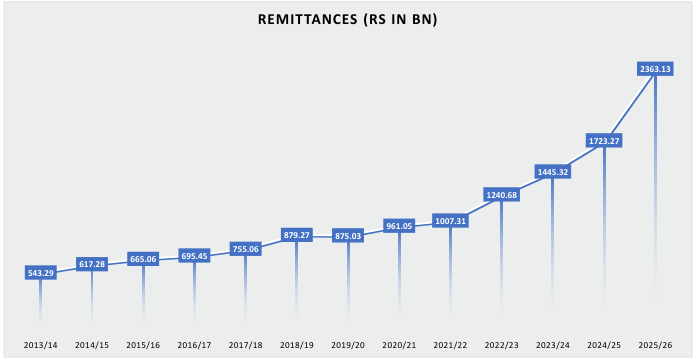
Remittances surge during the festive season as Nepali migrant workers send more money home. Remittance inflows routinely rise during these celebrations, with monthly figures already climbing past Rs. 200 billion. During the months of September and October, remittance inflows could rise even higher than that
amount. In FY 2025/26, Nepal recorded a milestone remittance inflow of Rs. 2,363.13 billion. Banks and financial institutions (BFIs) also attempt to offer cheaper loans as liquidity conditions further improve across the sector. Because BFIs are already flushed with liquidity due to sluggish loan deployment, the probability of cheaper credit flow increases during the festivals, supported by continuous remittance surges that flood the banking system with excess funds.
Backlashes: inflation and market distortions
A consumption surge during the festivals bolsters imports, which widens the trade deficit and adversely affects the country’s balance of payments alongside an increased outflow of foreign exchange, one of the nation’s precious resources. However, this import surge contributes significantly to government revenue, as Nepal collects over 50% of its total revenue at customs points through tariffs, VAT, and excise duties on imported goods, among others.
While revenue mobilisation through imports eases short-term fiscal management, it remains a dangerous strategy for the long term. Over-reliance on imports distorts the domestic production base, constrains import substitution potential, and paralyses the broader economy.
Likewise, heightened consumption leads to demand-pull inflation, making
it challenging to tame inflation to desired levels. Consumer price index (CPI) inflation stood at 5.22% in June, a figure that could rise further due to skyrocketed demand for consumable goods during the festivals and the potential increase in global fuel prices driven by ongoing tensions in the Strait of Hormuz.
Market distortions and misconduct frequently surface during festive periods despite regulatory oversight by state agencies. Past experiences show that smooth supply management and market interventions often prove inadequate. Curbing market misconduct requires stronger industry self-regulation alongside vigilant state monitoring to inspect product quality and prices, ensure seamless supply, and intervene effectively through fair-price shops run by state-owned enterprises such as Salt Trading Ltd., Food Management and

– Balram Pathak, General Manager at Royal Tulip Kathmandu.

The entire tourism ecosystem rejuvenates with the influx of domestic and foreign tourists, as every entity in the tourism business aims to serve more visitors with warm hospitality.
Trading Company Ltd., and National Trading Ltd.
It is important to note that the massive devastation caused by the floods in the Bhotekoshi and Trishuli rivers has dealt a major setback. People across the country share the pain of the flood victims. Major markets, which were previously vibrant with activity from dozens of hydropower plants along the basin and cross-border trade with China through Rasuwagadhi-Kerung, have been washed out. Lifeline roads and other public infrastructure were swept away by the August 26 flood.
Furthermore, the subsidence of the Krishnabhir area along the vital Prithvi Highway, the main arterial link connecting the capital city of Kathmandu with the East-West Highway, could severely disrupt the smooth supply of goods, including essential items. Interruptions in the supply of goods

– Dr. Shankar Prasad Sharma, former vice-chairperson of the National Planning Commission

As Nepal’s total final consumption expenditure remains extremely high, accounting for 90% of its Gross Domestic Product (GDP), spending spikes during festivals. Since Dashain is the primary festival, it stimulates the economy by boosting consumption. The share of Dashain and Tihar- related consumption is estimated at around 20% of Gross National Consumption.
and services risk exerting inflationary pressure on consumers.
“The early restoration of the Prithvi Highway and the Kathmandu-Kerung route (Pasang Lhamu Highway) is the need of the hour,” said Rajan Sharma, a trade logistics expert. “Life must move forward as we cope with these disasters.”
At the same time, the fact that this disaster occurred right before the peak tourist season has raised fresh concerns regarding tourist safety and security. According to tourism entrepreneurs, “Nepal must immediately communicate to the world that our key tourist destinations remain safe for travel.”

– Rajan Sharma, a trade logistics expert

The early restoration of the Prithvi Highway and the Kathmandu-Kerung route (Pasang Lhamu Highway) is the need of the hour. Life must move forward as we cope with these disasters.

