N obody expects an emergency or disaster will affect them, their staff or their business operations. But the truth is that emergencies can strike anyone, anytime, anywhere. A workplace emergency is an unforeseen situation that threatens your employee, customers, the broader public, shuts down your operations, and causes physical or environmental damage. How hard a disaster hits often depends on how vulnerable your circumstances are, the fewer safeguards you have in place, the greater the impact. When a crisis hits, clear and logical thinking becomes difficult, which is why planning, mitigating and preparing to respond with regular trainings and drills are important.
Nepal’s disaster landscape is shaped by its fragile and steep mountains, active tectonic plates, climate change along with intense monsoon rains, making landslides, floods, earthquakes and fires a recurring threat. Globally, Nepal ranks fourth in vulnerability to climate change. Floods along the Himalayan foothills bring landslides leaving tens of thousands of houses and vast areas of farmland and roads destroyed. Business operations can be disrupted further by health hazards (as the COVID-19 experience showed), human-caused hazards such as violence and accidents, and technological failures like power outages and equipment breakdowns.
Human Resources Management (HRM) in any organisation has a critical role in daily operations and must play a critical role in disaster preparedness and response. Organisational leadership and HRM must plan for workforce protection by ensuring staff safety, maintaining operational continuity and communication, creating flexible emergency policies, running staff training and drills as well as managing staff support systems before, during and after a crisis. It can be useful to brainstorm the worst-case scenarios with your staff and have an emergency action plan in place. An emergency action plan outlines actions employers and employees must take to ensure their safety from fire and other emergencies.
It will be useful for all organisations and individuals to reflect on the 2015 Gorkha earthquake, the 2015-2016 trade blockade, COVID 2019 and the recent youth-led Gen Z protest (September 8 & 9, 2025) and the damage these caused to normal business operations. Together, they should have taught us enough about the need to protect business operations against disasters – the requirement for a clear business continuity plan, reliable data backups, staff safety and a comprehensive insurance coverage.
The 7.8 magnitude Gorkha earthquake tragically claimed a lot of lives and devastated hundreds of
thousands of homes. Seismologists consider Nepal fortunate that the rupture moved eastward and lost intensity before fully striking the densely populated Kathmandu valley. The timing of the earthquake helped too as it struck at 11:56 a.m. on a Saturday, when government offices, administrative buildings and schools (estimated 30,000 classrooms damaged) were closed. This significantly reduced potential causalities among civil servants, students and public workers who would otherwise have been inside these buildings.
What does preparedness look like? Effective preparedness starts with a clear plan built around four key areas:
1. Risk mitigation and staff care Risk mitigation strategies are actionable approaches to assessing and minimising risk impacts on an organisation. It involves proactive steps to identify, evaluate and respond to risks before they turn into major issues. Proactive mitigation of risk in any organisation can offer the following benefits.
a. Prevents financial losses and reputational damages.
b. Ensures continuity of operations and long-term success
c. Improves decision making and best use of the resources.
Organisational staff care and disaster
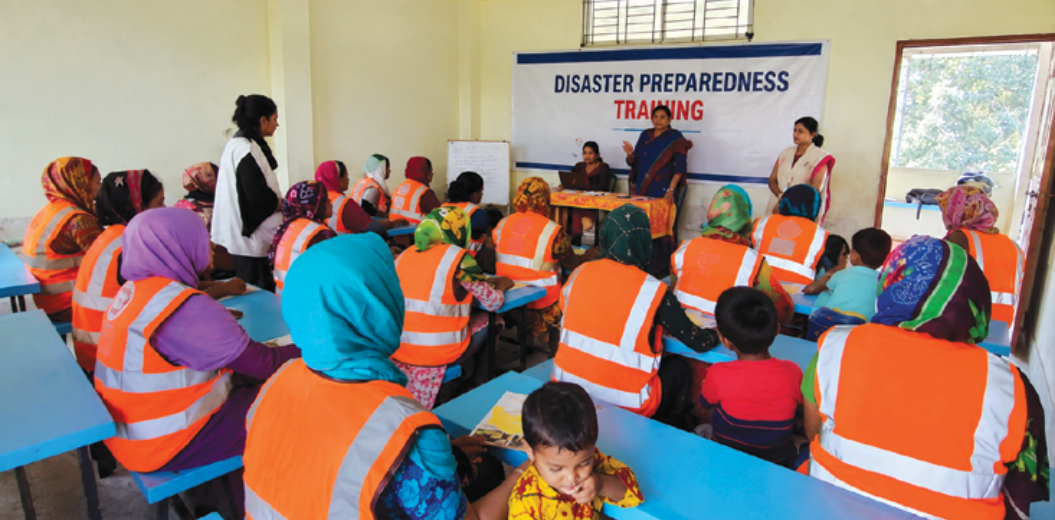
involve protecting physical safety, operational flexibility and psychosocial support. During these difficult times it requires leaders to communicate clearly, help with emergency resources and adjust work policies so the staff can manage personal and family recovery. Prioritising employee well-being during these difficult times will aid long-term retention and operational recovery.
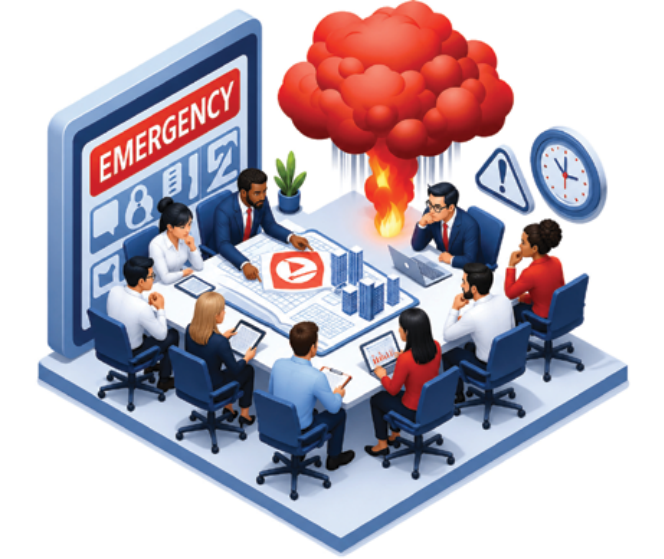
2. Building your emergency plan Any organisational disaster preparedness plan requires clear leadership, a comprehensive risk assessment, robust communication system, clearly defined life-safety protocols (evacuation/ assembly/sheltering) and business continuity procedures to keep essential operations functional and protect employees during the crisis. Organisation leadership needs to have an organisational emergency response team with clear hierarchy and backups.
Businesses have an obligation to prepare for an emergency to keep their staff safe and to plan for business continuity in any adverse condition. Disasters are unpredictable and either a sudden onset disaster like earthquake or a slow onset like droughts, sea-level rise, epidemic etc., it is essential that we have
a preparedness plan in place and the more prepared you are the less the damage these disasters will cause you and your business operations.
Any business emergency plan should include: Structural Mitigation: Is your organisation housed in a seismically safe building? Has an expert done a structural assessment of the building and recommended physical changes, engineering techniques or building modification to reduce potential physical damage and safety risks? For a business these tangible adjustments protect the property, assets and staff. Some of the important physical and facility reinforcements include earthquake retrofitting, wind resistant roofs, flood barriers, impact-resistant glasses (laminated or tempered windows). In addition to this secure heavy equipment bolt large shelves, filing cabinets and industrial machinery to the floor or walls so that they do not tip over. Make sure you are prepared for fire with fire extinguishers installed and staff knowing how to use them. Make sure you have a clear pathway for evacuation and that pathways are not obstructed by furniture or other items and finally protect
electrical panels, backup generators, and water valves.
a. Emergency procedures for fire, earthquakes and potential other hazards. b. Assembly points, wardens and first aid training. c. How to contact staff, suppliers, clients and insurance providers. d. Alternative arrangements if you are unable to access your premises, files, financial systems, etc. Nonstructural mitigations: Nonstructural mitigation measures are actions that do not involve physical construction. Instead, they use policies, knowledge, experience, laws and awareness to reduce disaster risks and limit damage from hazards.
a. Making sure your office is in a safe place as per government regulations far from floodplains and steep slopes b. Making sure that the building you are in has followed the building code as per government regulations. c. Making sure your staff are aware of and practicing ways to prepare for, respond to and recover from emergencies and continuous
annual refresher training. d. Annual or semiannual drills, defining escape routes and assembling points and a communication plan for work and for the staff and their families. e. First aid training for the staff.
3. Planning for the first 72 hours The first 72 hours after a disaster is considered critical where power, water and communication are often not available and all official emergency responders may be unable to reach you. During this time self-reliance, basic safety measures and careful assessment and your preparedness dictate survival.
Depending on the type and severity of disaster professional help may not arrive for the first 24 to 72 hours because of roadblocks, power and communication outage. The community or your office team are always the first responders and hence the more you plan and prepare the better you are. Staying calm, checking yourself and accountability of each of the staff will be the priority. You would then want to move to a safe spot or the designated assembly point. Ensure safety first, conserve and use the supplies you may have in stock.
For both home and work it is suggested you keep a first aid kit with bandages, tape and basic medicines that can be reached immediately. Have some water stored along with some packed dry food, items that do not need a stove or oven to cook. It is also recommended you keep flashlights and extra batteries and minimise the use of the devices as you are not sure when you will get fresh ones.
4. Individual preparedness All organisations’ protection against disasters requires a clear business continuity plan, reliable data backups and comprehensive insurance coverage. These actions along with a Business Continuity Plan (BCP) for the organisation will protect staff and keep the organisation running during emergencies and ensures a quick recovery.
Along with institutional preparedness everyone also needs to be prepared for the first 24 to 72 hours after a disaster. After a major disaster, individual safety responsibility at work means you must follow emergency plans, protect yourself and coworkers, report new hazards and inform on unsafe work conditions to your supervisor. You must follow safety rules, wear personal protective equipment and report broken gas lines, weak walls or
‘It is concerning that credit mobilisation hasn’t been supporting growth, as this suggests a problem’
exposed wires immediately.
In highly disaster-prone areas there is a practice of individuals having “go bags” at home and “stay bags” at work.
Go Bag: Go bags are immediate evacuation bags that you can grab on your way out while you evacuate your residence after a disaster situation. This bag should be durable, hands- free backpack containing water, nonperishable food, first aid medication and vital documents. Stay Bag: A stay bag is designed for sheltering in place when you cannot or do not need to evacuate, but local utilities or services fail. It is suggested that you have your personal medication, non-perishable food and sanitation items stored in this bag along with important documents and some cash.
Effective disaster preparedness transforms vulnerable organisations into resilient enterprises capable of safeguarding human life and maintaining continuous operations. Ultimately proactive planning and regular practice ensure that safety is not left to chance when emergencies occur. Organisational disaster preparedness is the continuous process of planning, training and equipping a workplace to protect business leaders and employees. Organisational human resources management can do a lot to prepare for the most likely hazards they will face in the workplace.