UNLOCKING HUMAN CAPABILITY
æcdGqdIf/+ gfl:t, gfl:t d”ndgf}ifwd\ . cof]UoM k’?ifM gfl:t , of]hs:tq b’n{eM.Æ
There is no alphabet that is not a mantra; there is no root that is not a medicine.
There is no human who is incapable; rare
then, is the facilitator. T
his timeless Sanskrit shloka reminds us that potential exists everywhere; in words, in nature, and in people. The challenge is not the absence of capability, but the scarcity of those who can unlock it. In today’s organisations, the Human Capability Facilitator is that rare catalyst who transforms latent talent into living excellence.
Context & Challenge
History is filled with stories of human potential misread or rejected. Narayan Murthy was denied funding for Infosys because India was “not ready for IT.” Kiran Mazumdar-Shaw was refused loans as biotech was deemed “unviable.” Oprah Winfrey was told she was “unfit for television.” Each of these personalities went on to redefine industries and inspire millions.
The lesson is clear: organisations often misjudge capability. They dismiss youth as inexperience, unconventional ideas as impractical, or lack of pedigree
as incompetence. The cost of such misreading is immense: lost innovation, disengaged employees, and missed opportunities. What is needed is a new lens, one that sees beyond surface limitations to the deeper reservoir of human potential.
Decoding Human Capability
To decode capability, we can use the 4S Model: • Spark: Spark latent talent by creating opportunities for expression. A young intern given a chance to lead a
project may surprise everyone with creativity and ownership. • Synergy: Synergise diverse skills together. True capability emerges when technical expertise, emotional intelligence, and cultural awareness converge. • Sense: Develop the ability to sense strengths and opportunities. Great facilitators read between the lines, spotting hidden skills in everyday actions. • Support: Guide and support transformation by channelling
capability into meaningful outcomes. Leadership is not about authority, but about enabling others to shine.
This framework shifts the focus from “managing people” to “facilitating capability.” It is about unlocking what already exists, rather than imposing what does not.
The Facilitator’s Agenda: The 5D Model
The Human Capability Facilitator follows a clear agenda • Discover latent talent: identify hidden strengths in individuals. • Develop competence: nurture skills through mentoring and training. • Deploy effectively: place people where their strengths create maximum impact. • Diversify opportunities: encourage exploration beyond comfort zones. • Drive progress: sustain momentum through recognition and challenge.
This agenda is not linear but cyclical. Discovery leads to development, which leads to deployment, and so on. The facilitator ensures that human capital is not static but dynamic, constantly evolving to meet new challenges.
Role Models of Facilitation
Consider Steve Jobs, fired from Apple for being “too difficult.” He returned to lead Apple’s creative revolution. Walt Disney, dismissed for “lack of imagination,” built the world’s most beloved entertainment brand. Falguni Nayar, doubted for her online beauty retail idea, created Nykaa, India’s first woman-led unicorn.
These stories highlight the power of facilitation. Each of these leaders had capability, but it was recognition, resilience, and facilitation; sometimes self-driven, sometimes supported; that transformed rejection into reinvention.
Developing Human Capital Facilitators: The ABCDE Model
If facilitators are rare, how do we develop them? The answer lies in the ABCDE model:
• Awaken awareness of human potential. • Build capability through structured learning. • Connect networks to expand opportunities. • Drive performance by setting clear goals. • Empower individuals to take ownership.
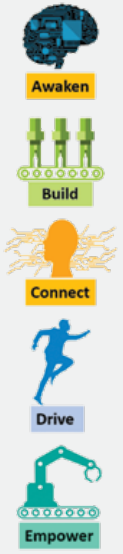
This model is a roadmap for HR leaders, coaches, and mentors. It shifts the role from transactional management to transformational facilitation. In a world where technology automates tasks, human facilitators will remain irreplaceable in unlocking creativity, empathy, and resilience.
Perspective Shift: Seeing Differently
Sometimes, capability is not about adding new skills but about shifting perspective. What one person sees as ordinary, another may see as extraordinary. “A small shift in the way you look at things can make a big difference.” This is the essence of facilitation: helping people see
themselves differently, and thereby act differently.
For example, a frontline worker may be seen as “just operational.” But a facilitator might notice their problem- solving instincts and encourage them to contribute to process improvement. That small shift can transform an overlooked employee into an innovator.


A small shift in the way you look at the things can make a big difference.
The Future of Facilitation
As organisations face unprecedented change; digital disruption, hybrid work, generational diversity; the need for facilitators has never been greater. The future will not be shaped by those who merely manage resources, but by those who unlock capability.
Facilitators will be the bridge between AI-driven efficiency and HI-driven empathy. They will ensure that technology enhances rather than erases human creativity. They will help organisations move from a culture of compliance to a culture of contribution.
Closing Reflection
Human capability is universal. Every person carries within them the seeds of talent, competence, and creativity. What is rare is the facilitator: the leader, mentor, or coach who awakens, builds, connects, drives, and empowers.
Let us strive to be those rare facilitators who see beyond limitations, who discover potential where others see none, and who transform human capital into human possibility.
In the words of the opening shloka: There is no human who is incapable, rare then, is the facilitator.