
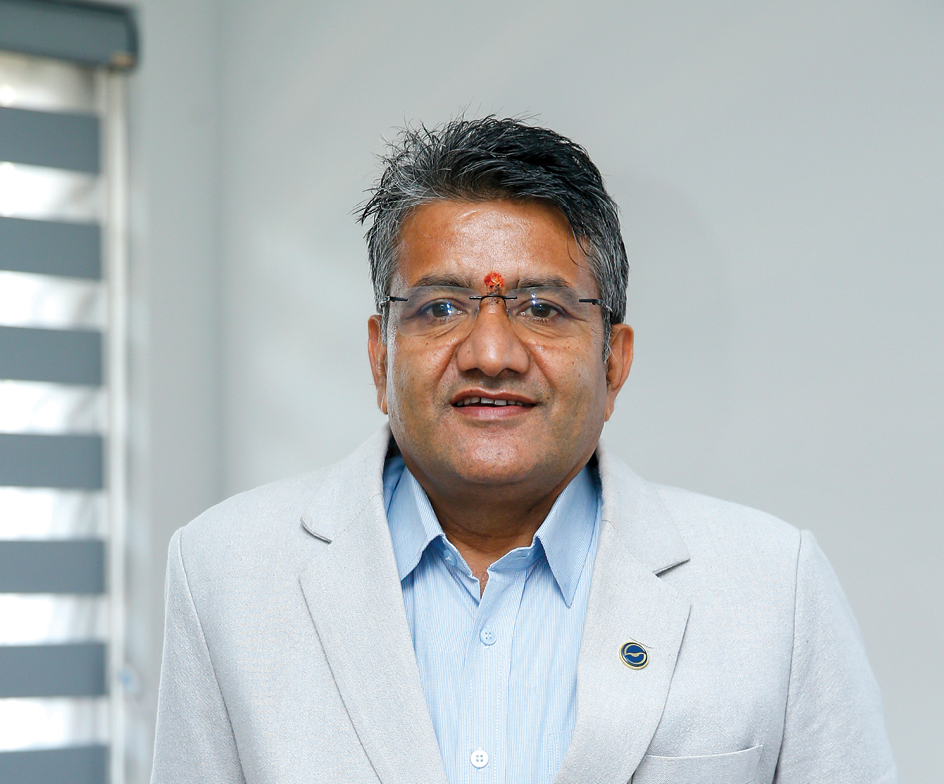
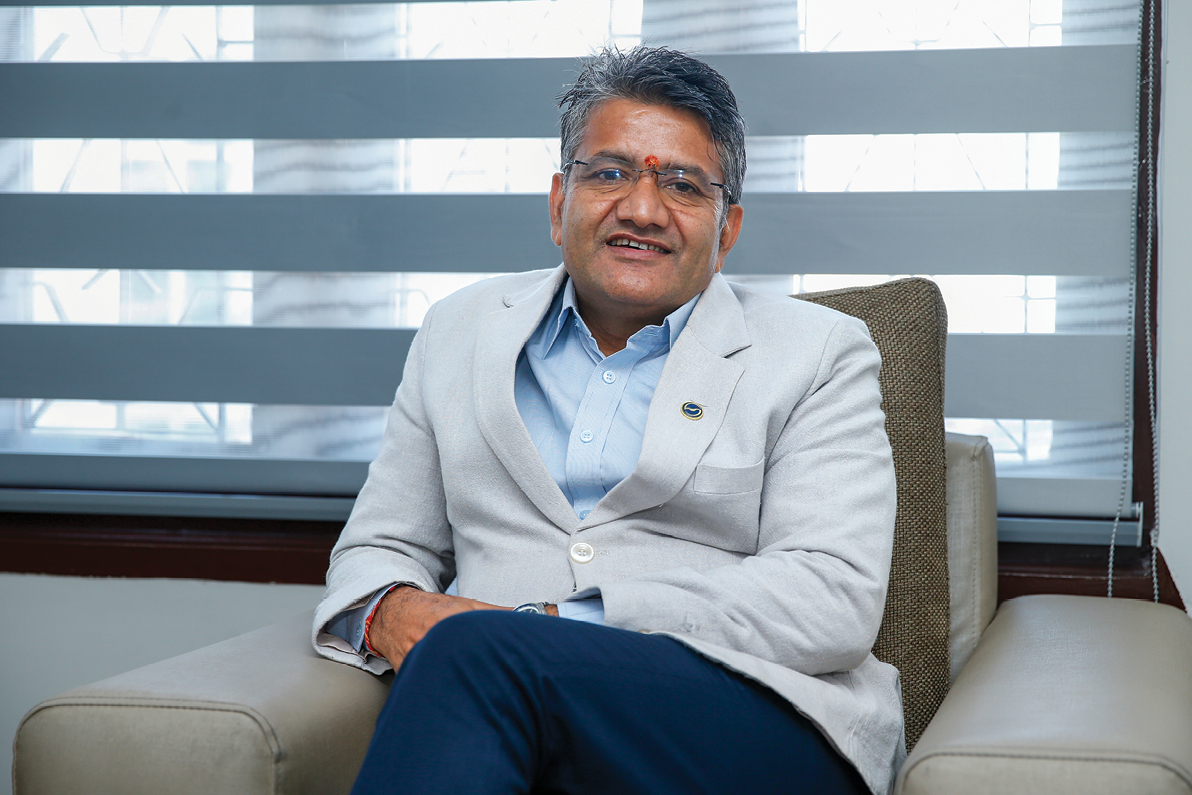
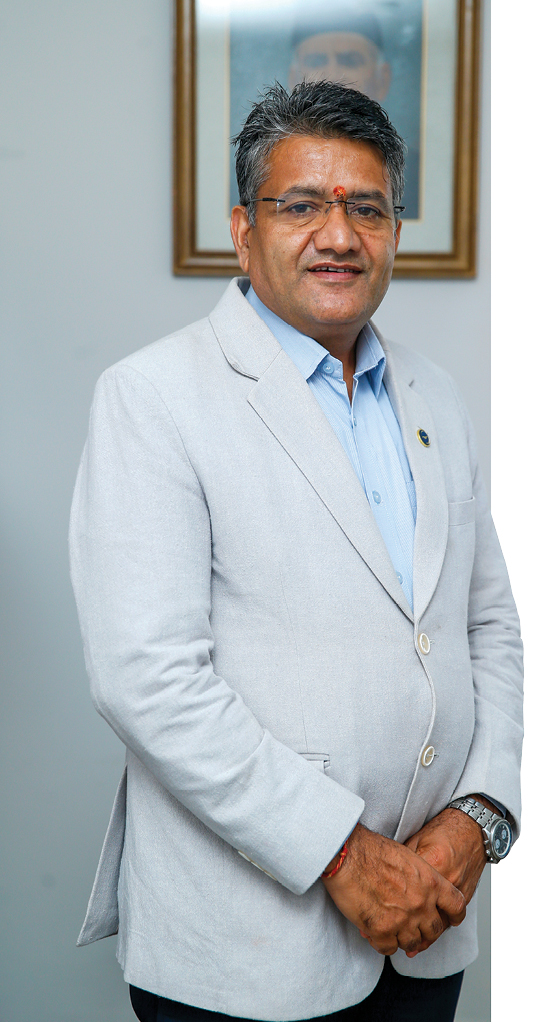
 Laxman Neupane is the Chairperson of the Siddhartha Business Group of Hospitality. Having entered entrepreneurship in the late 1990s, he has since built the Siddhartha Business Group of Hospitality into an empire encompassing 33 enterprises. Currently, the group has a total of 26 establishments, which include hotels, restaurants, and banquet services. Beyond hospitality, the group has diversified its investments into an agri-tech firm, travel and tours, trading, a Hotel Management College, and hospitality management services focused on skill development. Siddhartha Hospitality has established a distinctive identity and become a popular brand, largely attributed to its dedication and standardisation of services. The HRM Nepal recently interviewed Neupane to delve into the Siddhartha Business Group’s journey and gather his insights on Nepal’s tourism industry. The excerpts of that interview follow below.
Q: How would you like to reflect on your journey in the hospitality sector so far?
A: We travelled to India from my childhood because my father was working in Guwahati. I grew up there and began my career in India, working for almost a decade in Rajasthan, Mumbai, and Surat across the hospitality and textile industries. My father encouraged my elder brother to pursue entrepreneurship, and I, too, was motivated to start a business. I subsequently quit my job in India and returned to Nepal with the plan to become an entrepreneur. I had the option to migrate to the United States of America at the time, but the idea didn’t appeal to me, and I was resolved to begin my journey with some sort of enterprise. Considering the potential back then, I contemplated starting in either hospitality, garments, or travel & tours.
My brother had already started operating a hotel in Tamghas, Gulmi district, our ancestral home. Initially, my resources for investment were limited. I decided to start a small restaurant (a khaja pasal) and began searching for a suitable location where I was completely unknown. While exploring, I found Tikapur, Kailali, to be the best fit. It was an emerging area, and I was entirely new to the locality. Had I started in a place where people knew me, it could have been awkward for them, or it might have become a talking point among my friends and relatives. Therefore, I deliberately chose a completely new location where I could put in a small investment and embrace entrepreneurship. This was in early 1998, a time when Nepal was actively gearing up to promote tourism with the ‘Visit Nepal 1998’ campaign.
Q: Looking back, what were the key turning points that shaped Siddhartha Group’s hospitality business?
A: We began with a small investment. Within a year of operating the restaurant in Tikapur, I expanded the business there with a guest house. This guest house was considered one of the most standard in the area, and I had partnered with my elder brother in the venture. However, my brother eventually withdrew. At the same time, my father faced a serious health problem and passed away. I encountered a difficult business situation then. I was bearing bank loans that required repayment, and the return on investment was insufficient to cover all those expenses.
I approached my daughter-in-law, and we decided to start Siddhartha Cottage (Restaurant) in Nepalgunj in 2001, as she agreed to partner with me and secure fresh business loans. If I hadn’t faced difficulties in repaying the initial loans, if the necessary conditions had been fulfilled, I might not have considered expanding the businesses to other potential locations. For the next expansion, I approached another daughter-in-law who was working abroad. We only started generating a profit after the third expansion, and from then on, we no longer had cashflow problems running all our ventures.
Next, we considered expanding in Butwal or Bhairahawa. However, one of my seniors, with whom I share a friendly relationship, suggested I come to Kathmandu in 2002/03, and we started Sundhara Guest House. I also began bringing my family members into these businesses with a certain stake so they could feel a sense of ownership. After Sundhara, we opened Siddhartha Cottage (Restaurant and Banquet) in Tinkune, and then in Purano Baneshwor.
In the initial days, expansion was driven more by the doctrine of necessity due to liabilities rather than by a deliberate plan, and these early expansions are considered the turning point for the Siddhartha Business Group. Until then, we were operating businesses in rental properties. Subsequently, we began thinking about acquiring our own properties, specifically land and buildings, to run our ventures. By 2006, we had purchased land in Tikapur and Nepalgunj.
We first built a hotel in Tikapur in 2007. As the decade-long insurgency concluded with the peace process, the influx of tourists was on the rise. Targeting tourists visiting Kailash Mansarovar from Nepalgunj, we developed a 50-bed hotel in 2008, which was the largest at that time. This has since become a major milestone in the journey of the Siddhartha Business Group of Hospitality.
Q: What unique business strategy or vision do you believe has been instrumental in Siddhartha’s success?
A: Our fundamental business philosophy and strategy are to never give up and to constantly explore new avenues. When I faced a very difficult situation in the Tikapur venture, struggling to repay loans, instead of quitting, we chose to start another venture in Nepalgunj by bringing in new partners.
In business, sustainability is crucial. An enterprise must grow and generate profit to survive. Over time, some of my partners and siblings decided to take their share and exit the company. I happily accommodated their departure and introduced other partners, adding more ventures to sustain our business. The upgrade of the Nepalgunj property and the expansions into Chumlingtar and Surkhet were specifically undertaken to make our ventures viable despite the exit of some partners.
My personal philosophy is that partners will come and go, and the composition of the board may change over time, but this should never be allowed to affect the smooth operation of the ventures and the quality of their services.
Q: What are your core business mantras or guiding principles that have sustained your growth?
A: Our foundation is built on trusting our people. We grant them absolute responsibilities and refrain from meddling or interfering. My involvement is limited to reviewing the financial records and addressing major grievances raised by the team. In our experience, those who are given responsibility have delivered with their fullest potential. In business, if a chairperson or directors begin to look into daily affairs without relying on their CEOs and managers, it creates an unspoken understanding within the management that ‘the bosses are also looking into this’. This turns into the classic problem where, as we know, ‘everybody’s business means nobody’s business’.
The high level of trust provided by the board has enabled our businesses to operate in autopilot mode. We, the promoters, are a large team comprised of expertise from diverse fields, including chartered accountants and lawyers, among others. They guide our management team in matters related to their domain should the management require any support.
 Q: What is Siddhartha’s unique selling proposition. What do you offer that sets you apart from competitors?
A: Siddhartha has become a popular, homegrown brand. Our unique selling proposition is our service. We offer warm hospitality services, within which we are constantly introducing various innovations. Siddhartha represents our region, Lumbini, and the name itself is taken as a source of pride, glory, and respect. As the Siddhartha brand has grown over time, we have earned the esteem of Nepali society and communities. Our brand is trusted because we consistently deliver hotel and hospitality management services that are highly preferred by our valued guests and customers.
We are currently managing properties under our brand in Birtamod and Damauli. Crucially, we only manage properties that align with or match our specific standards. We do not compromise on the standards and systems we have established as our benchmark, and we have even dropped a few properties that began compromising the specified standards. We are also considering taking our management service abroad, as we have been corresponding with several properties in India, the United Arab Emirates, Malaysia, Singapore, and the United States of America.
If we look at the hospitality sector in India, homegrown brands such as The Leela, Taj, and Oberoi are more expensive than international chains like Hilton, Hyatt, and Radisson, among others. In this context, Nepal is still lagging behind in capitalising on the unique strength of our own homegrown hospitality services.
Nepal holds the potential to be the heart of spiritual tourism, being the origin of Eastern philosophy. The Vedas were written in Nepal, the Himalayas are narrated as the abode of Hindu gods, and Buddha, the apostle of peace and compassion, was born here. I recently visited Sri Lanka, and they are actively promoting wellness tourism. Nepal has not yet properly developed wellness and spiritual tourism, segments that hold tremendous potential. To successfully compete with other destinations, we must give serious attention to properly developing these particular segments.
Q: What specific challenges or factors are preventing you from taking your hospitality management services abroad?
A: The major barrier we face is the resources required to set up our offices in potential international destinations for marketing and for approaching properties that need our management services. I have also met with the Nepal Rastra Bank governor to discuss provisions that would allow us to explore this potential, given that we possess the necessary skill and innovation in the hospitality sector, including the provision to take a seed money abroad. The current fiscal budget has signalled a positive development in this direction.
We are continuously exploring different avenues. While we may not be acclaimed professors, scientists, or artists, every person has an inner desire to make a name through their work. We, as business people, can achieve a lasting name in society, even after our lifetime, if we can build a strong and resilient company that endures for generations. I have never solely focused on earning money; our primary goal is to ensure our company and brand endure for the generations to come.
With the emergence of new technologies, there has been a massive shift in people’s culture and behaviour. It has become challenging to develop patience and perseverance in the coming generations. Within our own companies, the new generation is ready to take over the businesses. I believe that a blend between the experience and expertise of the old and new generations is what will successfully carry the legacy, values, spirit, and aspirations of this brand. I am hopeful that the new generations will further expand and take Siddhartha Hospitality across the globe.
Q: Having expanded Siddhartha’s footprint across Nepal, what are your next growth or diversification plans?
A: Over time, we have successfully diversified our businesses, though all of them remain aligned with the hospitality sector, such as the agro farm, hotel management college, travel and tours, and trading. Other potential areas include hydropower. However, our group lacks the necessary know-how in that sector. This is why despite receiving proposals and advice we are not planning to invest in hydro projects. Other promising sectors in Nepal are trading and IT. Specifically in trading, we are currently exploring export potential, particularly in spices and other products.
Exporting is ultimately more about trust than it is about the products themselves. Nepal has been losing trust and credibility in the global market due to compromises in the quality, standards, and volume of products. To successfully boost exports and build global trust, we must significantly improve production, a goal which is largely dependent on creating a favourable environment for investments.
Q: How is Siddhartha actively working to strengthen the backward linkages between its locally rooted hospitality services and local production?
A: We are focused not only on consuming locally produced products but also on the possibility of exporting goods like Himalayan spices and other agricultural commodities. If you observe our hotel in Chumlingtar, you’ll notice it was developed with an antique design. This is because Nepal’s heritage and our unique native designs are key to our identity. We must gradually work toward developing heritage cities not just for Kathmandu, but for other potential locations as well. Kathmandu had the potential to be developed entirely as a heritage city if we had expanded urbanisation to its outskirts and nearby zones through tunnel roads and other robust connectivity.
Instead of blaming others, we must contribute from our own end. Against this backdrop, we are constantly introducing innovations in our food & beverages and services. We have oriented our employees with the understanding that tourists and travellers visit Nepal specifically to observe and appreciate Nepal’s unique culture, food and beverages, and our products. Regrettably, even our own new generations (Nepalis) often lack attachment to or understanding of our culture, tradition, and cuisine.
Q: Competing with international hotel chains even outside Kathmandu Valley can be challenging. How have you positioned Siddhartha as a distinctive brand in such markets?
A: We are not focused on competing with others. Instead, our entire focus is on achieving perfection in our services and introducing innovations. We prioritise more than just earning profits. We emphasise strengthening the company, improving service delivery, driving innovation, and ensuring optimum satisfaction for our valued guests.
Q: Siddhartha values customer feedback as a key input for improving service delivery. What other strategies are you adopting to enhance guest experience?
A: Customers (our valued guests) provide us with opportunities to learn. In fact, I have learned a great deal directly from them. Customers possess a wealth of experience, having utilised services from many providers. If we properly process their feedback, it gives us room to excel in our services. I once coined a line that we used to display where it would be clearly visible to our guests: “Kindly tell others if you liked our services; if you have dislikes or found gaps, don’t tell others, tell that to us.” If a guest takes the time to give feedback, it means they are willing to return to us repeatedly. Therefore, customer feedback and a timely, appropriate response to that feedback is our top priority.
Q: The tourism sector has faced multiple shocks — insurgency, instability, earthquakes, the pandemic, economic constraints, and now youth unrest and natural disasters. What lessons have you learned, and how can we build resilience?
A: I am unsure whether it is good or bad, but Nepal has historically seen a major social or political movement approximately every 10–15 years. With widespread internet penetration and smartphone availability, every individual can now instantly be aware of situations anywhere in the world. For instance, the violence, arson, and vandalism spread globally in a very short period.
When people travel, they base their plans on affordability, what the destination offers, the security situation, the hospitality of the local people, and various other factors. Consequently, the tourism industry is affected extremely quickly by any single negative incident. The entire tourism community must focus on developing trust and building our credibility.
When our investments in the tourism sector were smaller, we could survive even on low returns. However, since the end of the insurgency, there has been massive investment in tourism facilities, which now requires a sizable return to be viable. To ensure this return, there must be a greater influx of tourists, otherwise, we cannot sustain the industry.
It is often said that as we become bigger, complexities also grow. For example, a problem with even a nano-chip in an engine can ground an aircraft. The tourism industry is similar, where even a small incident can impact it badly. Taking my own example, if I had given up my business when I started in Tikapur and was struggling to repay loans, I could have simply taken a job and paid off the debt, as the loan amount was insignificant compared to today. Now, we can only repay our loans by successfully operating our businesses. That is why we should never lose hope and must continue to explore avenues. Who knows, Nepal’s situation might improve significantly in the coming days. We must always aspire for the good, as it is said that there is always a silver lining on dark clouds. If the core agendas of the Gen Z protestors are addressed properly, Nepal’s situation would undoubtedly improve.
Q: What policy or institutional reforms and collaboration (among stakeholders) do you think are critical to strengthen the tourism ecosystem?
A: Currently, the development of the hospitality sector is limited and mostly confined to urban areas. I advise the Government of Nepal to introduce a policy that provides subsidies for investors who choose to invest in rural and remote regions. For example, the Government of India offers a 40% subsidy to investors setting up ventures in Uttarakhand and other remote locations. When I speak with my Indian friends, they frequently mention these incentives and the government’s commitment to protecting investments. In Nepal, there are many investors willing to develop tourism facilities, including hotels and hospitality services, near sites like Rara and Muktinath, however, they receive no such subsidies or incentives from the government. The government should not view these incentives and subsidies as a burden. Once these enterprises mature and begin generating profit, they will ultimately contribute significantly to the government coffers through taxes.

