Discrepancies cannot remain hidden forever
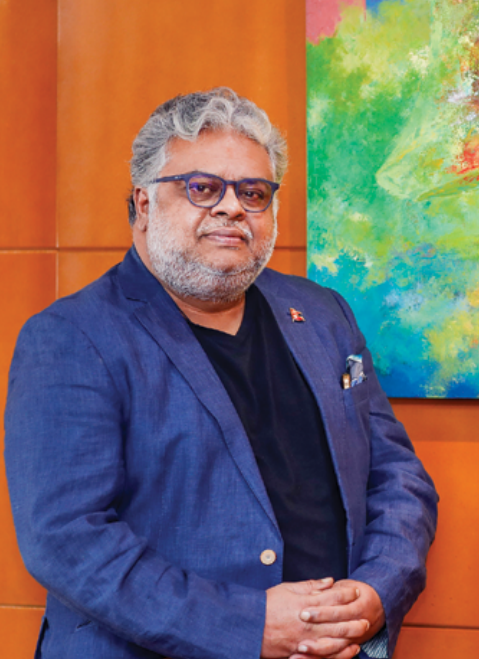
Rajendra Khetan is a renowned businessman upholding the legacy of what was once a business empire, the ‘Khetan Group’. A separation among siblings meant the group no longer exists in its unified form today. The business verticals once housed under the group are now operated separately, while some have been sold.
Khetan currently chairs Laxmi Sunrise Bank. From the group’s diverse commercial legacy, Khetan is now primarily focused on the financial sector, spanning banking, fintech, insurance, and alternative financing tools such as PE/VC and investment companies, among others. The HRM Nepal spoke with Khetan about the business legacy of the Khetan Group, the landscape of the financial sector and capital market, and his new investment priorities. Excerpts of the interview follow.
You have steered the Khetan Group from manufacturing to the service sector and concentrated your focus on the financial domain. What is the rationale behind this pivot?
Nepal’s modern economy carries a history of just five to six decades. In the course of economic evolution, there are naturally trials and tests, during which politics may undermine the importance of industry and the economy as a whole. Industries play a crucial role in driving production, generating employment, and contributing to government revenue. However, industrialists and businesspersons were often viewed merely as profit mongers, a line of thinking rooted at the policymaking level from the very beginning that has remained unchanged.
While struggling with these challenges as industrialists, we reached the conclusion that we should confine ourselves to a specific thematic focus rather than managing diverse business verticals, which required us to deal with multiple agencies and drained our energy, effort, and time. Thus, I have focused on the financial sector over the last 15 to 20 years.
The encouraging outcome of concentrating on a single sector is the development of an ecosystem comprising banking, the capital market, microfinance, insurance, fintech, and alternative financing tools such as private equity and venture capital (PE/VC), along with investment companies, among others. Recently, we acquired a 14% stake in Fonepay, bringing fintech into our ecosystem as well. Through this connection, we have engaged with evolving trends and technological innovations in the fintech domain. Our motive to continually reinvest dividends and profits back into the financial ecosystem has created a sustainable cycle of reinvestment.
There has been an ongoing debate regarding the government offloading its shares in the Nepal Stock Exchange. Are you considering increasing your stake if the government proceeds with this divestment?
Currently, Laxmi Sunrise Bank owns a 5% stake in NEPSE. Apart from the government, Laxmi Sunrise Bank and Prabhu Bank are the key institutional owners of the country’s sole trading bourse. If the government offloads its shares, we are keen to acquire a larger stake in NEPSE.
Apart from the capital market and fintech, we have sizable investments in investment companies and PE/VC funds. We are also mulling over issuing initial public offerings (IPOs) for two of our investment companies shortly. These investment companies represent the collective capital of our partners, who are already active in the financial sector, across banking, insurance, and related fields.
Fintech has emerged as a dominant subsector within the financial domain. Are you planning to focus more heavily on fintech in the coming days?
Currently, we are equally focused on three key domains under the financial sector. The first involves crediting remittance recipients’ accounts in real time as soon as funds are sent from the host country. Simultaneously, the system prompts recipients to consider their expenditure plans, guiding them toward productive avenues (shares of different companies, bonds, debentures, and other productive investment instruments) rather than unproductive ones (real estate, vehicles, household consumption, etc.).
Another system we are designing is peer-to-peer (P2P) lending of up to Rs. 1 million, to extend instant credit to the grassroots level. Under this P2P model, door-to-door services to facilitate credit demand for individuals across designated areas could be launched in the near future. We will not establish physical offices for P2P lending. Instead, our staff will deliver door-to-door mobile services directly to households. Based on income details and PAN numbers, software will assess the creditworthiness of grassroots borrowers. Furthermore, borrowers will be able to deposit funds and earn interest on their deposits. This initiative will not only deepen and diversify credit access but also make a tangible impact at the grassroots level and transform our economy.
Such services should ideally be delivered by payment service providers (PSPs), with banks facilitating them from the backend. We understand that Nepal Rastra Bank is currently developing a policy framework for P2P lending, under which banks will also be permitted to operate through this lending instrument.
You decided to exit Gorkha Brewery, one of your most lucrative businesses, which surprised many. Why did you opt to exit instead of purchasing the stakes of other family members?
The decision to sell Gorkha Brewery was not mine alone. Since the company was inherited as a family-owned business, I held a certain stake in it. In fact, exiting was not my original intention. However, when one of my siblings decided to sell, I was also compelled to sell my shares. Carlsberg Group required a local partner, and I was considering remaining as their local partner. Unfortunately, that could not materialise due to various circumstances beyond my control. They ultimately selected Raj Bahadur Shah of the Jawalakhel Group as their new local partner, and our family completed a total exit from the company.
The legacy of the Khetan Group, which was expanded by Mohan Gopal Khetan into diverse sectors, has now been consolidated into just a few areas. Given that your father once dreamed of building an empire, why didn’t you choose to follow in his footsteps?
As I mentioned earlier, managing more diverse businesses requires significantly more effort, energy, and time to handle issues with multiple agencies and stakeholders. When my father brought me in to take over the businesses, well-wishers advised me that we might not be able to run all of them smoothly and could face severe adversity. Consequently, we decided to concentrate on a specific theme and build an ecosystem around it to successfully take the businesses to new heights. Initially, it was difficult to convince my father, but he eventually accepted the strategic changes we initiated. Against this backdrop, it took me 30 years to reach today’s position in business.
We will soon return to a high- growth path by unleashing our underlying potential.
As you mentioned, industrialists and businesspersons were often criticised by politicians, policymakers, and authorities, leading to a public image of them as mere profit mongers. In your understanding, why were state authorities so reluctant to facilitate the private sector, new investments, production, and job creation in the past?
That mindset has not fully changed, but let us look at the latest example following the devastating floods. The regulatory body for the insurance sector, the Nepal Insurance Authority, has urged companies to release advance payments to victims against claims to be filed later. Fifteen to 20 years ago, facilitating a victim with advance payments for urgent crisis management would have been treated as a serious offence. It was exceptionally difficult for businesspersons if they lacked direct links with authorities and regulators. Arbitrary actions against naive businesspersons were often taken by authorities to serve specific interest groups. It was a pity, and an almost anti-private sector environment of extortion prevailed until a decade or two ago. Many peers share similar stories of bitter experiences.
Today, government authorities and regulators are far more system- and process-driven. Rules are transparent, making it much easier for industry players to operate within a prudent regulatory regime. The legal loopholes, procedural gaps, and connection-based treatments of the past no longer exist, at least within Nepal’s financial sector. Government institutions are moving forward seriously toward ethics-based corporatisation. For instance, no one today assumes that the Nepal Rastra Bank, Nepal Insurance Authority, Securities Board of Nepal, or Nepal Stock Exchange can exercise personal discretion beyond established systems and processes.
There has always been a blame game between government agencies and influential businesspersons regarding the creation of loopholes in the system to bend rules in their own interest. Have influential businesspersons also been the other side of the same coin, bending rules for their benefit or creating hassles for their business rivals?
Loopholes still exist to some extent, as the recent case involving Himalayan Reinsurance exposed. A scam involving Rs. 2.75 billion is a massive amount, and regulatory bodies failed to take prompt, appropriate steps to curb such ill practices. SEBON should have audited the company, given that it is a public entity that raised substantial capital from the public through an IPO. The Nepal Insurance Authority’s inability to supervise the situation effectively, alongside the reluctance of internal auditors to report to regulatory bodies like ICAN (Institute of Chartered Accountants of Nepal), has raised serious eyebrows. Regulatory bodies must engage in serious introspection over this. Human error and any deliberate intent to commit such scams must be thoroughly investigated and penalised accordingly. Only prudent, strict regulation and supervision can prevent such incidents and uphold the credibility of the entire financial sector.
On the other hand, institutions themselves must be ethical, prudent, self-regulated, and professionally managed. Discrepancies cannot remain hidden forever. If left unchecked, they will eventually cause the institution to collapse.
Does this mean the private sector, businesspersons, and state authorities must collaborate to build a transparent system for ethics-based corporatisation, drawing on lessons from the financial sector?
That is true. Financial sector companies can virtually operate on autopilot if five key positions, the CEO, Deputy CEO, Chief Financial Officer, Head of Internal Audit, and Company Secretary, are led by genuine, capable professionals. I share these insights based on my own experience.
Furthermore, robust external oversight exists through key regulatory bodies, the Nepal Rastra Bank, SEBON, NEPSE, CDSC, and the Ministry of Finance. Internally, statutory audits, internal audit departments, compliance teams, Board Committees, and CFOs continuously conduct rigorous oversight. Therefore, strong risk mitigation mechanisms are already embedded in the framework. Establishing a similar regulatory and supervisory environment across other industries could greatly support the growth of the broader economy.
At the moment, the country’s business environment is undergoing a difficult downward cycle. What would you suggest to policymakers and professionals to navigate these ongoing challenges?
Such downward cycles occur in the economy every 20, 30, or 40 years. We do not need to raise a hue and cry. Instead, we must explore new avenues, adapt to changing business dynamics, and improve the investment environment. People across the world love Nepal and the Nepali people, and we possess tremendous potential in tourism and high- value agricultural products. Furthermore, our local talent is actively exploring opportunities in ICT and connecting globally.
While banks and financial institutions (BFIs) have felt distressed by rising deposit costs alongside declining private sector lending, this situation will not last indefinitely. We will soon return to a high- growth path by unleashing our underlying potential. Harnessing the opportunities in agriculture, tourism, mining, ICT, and services requires adequate industrial financing. BFIs should not become desperate over reduced profits and dividends for a year or two. Their profitability will naturally recover once this economic downturn passes.
BFIs are stronger in terms of capital today, and business growth demands even higher capitalisation. How can BFIs explore new avenues in more productive sectors for sustainable growth?
At Laxmi Sunrise Bank, we are matching regulatory compliance very closely regarding our credit-to-deposit ratio, leaving minimal excess liquidity in our vaults. Last year, we distributed a 10% bonus share dividend. This year, the total distribution is expected to be around 6%, while next year’s target is approximately 20%, including debentures.
Our underlying strategy is to support business expansion by capitalising the bank rather than making heavy cash dividend payouts. Retaining funds within the institution strengthens our capital base and reduces our long-term reliance on preference shares and debentures, thereby helping us minimise associated financing costs.
How much have the investment companies under your leadership invested in the market so far?
To date, total investments from entities such as our insurance firms, investment companies, PE/ VC funds, shares, and debentures (excluding direct bank lending) hover around Rs. 30 billion. Each entity invests a defined percentage in available projects and opportunities while keeping risk aversion at the core of its investment strategy.
Our underlying strategy is to support business expansion by capitalising the bank rather than making heavy cash dividend payouts.
How much funding have you personally provided to PE/VC funds?
I personally have provided Rs. 500 million across three PE/VC funds, while Laxmi Sunrise Bank has contributed around Rs. 1.25 billion.
The financial sector has become highly sophisticated, yet frequent economic shocks pose significant risks, especially given heavy concentration in sectors like hydropower that are vulnerable to climate-induced disasters. How should this be managed?
Regulatory authorities need to reconsider the role of BFIs in business financing. At present, Nepal Rastra Bank (NRB) largely confines BFIs to debt financing and restricts them from taking equity stakes in commercial enterprises. While private equity and venture capital (PE/VC) firms can invest directly in equity, BFIs have also been seeking permission to make equity investments. NRB, however, has raised concerns about potential conflicts of interest and risk concentration, arguing that if a bank holds an equity stake in a company to which it has extended a loan, a conflict of interest could arise. Under current rules, BFIs can provide funds to PE/VC firms, but they cannot directly acquire equity in companies to which they lend.
This restriction increases monitoring costs. BFIs must conduct separate audits, inspections, and due diligence for both the borrowing companies and the PE/VC funds through which capital is funnelled. Allowing banks to participate in equity financing, subject to appropriate safeguards against conflicts of interest, would offer greater flexibility in business financing while reducing administrative overhead. In my view, BFIs should be permitted to invest up to a specified threshold across various instruments, including public shares, mutual funds, private equity, and corporate preference shares.
More PE/VC players are entering the market. Do you think this will prove instrumental in fostering entrepreneurship and scaling up businesses?
Private equity and venture capital (PE/VC) must be actively promoted as alternative financing instruments. Under existing rules, an individual or company is required to invest up to Rs. 5 million in PE/VC funds. These instruments occupy a middle space between wholesale mutual funds and direct equity investment in terms of structure and scale. Therefore, encouraging more PE/VC firms to enter the market will help diversify financing options.
However, policymakers must look beyond merely increasing the number of PE/VC firms and focus on developing a comprehensive capital market. A well- developed capital market should establish clear rules for larger, multipurpose investment companies, those with capital bases of Rs. 500 million, Rs. 1 billion, or more, allowing them to invest across diverse sectors. This would eliminate the need to incorporate separate entities for every specific investment purpose, thereby lowering administrative and compliance costs while making capital mobilisation far more efficient.
A company can no longer operate across multiple capital market segments simply by meeting the capital requirements of a single business activity. My vision is to expand our operations across various segments, including capital market services, IPO management, share registration, portfolio management services (PMS), specialised investment funds (SIFs), private equity, and mutual funds. Currently, Laxmi Sunrise Capital engages in most of these activities, with the exception of share brokerage, private equity portfolio management, and standalone investment company operations.
If an institution boasts a decade-long track record and a capital base of Rs. 1 billion, it should have the opportunity to raise capital through an IPO. While we are preparing to issue our own IPO, raising market capital requires greater operational flexibility to deploy those funds across diverse investment avenues. The regulatory framework should provide a broader scope of permissible investment instruments, enabling capital market institutions to diversify their operations and put mobilised capital to its most productive use.
The government has introduced the Alternative Financing Act to bridge financing gaps in large- scale infrastructure. How do you observe this initiative?
We appreciate the government’s initiative to bridge financing gaps while lowering the overall cost of funds. However, we already have sufficient domestic funds within the country that simply need to be mobilised effectively.
For instance, India has not permitted flight connectivity to Indian cities from Pokhara Regional International Airport due to Chinese loans used in its construction. Had we raised funds through project- specific bonds, local individuals and companies could have purchased them based on expected project returns. More infrastructure projects can be developed by issuing project- specific bonds. Therefore, we must establish large-scale companies to mobilise capital from the capital market, investment companies, and endowment funds. By bringing life insurance companies, BFIs, and assets together, we can design structured financial products that provide space to leverage resources, while our consulting expertise helps ensure that these investments remain secure.
There are substantial financial resources pooled in life insurance companies, the Employees Provident Fund, Citizen Investment Trust, and Social Security Fund, among others. How can the country utilise these resources for national development?
Nepal has more than 40 institutions and companies with assets of Rs. 100 billion or more. These include the Nepal Electricity Authority, Nepal Telecom, Social Security Fund (SSF), Citizen Investment Trust (CIT), Employees Provident Fund (EPF), all commercial banks, four to five insurance companies, and several multinational corporations. Considering the financial strength of these institutions, I believe Nepal has the potential to mobilise around Rs. 10 trillion in domestic capital.
Mobilising domestic capital offers multiple benefits. It not only supports productive investment and economic growth but also eliminates the foreign exchange risks associated with external financing. Furthermore, if investors are assured a standard rate of return, any earnings above that benchmark can be reinvested to generate additional capital and sustain long-term investment.
PE/VC funds offer a similar model in which investors receive returns following the first exit based on the agreed return structure defined during their initial investment. Decisions on whether to reinvest proceeds through recapitalisation or distribute additional profits are made by unit holders. A comparable framework could be adopted for domestic resource mobilisation, allowing institutional investors to earn an agreed return while retaining the flexibility to reinvest surplus profits and generate further capital.
How would you assess the development of our capital market?
Nepal’s capital market is still in a developing phase, but it has made considerable progress over the years. In FY 2011/12, the NEPSE index stood at around 1,200 points. Despite prolonged bearish cycles in recent years, it has maintained a benchmark level of around
Retaining and reinvesting those profits enables the company to expand shareholder equity and fortify its financial foundation.
2,500 points, indicating solid long-term market growth. However, speculative trading, including short- term profit-taking and investors’ expectations of doubling their investments overnight, has contributed to market volatility and weakened investor confidence. The capital market needs to move beyond short-term speculation toward more informed, disciplined, and long-term investment practices to support sustainable growth. For instance, if an investor holds 100 scrips, they can plan to sell 20 scrips in a given month, another 20 in six months, 40 after a year or a year-and-a-half, and the remaining 20 after two or three years. Staggering sales in this manner minimises selling pressure, helping the market steadily appreciate.
How can the regulatory bodies of the financial sector work in coherence for the development of the capital market?
A few months ago, I met with the finance minister and proposed establishing a coordinating board or mechanism within the Ministry of Finance to facilitate seamless coordination among financial sector regulatory bodies, including Nepal Rastra Bank, Securities Board of Nepal, Nepal Stock Exchange, CDS and Clearing Limited, and Nepal Insurance Authority.
Under the proposed arrangement, applicants would submit their proposals to a single coordinating agency, which would obtain the necessary clearances or no-objection opinions from the relevant regulatory bodies. Once those clearances were secured, the application would be forwarded to the primary regulator for the final decision. For instance, if an application fell under SEBON’s jurisdiction, it would be forwarded to SEBON after the coordinating agency gathered input from the other regulators. This integrated mechanism would provide applicants with a single point of contact, eliminating the need to approach each regulatory body separately. The coordinating agency would also communicate whether an application had been accepted for further processing or rejected, providing valid reasons in the latter case. Eligible applications would proceed through the relevant approval process, ensuring clear visibility into their status.
Such a system would reduce procedural complexities, improve coordination among regulators, shorten approval timelines, and save applicants considerable time and effort. More importantly, it would make the regulatory approval process more predictable, transparent, and accessible through a single-window system.
Additionally, an issue exists regarding dual ISIN codes for companies regulated by Nepal Rastra Bank and Nepal Insurance Authority, whereas other companies do not face this hassle. We have also been advocating for opening up promoter share trading, provided the promoter meets fit-and-proper criteria (clean record regarding blacklisting, no conflicts of interest, valid registrations) and the source of funds is verified. This would prevent capital from remaining locked in for extended periods and release liquidity for fresh investment avenues.
Finally, are you considering investing in new sectors outside the financial domain, given your strong focus on finance at present?
At present, I am not considering expanding beyond the financial sector in terms of core operations. However, in my personal capacity, I actively invest in IPOs and pre-IPOs across sectors such as hydropower, solar energy, education, and hospitality, including through private equity and venture capital (PE/VC) funds and investment companies.
We are also moving toward collaborative and partnership-based investment models. For instance, if our partners and investment companies decide to deploy Rs. 100 million in equities, we may distribute that capital across 10 different companies, investing Rs. 10 million in each. This enables us to diversify our portfolio and mitigate the risk of overexposure to any single company or sector. Although such investments are outside our core operating business, we view them as strategic opportunities to participate in broader economic sectors through partnerships.
My primary objective remains to reinvest dividends and profits to strengthen our capital base and maximise shareholder wealth. When a company distributes its earnings as cash dividends, funds leave the business, reducing the internal resources available for future expansion. Conversely, retaining and reinvesting those profits enables the company to expand shareholder equity and fortify its financial foundation. Ultimately, a company’s book value should grow well beyond its paid-up capital, reflecting the true wealth it has built over time. We are pursuing this exact strategic approach at Laxmi Sunrise Bank as well.