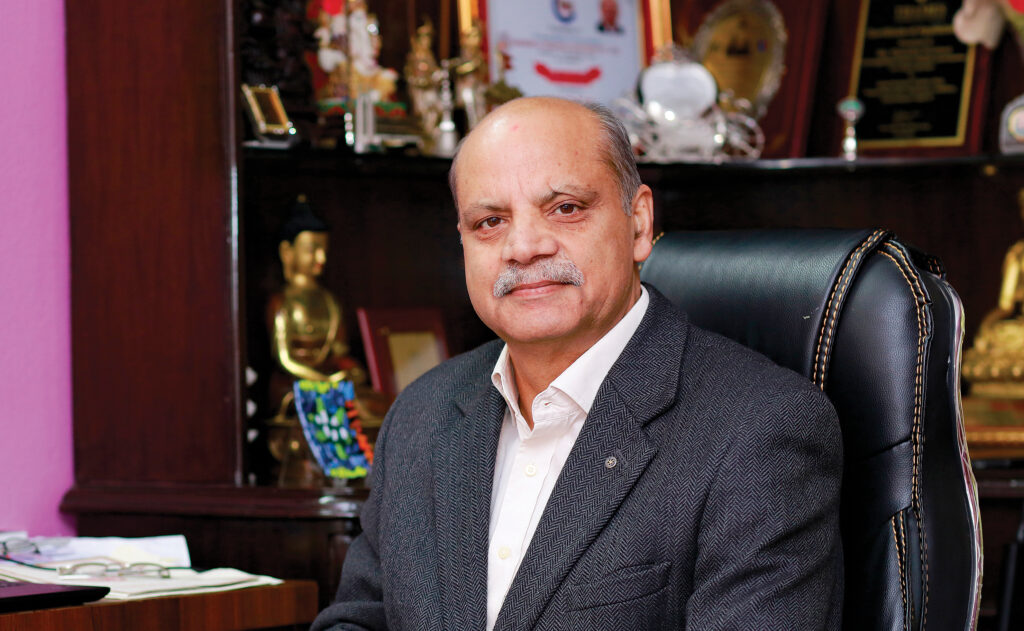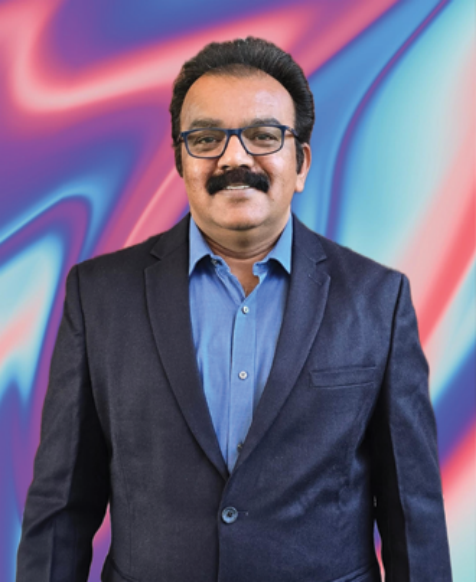
Yateen Gharat is an IAF Certified™ Professional Facilitator – Master (CPF-M) specialising in leadership and organisational development. He collaborates with organisations and professionals to enhance leadership capabilities, facilitation skills, and team effectiveness. The HRM Nepal spoke with him regarding the role of Training of Trainers (ToT) programmes in advancing leadership competencies, cultivating facilitation expertise, and driving a culture of continuous learning across organisations. Excerpts follow.
What distinguishes an effective facilitator from a conventional trainer, and why is this distinction important for leadership development?
A conventional trainer operates primarily as a subject expert transmitting content, directing the room from the front. In contrast, an effective facilitator acts as a catalyst and process architect, drawing wisdom out of the participants rather than pushing information in. In leadership development, leaders rarely need more theoretical slides; they need reflective inquiry, self-awareness, and peer accountability. Facilitation shifts the dynamic from passive compliance to active ownership. By creating a space where participants challenge assumptions, examine real dilemmas, and co-create solutions, facilitation models the exact collaborative, empowering behaviours that modern leaders must demonstrate with their own cross- functional teams in complex environments.
How can trainers apply adult-learning principles to make learning sessions more interactive, practical and relevant to participants’ real-world challenges?
Adults learn best through experience, relevance, and autonomy. To honour these principles, replace lecture-heavy modules with problem-centred, experiential simulations. Begin by surfacing the immediate, high-stakes dilemmas participants face in their daily roles, anchoring the agenda directly in their operating reality. Incorporate Kolb’s experiential learning cycle: run a brief immersive exercise, facilitate structured reflection, extract core behavioural principles, and immediately test them through applied peer role-plays or case work. When learners guide their own discovery and use their rich experience as raw material for inquiry, retention multiplies. Learning transforms from an abstract academic exercise into an immediate, practical toolkit for the workplace.
How can facilitators draw out diverse perspectives and unlock a group’s collective intelligence, especially when participants have different levels of experience or authority?
Hierarchical dynamics often silence emerging voices. To level the playing field, facilitators must establish strong psychological safety and democratise the conversation structure. Shift away from open- floor discussions, where dominant voices rule, toward structured asynchronous processes: silent visual brainstorming, 1-2-4-All conversational sequences, or small breakout dyads where status melts away. Establish clear ground rules that separate the person from the idea, and intentionally invite junior participants to speak first without defensive pushback. A skilled facilitator remains neutral, validating varied insights, visualising patterns on charts, and holding the tension until collective synthesis emerges from the entire ecosystem, not just the senior leadership.
How can managers and team leaders use facilitation techniques to build trust, encourage participation and improve team decision-making?
When managers trade top-down directive habits for facilitative leadership, team culture shifts fundamentally. Leaders can build trust by showing genuine vulnerability and actively practicing deep, non-judgemental listening during meetings. Frame discussions around powerful, open-ended questions rather than pre-baked conclusions, signalling that team input genuinely steers outcomes. In decision-making, separate divergence from convergence: first diverge openly to gather every creative possibility without evaluation, and then converge transparently using clear decision matrices or consensus criteria. When team members recognise that their viewpoints systematically shape key decisions, buy-in turns into accountable ownership, psychological safety flourishes, and collaborative problem-solving becomes second nature across the organisation.
What are the essential elements of a well- designed training session that moves beyond knowledge transfer to measurable learning and behavioural change?
Sustainable behavioural change requires intentional instructional architecture. First, anchor design in sharp, behaviourally observable outcomes rather than abstract topics. Second, balance cognitive input with rigorous experiential practice; at least 60% of session time should involve live application, deliberate practice, and targeted behavioural feedback. Third, build in multi-layered debriefs that help participants confront emotional habits, internal beliefs, and real operational bottlenecks. Finally, integrate robust transfer mechanisms: peer coaching commitments, micro-habit tracking, baseline diagnostic rubrics, and deliberate manager check-ins post-workshop. Moving beyond passive knowledge delivery means structuring a developmental crucible where participants unlearn outdated behaviours, experiment safely, and commit to verifiable action.
What core competencies should participants expect to develop through the ToT for Leadership in Facilitation Expertise programme in Kathmandu, and how can they apply these skills in their organisations?
Participants in Kathmandu will master process architecture, psychological group dynamics, and impactful facilitation intervention. Core competencies include designing experiential learning journeys, reading non-verbal group energy, mastering high- leverage questioning, managing resistance, and guiding complex teams to actionable consensus. Participants will learn how to design dynamic visual charts, facilitate large-group discussions, and debrief experiential activities with behavioural precision. Back in their organisations, alumni can immediately replace dry operational meetings with engaging strategy labs, lead internal organisational change workshops, mediate cross-departmental silos, and mentor emerging leaders. They evolve from conventional instructors into catalytic internal consultants who elevate workplace problem- solving, engagement, and strategic clarity.
What practical steps can trainers and organisations take to ensure that the skills acquired through a ToT programme translate into lasting improvements in leadership, team performance and workplace learning culture?
Translating learning into sustained organisational impact requires deliberate structural scaffolding beyond the three-day immersion. First, participants must establish a 90-day application roadmap with measurable micro-experiments executed directly within their teams. Second, organisations should pair graduates into peer-coaching dyads for bi-weekly debriefs and mutual observation during live meetings. Third, senior leaders must actively support learning by attending facilitative sessions and recognising leaders who create collaborative spaces. Finally, establish an internal community of practice where facilitators convene monthly to share field challenges, refine session designs, and evaluate team performance metrics. Embedding facilitation as an everyday organisational capability ensures long-term cultural transformation.