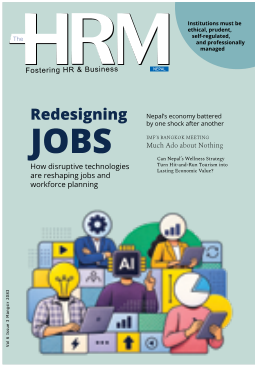
THE NATURE OF WORK IS CHANGING globally, driven by disruptive technologies, the expansion of gig work, and the emergence of digital platforms. These developments are reshaping the economy, employment relationships, and the ways organisations deploy their workforces. Digital platforms have opened new avenues for self-employment and entrepreneurship, while businesses are actively reassessing which jobs they need, which tasks can be automated, and what skills they will require in the coming years.
Routine clerical and administrative tasks have already undergone substantial automation. As AI agents become more capable, they are likely to automate additional tasks, reduce reliance on certain forms of human labour, and transform existing jobs. At the same time, technology is empowering individuals to work independently, offer specialised services, and establish their own enterprises. However, the benefits of this transition will depend heavily on access to technology, digital literacy, and the capacity to adopt new tools.
These shifts will create both opportunities and disruptions for employers and employees alike. Large companies with established talent pipelines, robust financial resources, and the ability to attract skilled professionals may be better positioned to manage workforce transitions. Conversely, small and medium-sized enterprises (SMEs), which often operate with lean teams and limited resources, could face greater difficulties if they lose key employees or struggle to recruit talent with emerging skill sets.
For Nepal, where unemployment and underemployment remain significant concerns, the challenge is not merely preserving existing jobs, but redesigning work and creating new employment opportunities. Organisations must rethink traditional job roles, integrate technology where it adds true value, and maximise overall productivity without overlooking the human contribution. The extent to which technology can transform individual tasks and full job functions must be carefully considered when designing future workforce structures.
Traditional office arrangements and rigid organisational hierarchies may gradually give way to more flexible, collaborative, and skills-based frameworks. Functions such as strategy, creativity, research and development, innovation, and cross-functional coordination will become increasingly vital, supported by technology- enabled teams and modern work practices.
At this critical juncture, human resource management professionals have a strategic role to play in redesigning jobs. They must identify tasks suitable for automation, determine where human judgement and creativity remain essential, reskill existing employees, and develop hybrid roles that combine technological capabilities with human strengths. The objective should not merely be reducing workforce costs, but enhancing productivity, cultivating meaningful work, and helping Nepali organisations remain competitive in a rapidly evolving global economy.
Happy Reading!
At this critical juncture, human resource management professionals have a strategic role to play in redesigning jobs.