A PARADIGM SHIFT IN MANAGEMENT EDUCATION IN NEPAL
M anagement education plays a critical role in developing the human resources required for the economic and social development of a country. In Nepal, management education has traditionally focused on theoretical knowledge, examinations, textbooks, and classroom- based instruction. While this approach has provided students with fundamental concepts of accounting, finance, marketing, economics, and business administration, the rapidly changing nature of the global economy has created a need for a different approach.
Today’s business environment is characterised by technological disruption, globalisation, entrepreneurship, changing consumer behaviour, environmental concerns, and increasing competition. Employers increasingly seek graduates who can apply knowledge, solve complex problems, communicate effectively, work in teams, use technology, and demonstrate creativity and leadership. As a result, Nepal’s management education is experiencing a gradual paradigm shift

from a predominantly theory-based system toward a practical, industry driven curriculum, technology-driven, skill- oriented, entrepreneurial, and globally focused model. One of the most important changes in management education is the movement from theoretical learning toward experiential and practical education. Traditional classroom teaching remains important for developing conceptual understanding, but knowledge becomes more valuable when students can apply it to real-world situations.
Internships, case studies, business simulations, field projects, industrial visits, and problem-based learning can help students understand how management concepts operate in actual organisations. For example, instead of only studying marketing theories from textbooks, students can conduct market research, develop marketing plans, analyse consumer behaviour, or work on digital marketing campaigns. Stronger collaboration between universities and industries is also essential. Businesses can provide internships, guest lectures, mentorship, live projects, and opportunities for students to understand workplace realities. Such cooperation can reduce the gap between academic knowledge and industry requirements while making graduates more employable.
Technology is transforming almost every aspect of business, and management education must respond accordingly. Digital platforms, artificial intelligence, data analytics, cloud computing, business intelligence tools, and specialised business software are becoming increasingly relevant to modern managers. Management students should therefore develop digital literacy alongside traditional management knowledge. They need to understand how data can support decision-making, how artificial intelligence can improve business processes, and how digital platforms can transform marketing, finance, human resource management, and operations. The use of online learning platforms and
blended learning can also make education more flexible and accessible. However, technology should not simply mean transferring traditional lectures to digital platforms. It should encourage interactive learning, collaboration, research, simulations, data-based analysis, and problem-solving.
Another major dimension of the paradigm shift is the growing emphasis on entrepreneurship. Traditionally, many students viewed management education primarily as a pathway to employment. In a changing economy, however, management graduates can also become job creators. Universities can encourage entrepreneurial thinking by establishing business incubation centres, start-up programmes, innovation laboratories, entrepreneurship clubs, mentorship schemes, and business-plan competitions and especially an organisation like NYEF (Nepalese Young Entrepreneur’s Forum) has given national level platform for the growth of entrepreneurship to Nepali citizens. Students should be encouraged to identify social and economic problems and develop innovative solutions that can become sustainable enterprises.
Entrepreneurship education should not be limited to teaching students how to establish companies. It should develop creativity, risk assessment, opportunity recognition, financial awareness, resilience, and the ability to adapt to uncertainty. These qualities are valuable not only for entrepreneurs but also for employees and managers working within established organisations. Globalisation has changed the nature of business competition. Even businesses operating within Nepal are increasingly influenced by international markets, technology, foreign investment, global supply chains, and changing consumer trends.
Management education therefore needs to provide students with a global perspective. Curricula should incorporate international business,
cross-cultural management, global marketing, international finance, sustainable development, and the effects of globalisation. Exposure to international academic practices can further strengthen management education. Universities can develop international partnerships, exchange programmes, joint research initiatives, visiting faculty programmes, and opportunities for students to interact with international institutions and businesses. At the same time, globalisation should not mean abandoning Nepali realities. Students should be able to understand international management practices while applying them appropriately to Nepal’s economic, social, cultural, and institutional context.
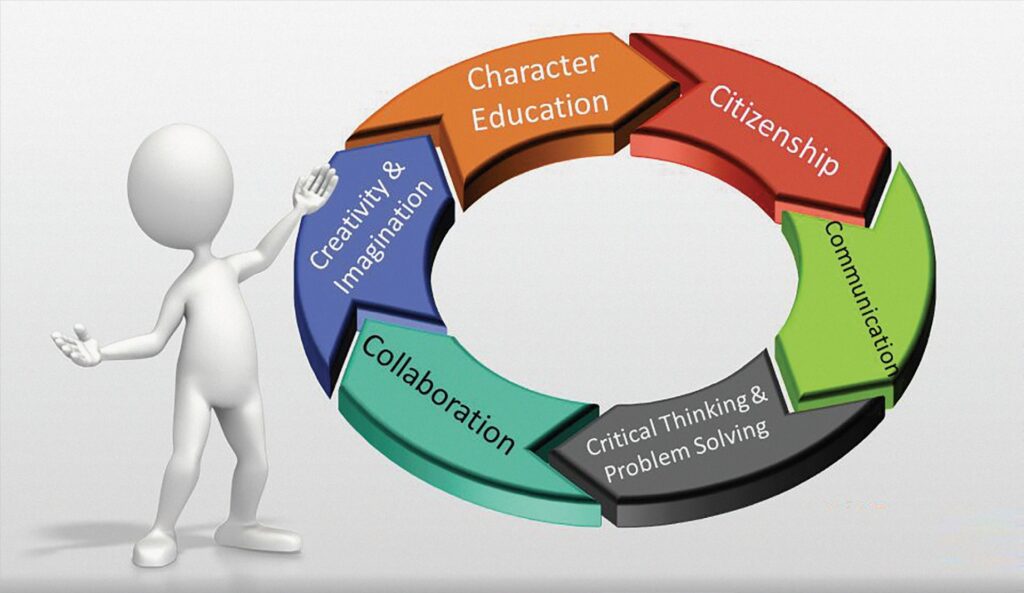
Modern organisations require more than technically competent managers. They need leaders who can communicate clearly, work collaboratively, think critically, solve problems, manage conflict, make ethical decisions, and motivate others. Consequently, management education should place greater emphasis on soft skills and leadership development. Communication, teamwork, negotiation, emotional intelligence, presentation skills, creativity, critical thinking, and decision-making should be integrated into classroom activities and assessment. Students can develop these skills through group projects, presentations, debates, leadership exercises, simulations, community activities, and practical assignments. The objective should be to produce responsible and transformational leaders who can manage organisations while also contributing positively to society.
Business education can no longer focus exclusively on profit and financial performance. Environmental degradation, climate change, inequality, ethical concerns, and social responsibility have become important management issues. Nepal’s management education should therefore integrate sustainability,

corporate social responsibility, business ethics, environmental management, and responsible business practices into its curriculum. Future managers need to understand that successful businesses must consider their impact on employees, communities, consumers, the environment, and wider society. This is particularly important for Nepal because sectors such as tourism, agriculture, hydropower, manufacturing, and infrastructure depend heavily on natural resources and local communities. Sustainable management practices can help businesses achieve long- term economic success while protecting social and environmental interests. Educational institutes like Silver Mountain School of Hotel Management, KUSOM, KCM, Ace Institute of Management have proven to be game changers of management education in Nepal in the last few decades.
Despite the need for transformation, several challenges may slow the development of management education in Nepal. Some institutions continue to use outdated curricula that do not adequately reflect current market requirements. The rapid development of artificial intelligence, digital business, fintech, data analytics, and other emerging fields requires continuous curriculum revision. Another major challenge is limited industry-academia
collaboration. When universities and businesses operate independently, students may graduate with strong theoretical knowledge but insufficient practical experience. Technological infrastructure is another concern. Effective digital education requires reliable internet access, modern computer laboratories, appropriate software, digital learning platforms, and trained faculty. Furthermore, there may be a shortage of qualified teachers in rapidly emerging areas such as artificial intelligence, data analytics, digital transformation, and entrepreneurship. Addressing these challenges requires long- term institutional commitment rather than temporary reforms.
Several measures can accelerate the paradigm shift in Nepali management education.
First, universities should regularly review and update their curricula based on changing industry and market requirements. Curriculum development should involve employers, professional organisations, academics, entrepreneurs, alumni, and other stakeholders.
Second, universities should strengthen partnerships with industries through internships, apprenticeships, research projects, guest lectures, consultancy, and live business projects.
Third, greater investment should be made in digital infrastructure and educational technology. Students and faculty should have access to modern software, online databases, digital learning platforms, and technology-enabled classrooms.
Fourth, faculty development should become a priority. Teachers need continuous training in emerging technologies, innovative teaching methods, research methodologies, and contemporary management practices.
Finally, institutions should promote entrepreneurship, innovation, research, critical thinking, and experiential learning. Assessment systems should also move beyond memorisation and place greater emphasis on application, analysis, creativity, and problem-solving.
Management Education in Nepal is gradually moving from a traditional, theory-based approach toward a more practical, technology-driven, skill- oriented, industry driven, entrepreneurial, sustainable, and globally competitive system. This paradigm shift is not merely an educational reform; it is a response to fundamental changes taking place in the economy and society. The future of Nepali management education depends on its ability to connect academic knowledge with practical experience, technological innovation, entrepreneurship, leadership, sustainability, and global perspectives. Universities and colleges must work closely with industries and communities to ensure that graduates possess the knowledge and competencies required in the modern workplace.
If these reforms are implemented effectively, management education can produce not only competent employees but also innovative entrepreneurs, responsible managers, and transformational leaders. Such graduates can play an important role in increasing productivity, creating employment, promoting innovation, and contributing to Nepal’s long-term economic and social development.
(Thapa is Executive Chairman at Silver Mountain School of Hotel Management.)