

 Human Resource Management (HRM) practices in Nepal originated within multinational corporations and banks, eventually gaining widespread adoption across the domestic private sector. Over time, these practices have been effectively leveraged to enhance both individual and organisational performance within private enterprises. As Nepal’s healthcare industry continues its expansion, HRM has increasingly been integrated into the framework of corporate governance.
However, significant gaps in effective HRM persist within healthcare institutions, particularly in public facilities, despite substantial state investment aimed at ensuring quality care for citizens. Effective HRM is no longer optional; it is a fundamental necessity for the seamless functioning of these institutions. Nevertheless, the traditional view of administrative roles – focusing strictly on recruitment and payroll – is still frequently mistaken for HRM in many organisations today. This limited understanding prevents such entities from optimising their performance through the efficient application of modern HRM practices.
Healthcare as an industry
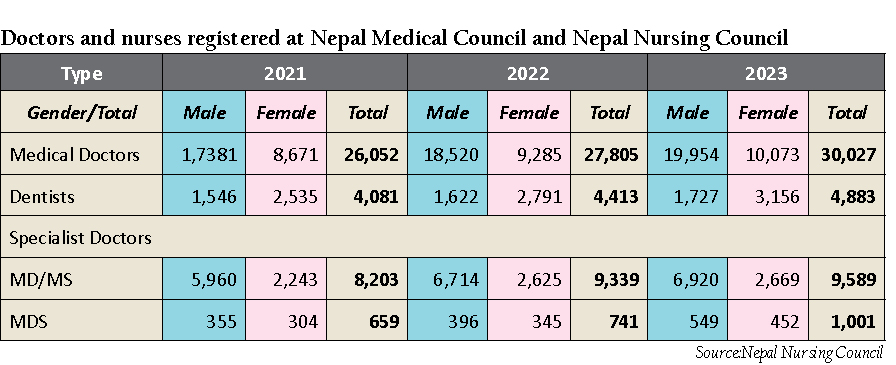 Nepal’s healthcare industry is a rapidly growing sector, expanding by 5.52% in the 2023/24 fiscal year and contributing nearly 2% to the country’s Gross Domestic Product (GDP). Recent years have seen a massive influx of private sector investment into this field.
Because healthcare affects every citizen, ensuring affordable and accessible services is a national priority, with policies oriented toward the fundamental rights enshrined in the constitution. While healthcare was initially a government-led domain, private investment has reshaped the delivery landscape and eased the overwhelming patient burden on public institutions. These facilities provide a full spectrum of care, from immunisations and outpatient visits to emergency and inpatient services. Private hospitals, in particular, have introduced advanced technologies and management systems to enhance efficiency, now serving a large segment of the population.
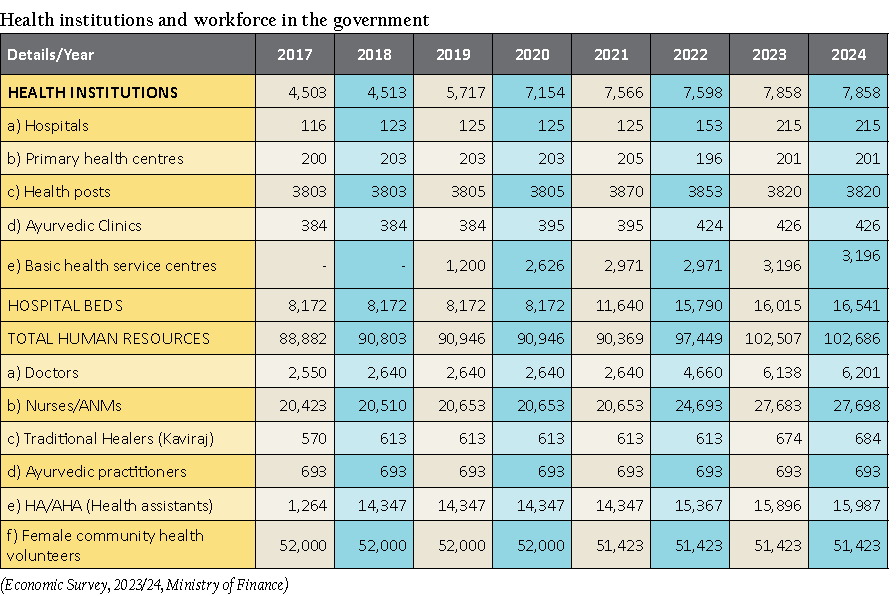
However, managing the healthcare workforce remains a significant challenge relative to the nation’s needs. Nepal currently has 1.2 doctors and 2.83 nurses per thousand people. While this meets the World Health Organisation’s minimum thresholds, these numbers remain grossly insufficient to provide quality healthcare to all citizens across the country.
Parallel to rising investments from both the public and private sectors, there has been a notable improvement in various industry indicators. National policies, alongside legal and institutional frameworks, remain crucial in shaping the human resource strategies of healthcare service providers.
Strategic HRM
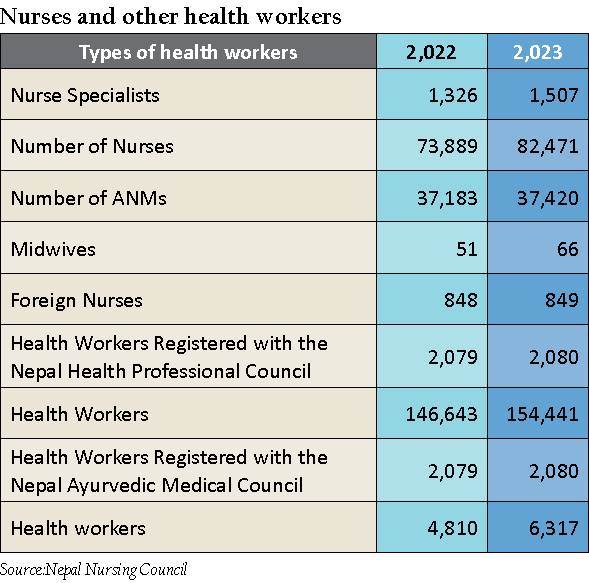 Strategic HRM ensures that necessary talent is available at the right time while optimising recruitment costs. It plays a key role in organisational planning regarding strategic recruitment, talent development, and performance management – encompassing planning, monitoring via HR audits, and feedback – as well as succession planning.
However, there remains a lack of practice in workforce planning, which requires surveying for surpluses, gaps, or supply-demand balances. Unless balanced, action is required; a surplus leads to disguised employment and high inefficiency risks, while a shortfall necessitates planning for talent acquisition. Recruitment success depends on both the number of hires and employee retention. Indeed, many organisations now view retention as the new recruitment, recognising that retaining top talent is more cost-effective and beneficial for growth than constant hiring.
Furthermore, retaining personnel, specifically doctors and nurse specialists, remains a herculean task and is crucial for decentralising advanced healthcare services. Highly acclaimed cardiac surgeon Dr. Bhagawan Koirala, Chairperson of KIOCH, notes that while decentralisation is critical, he encountered multiple challenges attempting to decentralise cardiac surgery. He ultimately succeeded in establishing a decentralised multispecialty pediatric hospital years after his team first envisioned it.
The retention challenge stems from a limited highly skilled workforce that is often reluctant to serve in remote areas. Consequently, the government mandated remote area service for those studying on government scholarships. Additionally, the government has decentralised the establishment of medical colleges to improve accessibility, as private hospitals are predominantly located in convenient urban centres like the Kathmandu Valley. Policymakers also encourage investors to open multispecialty hospitals in border towns, highlighting potential patient flow from India, citing the historically popular Lahan Eye Hospital, though this has not yet convinced investors at the desired level.
Ultimately, organisational job fit is the primary issue for specialists in remote hospitals, where core competencies like knowledge, skills, and abilities, remain a major concern for those deployed.
Succession planning
Succession planning is notably absent even within premier private hospitals, while the brain drain remains an alarming national trend. The high participation rate of Nepali doctors in the United States Medical Licensing Examination (USMLE) serves as a primary indicator of this talent retention crisis. Consequently, succession planning in hospitals must urgently address key medical roles, including medical directors. Furthermore, ensuring continuity in top management positions is an equally vital responsibility for Boards and Board Committees.
“Succession planning is often acknowledged as important, yet it remains difficult to implement in a deliberate and structured way. While it is a valuable topic of discussion, in practice it cannot rely on selectively nurturing a few ‘chosen’ individuals through biased or preferential approaches,” noted Pitambar Adhikari, Chief Operating Officer of the Tilganga Institute of Ophthalmology (TIO).
 “A more logical perspective is that leadership capability develops through exposure to diverse and challenging work environments. As employees navigate varied roles and responsibilities, they gain opportunities to build the insight and resilience required for leadership.”
He further stated that leadership is not merely a skill to be taught. It is a broader capability that involves viewing the organisation holistically and influencing the behaviours of subordinates and peers to align with organisational goals. In this context, he advised that the organisation’s role is to create enabling conditions by providing opportunities, guidance, and incremental support.
“Ultimately, it is the individuals ready to take on challenges and recognise and capitalise on these opportunities who will grow into effective leaders,” he emphasised.
Performance management
Performance management remains a significant issue within Nepali organisations, spanning from initial planning to consistent monitoring and the feedback loop. It is essential for rewarding high performers and establishing consequences for those underperforming. Effective performance management enables an organisation to achieve its intended goals while identifying employee strengths and gaps. Moreover, it highlights training and development needs and provides employees with opportunities to review their career plans.
Moreover, non-medical staff working outside core functions in health institutions frequently harbour grievances regarding pay and promotions, particularly concerning rewards and compensation. “Often, the CEO and COO are hired from the outside instead of being developed from in-house staff,” shared a high-level management employee requesting anonymity. “Typically, there are no such issues with medical staff because priority is always given to those in core functional roles.”
Changing landscapes
Most private hospitals maintain separate functions for their management and medical departments. While many have introduced human resource management practices and essential tools, such as HR management systems, strategic HRM is still sorely lacking. Large-capacity, multispecialty private institutions like the Tilganga Institute of Ophthalmology, Nepal Mediciti, Frontline Hospital, Alka Hospital, Grande International Hospital, KIOCH, B&B Hospital, Norvic International Hospital, and HAMS Hospital and Research Centre are redefining operational standards by introducing advanced management and technologies.
Ayushi Goyal, HR Manager at Norvic International Hospital, stated that the facility implements over a dozen HR functions. These include Strategic Workforce Planning, Recruitment and Selection, Onboarding and Off-boarding, HR Administration, Performance Management, Training and Development, and HRIS. Her list further extends to Employee Engagement and Retention, Compensation and Benefits, Employee Relations (including grievance and conflict resolution), Succession Planning, Diversity, Equity, and Inclusion (DEI), Employee Health and Safety, and Policy Compliance.
Furthermore, the country’s public hospitals are similarly equipped with capable medical and paramedical teams. However, these institutions could operate much more efficiently by adopting these best management practices.
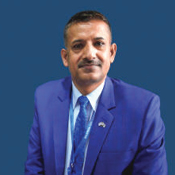 ‘TIO believes on performance pay’
Pitambar Adhikari | Chief Operating Officer, Tilganga Eye Hospital
Retention is not a highly alarming challenge at TIO; however, it remains closely linked to broader industry dynamics. Like as other organisations across the sector, the more skilled and valuable the human resource, the more difficult it is to retain them.
TIO, as a leading institution in quality healthcare, has been relatively successful in both attracting and retaining high-calibre professionals. This can largely be attributed to two factors: its strong institutional reputation, which draws individuals seeking meaningful and credible work environments, and its competitive perks along with long-term benefits.
Retention challenges are influenced by the competitive behaviour of peer organisations. With the rapid expansion of private healthcare providers, some institutions adopt short-term or ethically questionable practices to attract highly qualified personnel. While such strategies may deliver immediate recruitment gains, they often compromise long-term workforce stability.
In contrast, larger and more established institutions tend to provide greater job security, structured career progression, and opportunities for professional growth and self-fulfillment. Meanwhile, some smaller private entities may rely on shortcut approaches that prioritise quick wins over sustainable human resource practices. These industry trends are contributing to an increasingly volatile and unpredictable human resource landscape.
In TIO, effective reward practices are applied across both medical and non-medical clusters. We assess the individual performance every year. This has proven to be a strong motivational tool not only for top performers but also for those who are eager and enthusiastic to improve and contribute more.
There is no disparity in the compensation system between clusters. Additionally, staff are encouraged to engage in performance-based opportunities, allowing them to earn more by contributing more. This performance-linked approach reinforces accountability and drives overall organisational effectiveness.
 ‘HR at the core of our operation’
Acu. Sudarshan Basnet | Chairperson, Sushwastha Hospital
At Sushwastha hospital, we believe that good human resource management begins with treating our staff like family. We understand that when employees feel respected, supported, and valued, they work with greater dedication and provide better patient care.
Our HR and management practices focus on the following:
1. Family-Like Work Culture
We treat all our staff – medical, para-medical, and non-medical – as part of one family. We maintain empathy toward their personal and professional needs, listen to their concerns, and support them during difficult times.
2. Equal Growth Opportunities for All Staff
We believe every employee deserves the opportunity to grow. We provide:
– Training and skill development programmes
– Fair performance evaluations
– Opportunities for promotion based on dedication and performance
– Leadership responsibilities for capable staff across all departments
3. Staff Retention Practices
One of our strongest retention strategies is ensuring that staff feel secure and appreciated. We focus on:
– Timely salary payments without delays
– Performance-based incentives and rewards
– Advance salary support during emergencies or personal needs
– A supportive and understanding management team
– A respectful workplace culture
– These practices help us build loyalty and long-term commitment among staff members.
4. Succession Planning
We prepare future leaders by identifying responsible team members, training them, and gradually giving them more responsibilities so they are ready for key positions when needed.
5. Open Communication and Empathy
We believe empathy is essential in healthcare management. We regularly communicate with staff, understand their challenges, and work together to create solutions.
Our hospital’s success is built on discipline, a patient-oriented approach, and the principle of ‘patients first’. We ensure that every staff member is trained to prioritise patient care while upholding trust, fairness, timely support, and genuine care for one another. When staff are treated well, they stay longer, grow better, and serve patients with greater commitment.
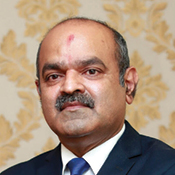 ‘Each employee feels valued in Norvic’
Ajaya Mishra | CEO, Norvic International Hospital
Norvic International Hospital ensure equal growth and career development opportunities for all staff in the following ways:
Open Competition
• Vacancies are advertised through official channels, including social media platforms such as LinkedIn, Facebook, and Instagram, to ensure broad, open, and competitive recruitment for all qualified candidates.
Equal Opportunity
• We are an equal opportunity employer, considering all qualified applicants fairly and objectively, based entirely on job-related qualifications and skills.
Merit-Based Hiring
• We recruit staff based on merit, competence, and relevant experience. Candidates must possess the appropriate educational qualifications required for the role, as well as any professional registration certificate mandated by law. Relevant prior experience, particularly in a healthcare setting, is preferred for roles involving direct patient care or specialised technical responsibilities.
• Overall, our recruitment criteria emphasise formal education, relevant experience, regulatory compliance, and professional capability, ensuring that selected individuals meet the hospital’s standards for delivering high-quality patient care.
Retention at Norvic is built around three core areas: growth, support, and engagement.
• First, growth and career development is a major focus. We invest heavily in continuous learning through regular trainings, CME programmes, and external development opportunities. Alongside that, we maintain clear career progression paths, with flexibility to fast-track high performers. This helps employees see a long-term future within the organisation.
• Second, we emphasise on a supportive work environment. That includes maintaining a strong team culture, ensuring safety and compliance, and offering structured policies that support work-life balance – like flexible arrangements and well-defined leave as well as benefits. Compensation is also kept competitive through periodic benchmarking.
• Finally, we focus on engagement and feedback. We conduct quarterly performance appraisals, conduct employee satisfaction surveys, and maintain open communication channels. On top of that, we make consistent efforts around recognition and employee connection, which helps build a sense of belonging.
• Overall, the approach is to create an environment where employees feel valued, see growth, and are heard.
Succession Planning
We take a proactive approach to succession planning by identifying high-potential employees early and preparing them for leadership roles through structured development. This includes targeted training, cross-functional exposure, and gradually increasing responsibilities to build leadership capability. Critical roles are mapped with potential successors to ensure business continuity, and readiness is periodically reviewed in alignment with performance appraisals. The objective is to reduce dependency on external hiring for senior roles and create a strong internal leadership pipeline that understands the organisation’s culture and operational dynamics.
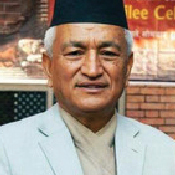 ‘Siddhi has been catering its services to those in need thanks to the contributions of its valued staff and donors’
Shyam Sundar Dhaubhadel | Founder, Siddhi Memorial Hospital, Bhaktapur
Siddhi Memorial Hospital was established with the pious objective of serving child health and expectant mothers. We also provide counselling for those planning conception and addressing pregnancy preparation. Simultaneously, we operate a senior citizens’ home as a vital component of our philanthropic activities. We continue to seek cooperation from generous individuals. We operate the hospital by initiating best management practices, including human resource management. However, as a small institution, we do not function within a corporate structure, though we remain committed to serving the people. Our valued staff and generous donors are highly appreciated for their continued support.

