
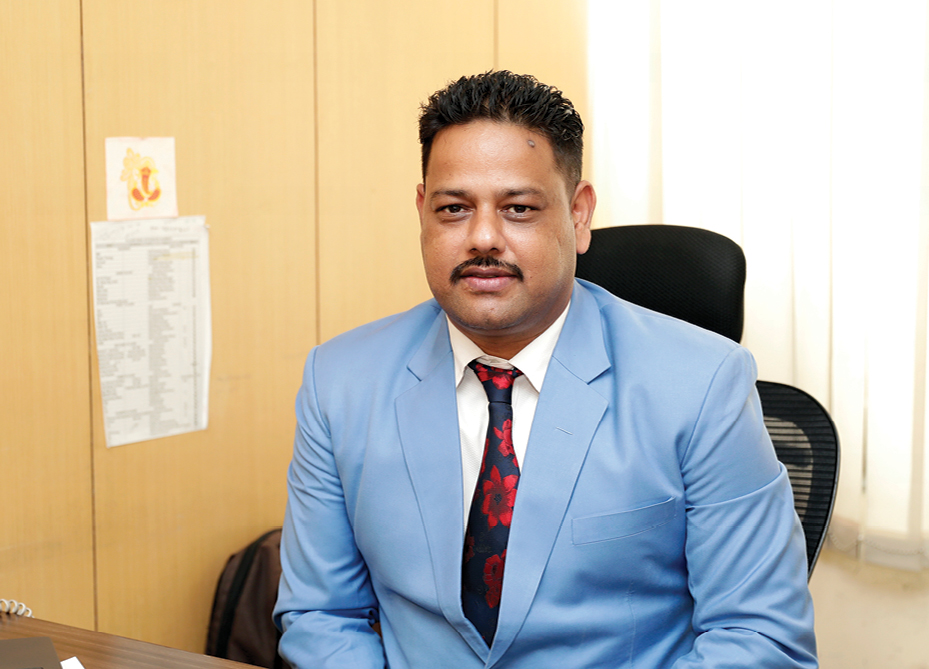
 Lab Raj Awasthi is the HR Head at Om Hospital and Research Centre (OHRC). He pursues a dynamic and results-driven approach to effective Human Resource Management. With over a decade of experience in HR, Administration, and People Management across the healthcare and hospitality industries, Awasthi has garnered expertise in policy formulation, recruitment, employee engagement, labor compliance, conflict resolution, and performance management.
Awasthi is recognised for building strong HR systems, fostering positive work cultures, and aligning workforce strategies with organisational goals. He began his career in HRM in April 2015, serving as Senior HR Officer at SHL Management Services/Tiger One Hotel & Casino until June 2021, before joining OHRC as HR Manager in July 2021. The HRM Nepal caught up with Awasthi to learn about his experience implementing HR strategy and core HR functions within a health institution. Excerpts:
Q: What motivated you to pursue a career in Human Resource Management (HRM)?
A: My motivation to pursue a career in Human Resource Management began early in my professional life while working for an FDI investment company that operated a casino and 5-star hotel in Nepal. Starting as an HR & Admin Assistant, I was exposed to various challenges within both administrative and HR functions. During that time, I came to understand the responsibilities of management as well as labour unions, learning vital skills and the importance of HR in building and sustaining an organisation.
Handling those challenges helped me develop a strong interest and confidence in managing people and organisational processes. Given my management background, I have always been inclined toward people management and enjoy taking on challenging roles. HR provides me the opportunity to work closely with employees, solve workplace issues, and contribute to overall organisational growth, which motivates me to continue building my career in this field.
Q: What key HR strategies have you implemented at OHRC?
A: At Om Hospital and Research Centre Pvt. Ltd., I have implemented several key HR strategies to strengthen systems and ensure compliance. As this is a long-standing medical institution, I tactfully engaged with both the labour union and management to implement the following HR strategies:
- Introduced and implemented an HRMIS system, enabling quick access to complete employee data and improving HR efficiency.
- Amended and enforced Employee Bylaws in line with the Labour Act, clearly defining policies, procedures, and benefits, and rights and duties of trade unions as well as management.
- Successfully conducted HR Audit and Labour Audit, ensuring full legal compliance.
- Enrolled all eligible employees in the Social Security Fund (SSF).
- Updated and systematised personnel records of all staff and consultants for better documentation and compliance.
- Improved attendance, overtime, and payroll tracking by upgrading and customising the HRMIS system.
- Facilitated consultant engagement strategies with instruction of board as well as medical wings by onboarding specialist doctors through formal contracts to enhance hospital services.
- Promoted employee development by arranging training and seminars for career growth and institutional development.
- Enforced stricter dress code and workplace discipline standards across the organisation.
Q: Based on your extensive experience as an HR professional, could you reflect on the major milestones achieved by your department?
A: At Om Hospital and Research Centre Pvt. Ltd., I have implemented several key HR strategies focused on digital transformation, compliance, and workforce development, including the following:
- Introduced and strengthened the HRMIS system, enabling centralised and real-time access to employee data.
- Transitioned from a manual system to a hybrid HR documentation approach (digital + physical records).
- Developed and implemented Employee Bylaws aligned with the current Labour Act, clearly defining policies, procedures, and employee benefits.
- Ensured 100% Social Security Fund (SSF) enrollment for all eligible employees as per statutory provisions.
- Upgraded attendance, payroll, and overtime management systems, minimising discrepancies and audit issues.
- Strengthened disciplinary policies and compliance mechanisms to improve workplace governance.
- Promoted employee development initiatives through training, seminars, and capacity-building programmes as per the performance appraisal reviews.
These strategies have significantly enhanced HR efficiency, compliance, and overall organisational performance.
Q: In your view, what are the most effective approaches to HR management and organisational development in hospitals?
A: In the hospital sector, Human Resource Management and Organisational Development play key roles in ensuring quality patient care, smooth operations, and staff satisfaction. Effective HR starts with proper workforce planning, ensuring the right number of skilled doctors, nurses, and technical staff are available based on patient needs. However, all hospitals in Nepal are facing a shortage of trained and skilled manpower, which is a major challenge that will become more fatal within the next five to seven years.
Another approach is the use of digital HR systems like HRMIS, which help manage employee records, attendance, payroll, and performance more efficiently and accurately. These systems improve transparency and reduce manual errors while playing an important role in identifying problems and gaps between employees and employers.
Compliance with labour laws and regulations is also vital to ensuring a fair and legally safe working environment for both the organisation and its staff. Along with this, continuous training, CMEs, and seminars help staff improve their skills to deliver better patient care.
A strong performance management system helps evaluate employees fairly, identify gaps, and motivate staff. Effective communication between management and staff, as well as with patient parties, is also essential for smooth coordination and quick decision-making.
With more than 600 employees, maintaining discipline, a professional work culture, and clear workplace ethics is very important. Employee engagement activities further help improve teamwork and motivation. Overall, these approaches enhance service quality, patient satisfaction, and long-term organisational growth in hospitals.
Q: How do HR policies play a pivotal role in shaping an organisation’s sustainability and long-term growth?
A: HR policies play a vital role in ensuring the sustainability and long-term growth of any organisation because they create a clear structure for managing people, performance, and workplace culture. Well-defined HR policies help maintain consistency and fairness in all practices, such as recruitment, promotion, compensation, leave, and disciplinary actions. This builds trust among employees and reduces conflicts, which is essential for a stable work environment. In addition, HR policies ensure legal compliance with labour laws and regulations, protecting the organisation from legal risks and penalties. This is especially important in sectors like healthcare, where regulatory requirements are strict every year.
HR policies also support employee development and retention by clearly defining training opportunities, career growth paths, and performance expectations. When employees see fairness, growth opportunities, and benefits within the institution, they are more motivated and committed, which helps reduce turnover. However, it cannot be completely eliminated due to various push and pull factors. Furthermore, strong HR policies help build a positive organisational culture by promoting discipline, accountability, and ethical behaviour. This becomes even more important in institutions where trade union activities are active. Overall, this directly impacts service quality and operational efficiency.
Q: What gaps have you identified – both among employers and employees – in creating an enabling work environment and ensuring effective performance delivery?
A: In my experience, gaps exist on both the employer and employee sides that hinder an enabling work environment and effective performance delivery.
On the employer side, inadequate staffing and workload management are common. Many institutions fail to maintain optimal staff-to-patient ratios, leading to burnout, fatigue, and compromised care. There is also less investment in professional development, as insufficient training, continuing education, and career pathways reduce motivation and competency. Traditional leadership and communication systems between management and frontline staff often result in misunderstandings, low morale, and inefficiencies. Also, a lack of supportive infrastructure, such as outdated technology, inadequate medical equipment, or poor building layouts, hinders healthcare workers from performing effectively. Similarly, poor occupational health and safety measures, including failures in infection control or mental health support, expose staff to risks. Finally, limited recognition and incentive systems cause motivation and job satisfaction to decline when contributions go unacknowledged.
Likewise, on the employee side, gaps are often seen in areas such as skill and competency. Some staff may lack up-to-date clinical knowledge or technical skills due to limited training or resistance to learning. Low engagement and motivation, often driven by burnout and stress, can reduce commitment to organisational goals. Poor adherence to protocols and standards, specifically inconsistent compliance with clinical guidelines and safety practices, also affects quality. Communication and teamwork challenges, such as ineffective collaboration among multidisciplinary teams, can lead to errors and fragmented care. Lastly, resistance to change remains a worldwide problem, as employees may be reluctant to adopt new technologies or policies, slowing organisational improvement.
Overall, bridging these gaps requires strong communication, clear policies, continuous training, and a culture of mutual trust. HR serves as that vital bridge, communicating signals both ways to the employer and the employee.
Q: Why do you think HRM has not been given adequate priority in Nepal, despite its critical importance for an organisation’s future?
A: Human Resource Management has not always been given adequate priority in Nepal due to traditional management practices and limited awareness in the past. During that era, HRM was often treated merely as a personnel function where the focus was limited to basic administrative tasks such as maintaining employee records, handling files, and managing attendance. It was commonly viewed as the role of a ‘Personnel Assistant’ rather than a strategic function.
However, in the modern context of Nepal, this traditional thinking is gradually changing. Many organisations now recognise the importance of HRM in achieving business growth and organisational objectives. HRM is increasingly being seen as a key contributor to employee development, performance management, and overall organisational success. Despite this progress, some institutions still lag due to factors such as a lack of skilled HR professionals, limited investment in HR systems, and a continued focus on short-term operational goals rather than long-term strategic planning.
Q: Employee relations is often one of the most challenging aspects of HRM. Based on your experience, how do you address retention challenges, grievances, and workplace conflicts?
A: Employee relations is one of the most sensitive and challenging aspects of Human Resource Management in any institution. In the context of our hospital, staff retention remains a key concern, particularly among technical personnel.
Although we cannot ensure 100% retention, we have implemented several measures to address this challenge. We offer competitive salaries, among the best in the Kathmandu Valley, along with attractive benefits such as 100% medical coverage for employees and 80% medical benefits for their parents and children, with no age limit for children. These provisions serve as strong motivational factors and help improve employee satisfaction. In addition, we have an authorised employee union, and a Collective Bargaining Agreement is conducted every two years to review salary, benefits, and other employment terms. Despite these efforts, we still face retention challenges, especially in specialised technical roles due to various push and pull factors.
Regarding grievance handling and workplace conflict, we follow a structured three-tier system. Initially, conflicts are addressed by the immediate supervisor or line manager. If unresolved, the issue is escalated to the Head of Department (HOD). If it remains unsettled, it is finally handled by the HR department for resolution.
We also maintain a zero-tolerance policy toward serious issues such as financial irregularities, bullying, workplace harassment, and sexual harassment. All matters are managed in accordance with our internal employee bylaws as well as the Labour Act, which we strictly follow to ensure a fair and safe working environment.
Q: How does your organisation approach succession planning across departments, particularly given the high turnover of senior management staff?
A: Succession planning in our organisation is approached as a continuous and structured process, particularly given the relatively high turnover in senior management positions. We recognise the vital importance of having capable successors prepared to ensure operational continuity and stability. Initially, we identify high-potential employees across departments through performance evaluations, competency assessments, and leadership potential.
Next, we focus on capacity building by providing training, mentoring, and exposure to higher responsibilities. We prioritise internal promotion whenever possible, as it motivates staff and minimises the gaps created by sudden vacancies in senior roles. Simultaneously, we maintain the flexibility to recruit externally if necessary, especially for highly specialised positions. Additionally, we ensure the thorough documentation of roles, responsibilities, and standard operating procedures to facilitate smooth transitions during leadership changes.
Employees are also given opportunities to act in senior roles on a temporary basis if a senior leader is on extended leave, which helps them gain practical experience and confidence. Overall, our approach aims to balance internal talent development with organisational needs, ensuring that critical positions are filled efficiently without disrupting service delivery.
Q: Does your organisation reward high performers and establish consequences for non-performers?
A: In our organisation, we have implemented a robust reward and punishment system for employees to ensure accountability and performance improvement. We conduct an annual performance appraisal for all staff members. Based on the results, we recognise and reward high performers, including an ‘Employee of the Year’ award worth Rs. 25,000. Additionally, if training needs are identified during the appraisal process, we arrange relevant development programmes to enhance employee skills and performance.
On the other hand, if an employee consistently fails to improve their performance appraisal for more than three consecutive cycles despite support and opportunities, necessary actions are taken in accordance with the Labour Act, which may include contract termination. However, before any such decision, we issue a clarification letter and provide the employee an opportunity to respond and improve. This system is particularly important in a hospital setting, where maintaining high standards of performance is critical, as we deal directly with patient care and life-saving services.
Q: In your opinion, how scientific and effective is the performance management system in Nepali organisations?
A: In my opinion, the performance management system in many Nepali organisations is gradually becoming more scientific and effective, although there is still room for improvement. Some institutions have started adopting modern approaches such as 360-degree performance evaluation. I believe this type of system is highly beneficial because it collects feedback from multiple sources, including supervisors, peers, subordinates, and sometimes even clients. This helps to reduce bias at any single level and provides a more balanced and fair assessment of employee performance. However, many organisations in Nepal still rely on traditional appraisal methods, which are often based solely on supervisor evaluations. These methods may be more subjective and can lead to bias or incomplete assessments.
Overall, while the shift toward scientific performance management practices like 360-degree evaluation, and the M.B.O. (Management by Objectives) model for top-level employees, is a positive development, wider implementation, proper training, and a strong organisational culture are needed to make these systems more effective and reliable across Nepali institutions.
Q: How frequently does your organisation conduct skill development or other capacity-building activities for employees?
A: Our organisation conducts skill development and capacity-building activities on a regular basis, tailored to institutional needs and identified skill gaps. Training requirements are assessed through performance appraisals, supervisory feedback, and operational demands. Based on these evaluations, we organise both in-house and external training programmes to enhance employee competencies.
Additionally, we conduct periodic refresher training and development programmes to ensure that staff remain current with the latest practices. This is especially vital in a healthcare setting, where continuous learning is essential.
Q: How do you manage career progression for both managerial and technical employees, particularly non-technical staff in specialised organisations who may remain in the same position for years and express frustration regarding service delivery?
A: In our organisation, career progression for managerial, technical, and non-technical staff is managed through clear policies and structured benefits to ensure motivation and retention.
We have a defined policy that recognises the long-term contributions of our employees. Staff members who complete five years of service are acknowledged for their dedication, while those who complete 10 years receive a seniority allowance with monetary benefits, even if they haven’t been promoted, as a form of recognition for their loyalty and experience.
In addition, we provide comprehensive welfare benefits, including 100% medical coverage for employees and an 80% medical discount for their dependents. These benefits are designed to support staff well-being and enhance overall job satisfaction.
For employees who remain in the same position for extended periods, we focus on internal development opportunities such as training, skill enhancement programmes, and performance-based evaluations. This helps them improve their competencies and prepares them for higher responsibilities when opportunities arise.
Overall, our approach combines financial benefits, recognition, and capacity development to manage career progression and address employee frustration regarding limited upward mobility, especially among non-technical staff in specialised roles.
Q: How important are team-building, and both horizontal and vertical communication, within your teams?
A: Team-building and communication are vital in the healthcare industry because patient care depends on effective teamwork. They help doctors, nurses, and other staff trust one another and collaborate efficiently. When a team is strong, they can handle emergencies more effectively and support each other during stressful situations.
Horizontal communication between staff at the same level, such as nurse-to-nurse, is crucial for sharing patient information quickly and clearly. This helps avoid mistakes and ensures everyone understands the care plan. Similarly, vertical communication between different levels, such as between doctors and nurses or managers and staff, is also essential. It ensures that instructions, decisions, and feedback are clearly understood. Ultimately, good teamwork and clear communication help provide safe, efficient, and high-quality patient care.
Q: Since Nepal’s health sector is regulated by bodies such as the Department of Health Services and the Nepal Medical Council (NMC), what HR-related regulatory policies are needed to strengthen people management in health institutions?
A: In Nepal, the health sector is regulated by organisations such as the Department of Health Services and the Nepal Medical Council. To improve people management in health institutions, HR-related policies should be strengthened at multiple levels.
At the national policy level, the government should create a standard HR system for all hospitals, both public and private. There should be clear regulations regarding the minimum number of doctors and nurses required per patient. Licensing and the renewal of health workers should be linked to continuous training to ensure their skills remain current. The government should also ensure fair salaries and benefits to reduce the migration of staff abroad. Policies addressing workplace safety, mental health, and the reduction of burnout are equally important.
At the institutional level, hospitals should follow fair and transparent payscales, recruitment, and promotion systems, as well as reward mechanisms. Each staff member should have a clear job role and a proper performance evaluation system. Hospitals should provide regular training to improve staff skills. Furthermore, there should be systems to handle complaints and resolve conflicts. Promoting teamwork and effective communication within the hospital is vital.
At the operational level, hospitals should maintain accurate HR records, preferably in digital form. Duty schedules, shifts, and leave should be managed fairly. Staff performance should be checked regularly. Hospitals should ensure that all employees follow ethical rules and professional behaviour. Supportive supervision and regular feedback should be provided to help staff improve.
At the monitoring and compliance level, regular inspections and audits should be conducted to verify HR practices. Hospital accreditation should depend on following HR standards. There should be rewards for good performance and penalties for failing to follow rules. Systems should also be in place to report malpractice or misconduct.
Q: Have you adopted any unique or innovative practices in people management and performance delivery? If so, could you briefly share them?
A: We have begun implementing innovative practices in people management and performance delivery to enhance both staff satisfaction and patient care. One such practice is the adoption of digital HR systems, where hospitals utilise software to manage staff records, attendance, and performance. This makes the process faster and more transparent while significantly reducing paperwork. We also employ team-based care models, in which doctors, nurses, and other staff work closely as a cohesive unit. This improves coordination and leads to better patient outcomes.
Along with that, we have introduced continuous training and e-learning programmes, allowing staff to update their knowledge regularly without leaving their workplace. In addition, feedback systems are utilised through which patients and staff can provide input. This helps identify problems and improve services. Another highly useful practice is flexible duty scheduling, which helps reduce staff stress and burnout, especially in high-pressure environments like hospitals.
Q: Do you have any recommendations to improve governance in health sector institutions, particularly in terms of efficiency, effectiveness in service delivery, and human resource management?
A: Good governance within health regulatory bodies, enhanced HR systems, digital tools, robust monitoring, and public-private cooperation can make Nepal’s health services more efficient, effective, and patient-friendly.
Q: Would you like to share any additional insights on HRM for our valued readers?
A: A simple insight into HRM in healthcare is that people are the most vital component of the health system. When health workers are treated fairly, provided with clear roles, given proper working conditions, and offered opportunities to grow, they perform better and remain in the system longer. These types of internal perspectives and real-world experiences are invaluable for HR employees, as they reveal the actual trends and challenges faced by HR professionals within an organisation.

