What This Titan Flyer Teaches Us About Recruitment Today?

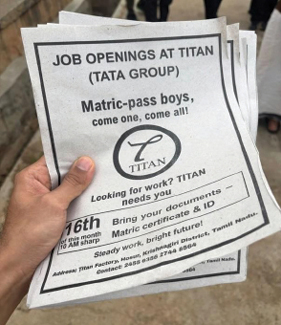
At first glance, this old-style Titan recruitment flyer looks simple. It invites “Matric-pass boys” to come to the factory with their certificates and apply for a job. Whether this is an actual historical flyer or a recreation, it offers an interesting lesson on how recruitment and HR practices have changed over the years.
1. From Hiring in Bulk to Hiring the Right Talent
In earlier decades, companies mainly focused on filling large numbers of vacancies, especially in factories and production units.
The flyer reflects that approach. The requirements are minimal, the process is straightforward, and applicants are asked to walk in directly for selection. The success of the campaign depended on how many people turned up.
Today, recruitment is much more targeted. Companies look beyond educational qualifications and evaluate skills, attitude, adaptability, and long-term potential. Modern HR aims not only to fill positions but also to find people who can grow with the organisation.
2. Changing Expectations from Employers
The language used in the flyer reflects the realities of its time. Phrases like “Matric-pass boys” were commonly used and accepted in many industries.
Today, organisations focus on diversity, inclusion, and equal opportunity. Job advertisements are designed to attract talent from all backgrounds, regardless of gender or other personal characteristics.
The promise made in the flyer is simple: “Steady work, bright future.” Modern candidates, however, look for much more than job security. They evaluate career growth opportunities, learning and development programmes, work culture, employee wellbeing, flexibility, and the overall purpose of the organisation. Companies now compete not only on salary but also on the employee experience they offer.
3. From Printed Flyers to Digital Recruitment
Perhaps the biggest change is the way companies reach potential candidates.
In the past, recruitment depended on printed flyers, newspaper advertisements, notice boards, and word-of-mouth referrals. The reach was limited to nearby communities, and candidates often had little information before attending interviews.
Today, recruitment happens through company websites, job portals, LinkedIn, social media platforms, and digital campaigns. Organisations can attract candidates from across the country or even around the world.
Modern recruitment systems also allow companies to:
- Screen applications automatically
- Communicate instantly with candidates
- Track recruitment costs and effectiveness
- Build long-term talent pipelines
The process has become faster, more efficient, and data-driven.
4. The Importance of Trust and Authenticity
One important lesson from this flyer is the issue of credibility.
In today’s environment, fake recruitment advertisements and job scams are becoming increasingly common. Since company logos and designs can be easily copied, organisations must ensure that recruitment communication comes through official and verified channels. Candidates are also encouraged to verify job opportunities through official company websites and authorised recruitment platforms.
The Core Purpose Has Not Changed
Despite dramatic changes in technology, communication channels, and hiring practices, one thing remains constant.
Recruitment is still about connecting people with opportunities.
This Titan flyer represents a time when that connection was made through a simple piece of paper distributed in local communities. Today, the same objective is achieved through sophisticated digital platforms and advanced HR systems.
The tools have changed. The scale has changed. The language has changed.
But the fundamental purpose of HR remains the same: helping organisations find the right people and helping people find meaningful work.