

 Recruitment and selection are vital functions within Human Resource Management (HRM). Although often used interchangeably, these two processes are distinct yet deeply interrelated.
In modern HRM, recruitment and selection are collectively termed ‘talent acquisition’. Private organisations, in particular, aim to secure top-tier talent, recognising that an employee’s ultimate objective is to drive growth maximisation. Through a system-driven recruitment process, companies can successfully hire competent individuals tailored to the job.
“The fundamental aspect of recruitment is connecting people with opportunities,” remarked Umesh Rauniyar, Director of Pharma Marketing Solutions (PMS).
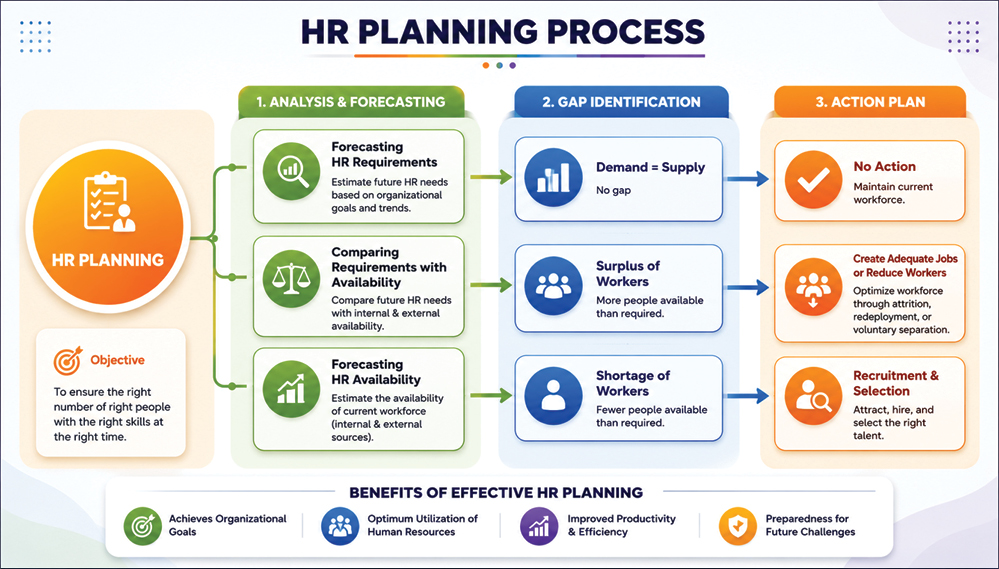
For recruitment to be effective, robust human resource planning is essential. Human resource planning involves a systematic analysis of HR needs to ensure the right number of qualified employees are available precisely when required.
Aligning recruitment strategy with employer branding
Recruitment and selection do not exist in isolation. If they fail to align with organisational strategy, they cannot succeed. Recruitment is closely tied to a company’s branding and marketing efforts, as an organisation’s reputation and brand values strongly influence whether candidates choose to apply.
The primary objective of recruitment is to attract potential and suitable candidates, with organisations hiring eligible individuals based on clear job descriptions.
“The people management process starts with our robust pre-employment screening checks, which are conducted during recruitment to support our commitment to safeguarding and safer hiring practices,” stated Prajana Waiba Pradhan, a renowned HR professional. “I believe that fostering a diverse workforce and an inclusive workplace culture built on respect enables us to be a more effective organisation.”
 Attracting top talent through modern recruitment methods
Most companies seek top talent, regardless of their own reputation or market standing. However, top candidates prefer to work with leading, highly reputed organisations, meaning companies often attract talent proportionate to their status. Furthermore, an employer’s push to secure the absolute best candidates can sometimes delay the selection process.
Recruitment can be tedious. Common recruitment methods include formal or direct outreach, media advertisements, point-of-purchase notices, direct mail, employment agencies, campus recruiting, computer databases, special events, and employee referral programmes. For specialised and technical roles, recruiters must select the most appropriate options to locate the right talent. Because recruitment is repetitive, these tasks are frequently outsourced to HR service providers.
 Recruitment firms apply the STP framework – Segmentation, Targeting, and Positioning – to talent acquisition. Rather than treating job seekers as a uniform mass, recruiters segment the talent pool, target the most relevant candidate profiles, and position the hiring company as an appealing employer.
Measuring recruitment effectiveness and driving job satisfaction
Recruitment effectiveness depends on metrics such as time-to-fill, retention rates, cost per qualified applicant, and the job performance of new hires. The recruitment yield pyramid clearly illustrates this effectiveness. In recent years, companies in Nepal have reported low recruitment yields (Yield = No. of candidates who move to new stage / No. of candidates at the current stage * 100), which drives up overall hiring costs due to low retention, frequent quits, and high turnover rates. However, recruitment and selection alone cannot be held solely responsible for high turnover.
“Effective recruitment demands a blend of strategic foresight, local market adaptability, and a strong Employee Value Proposition (EVP),” shared Manoj Poudyal, Head of Human Resources at Huawei Technologies Nepal, in a recent interview with the HRM Nepal.
Various studies indicate that job satisfaction and the job role itself must be attractive to reduce turnover and resignations. Job satisfaction relies much more heavily on motivational factors (such as meaningful work, recognition, achievement, responsibility, and career advancement) than on hygiene factors (such as salary, benefits, job security, working conditions, and organisational policies).
Headhunting and the impact of employee poaching in Nepal
Headhunting is also widely practiced in recruitment, mainly for senior management positions. Within companies and organisations, senior roles are filled through promotions, headhunting, and formal recruitment processes. Headhunting is a common approach, but it is considered acceptable only when candidates possess a proven, high-performing track record. There are other informal recruitment practices widely used in Nepal, such as ‘situation wanted’ advertisements, direct applications, and employee referrals.
In Nepal, employee poaching is a serious issue in the job market and is sometimes used to disrupt competitors. This involves identifying key employees within a competitor’s organisation and luring them away with higher positions and better benefits to gain an advantage. Employee poaching is a highly unethical practice that undermines job market stability, damages trust between businesses, and discourages companies from investing in staff training.


 Selection follows specific processes to choose talent based on both person-job fit and person-organisation fit. Person-job fit is identified through knowledge, skills, and abilities (KSA), alongside education, qualifications, and core competencies. Person-organisation fit is equally vital for long-term employee retention, making the alignment between an organisation’s values and an individual’s personal values critically important.
“If a candidate proves capable in a skills assessment but fails to align with organisational values, they should not be selected or hired,” according to HR experts.
The selection process relies on several scientific methodologies. However, selection can only minimise error if the methods used are reliable and the tools are properly validated. Tests can become unreliable due to poor physical testing conditions, variations in test administration, or questions that inadequately sample the necessary material.
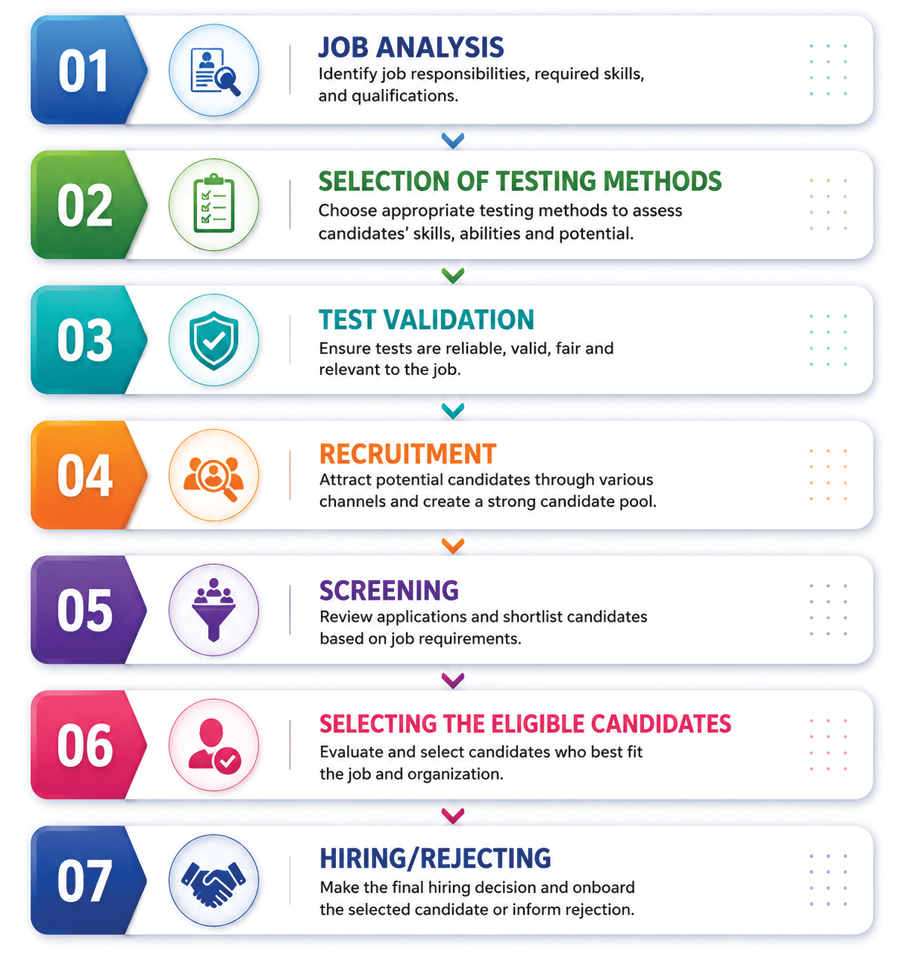
The most effective testing approach is the work sample test, where potential candidates are evaluated using actual work samples. Other popular methods include interviews, problem-solving exercises, and situational simulations. Whatever test method is designed for selection must be validated using criterion validity, content validity, and construct validity. Assessing IQ, specific cognitive abilities, motor and physical capacities, personality traits, achievements, and interest inventories (hobbies and areas of interest) forms an integral part of candidate testing. To measure personality, the Big Five personality test is widely practiced. Selection testing is often conducted by industrial psychologists using psychometric tests, which significantly lower the risk of evaluator or rater error.
To minimise evaluator bias, evidence-based recruitment and selection should systematically include job analysis, selection of the right test, proper test administration, correlation of test scores with job criteria, and continuous cross-validation and revalidation of the testing methods.
BIG FIVE PERSONALITY FRAMEWORK
—OCEAN model
O – Openness to Experience:
- Measures curiosity, creativity, and imagination.
- High scores: Love novelty, art, and abstract ideas.
- Low scores: Prefer routine, tradition, and practical things.
C – Conscientiousness:
- Measures self-discipline, organisation, and duty.
- High scores: Hardworking, dependable, and organised.
- Low scores: Spontaneous, flexible, or prone to disorganisation.
E – Extraversion:
- Measures sociability, energy, and assertiveness.
- High scores: Outgoing, talkative, and energised by crowds.
- Low scores (Introversion): Quiet, reserved, and drained by social groups.
A – Agreeableness:
- Measures cooperation, compassion, and trust.
- High scores: Helpful, kind, and trusting of others.
- Low scores: Competitive, critical, or detached.
N – Neuroticism:
- Measures emotional stability and stress reactivity.
- High scores: Prone to anxiety, moodiness, and stress.
- Low scores (Emotional Stability): Calm, resilient, and relaxed under pressure.

