Nepal’s young generation possesses abundant ideas, ambition, and technological talent.
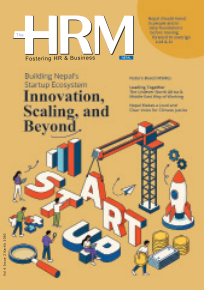

NEPAL’S YOUNG GENERATION possesses abundant ideas, ambition, and technological talent. However, the ecosystem required to transform those ideas into scalable enterprises remains weak. Early-stage funding, venture capital, angel investment, mentorship, and access to regional and global markets are still limited. Consequently, many promising startups struggle to move beyond the survival stage.
The world’s technology giants were once startups themselves. Meta Platforms and numerous other global corporations emerged from ecosystems where talent, capital, research, entrepreneurship, and risk-taking converged. Silicon Valley grew into a global startup hub not merely because it produced talented entrepreneurs, but because an enabling ecosystem allowed new ideas to secure finance, technology, markets, and networks, and to scale rapidly.
Nepal has recognised the importance of startups for over a decade. The government introduced a startup fund in Fiscal Year 2014/15, allocating Rs. 500 million in seed capital for innovative business proposals lacking adequate financing, while seeking participation from the private sector and non-resident Nepalis. Fiscal incentives have also been introduced to encourage investment in major manufacturing, tourism, and ICT projects.
A decade later, however, the primary challenge is no longer whether Nepal should promote startups but whether it can establish the conditions for them to scale.
Some homegrown technology companies, including Fonepay, Fusemachines, CloudFactory, and Foodmandu, have demonstrated that Nepali entrepreneurs can build businesses with significant market potential. The government has also consistently announced startup funds and invited applications. Yet, the ecosystem has failed to generate the momentum required to produce a critical mass of globally competitive enterprises.
The constraints are structural: a modest domestic market, cumbersome regulatory and procedural hurdles, limited access to risk capital, weak research–industry linkages, and inadequate integration into
regional and global value chains. Funding a startup is insufficient. The true policy challenge lies in financing growth.
Organisations such as the Nepalese Young Entrepreneurs’ Forum (NYEF) and CNIYEF have been advocating for a more supportive environment and encouraging young people to transform ideas into viable businesses. Their efforts require stronger policy backing.
Nepal must now transition from a startup- funding mindset to a startup-scaling strategy. This entails establishing a predictable regulatory regime, expanding venture capital and angel investment networks, facilitating innovation finance, strengthening incubation and mentorship, enabling smoother market access, and purposefully connecting Nepali startups with regional and global value chains. The coming decade should be the period in which Nepal turns its young talent and entrepreneurial ideas into productive, innovative, and globally connected enterprises.
Happy Reading!