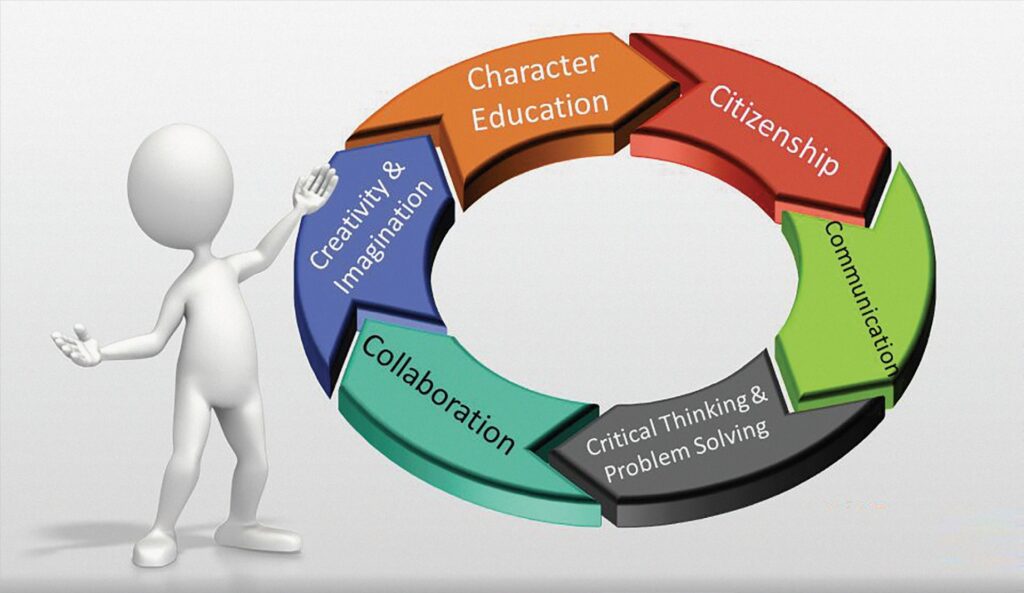
WHAT IS AI IN HR?

Artificial Intelligence (AI) is technology that enables machines to demonstrate human-like reasoning and capabilities such as autonomous decision-making. By assimilating vast amounts of training data, AI learns to recognise speech, spot patterns and trends, proactively solve problems, and predict future conditions and occurrences.
For human resource management, also referred to as Human Capital Management, AI involves using a fast- growing array of tools to automate routine, structured, and process-oriented duties. It’s changing how companies attract, hire, retain, and skill their employees.
AI TECHNOLOGIES FOR HR TASKS
The best place to start is by understanding the different types of AI technologies that drive business AI for HR, such as generative AI, conversational AI, deep learning, and automation, each suited for particular HR tasks.
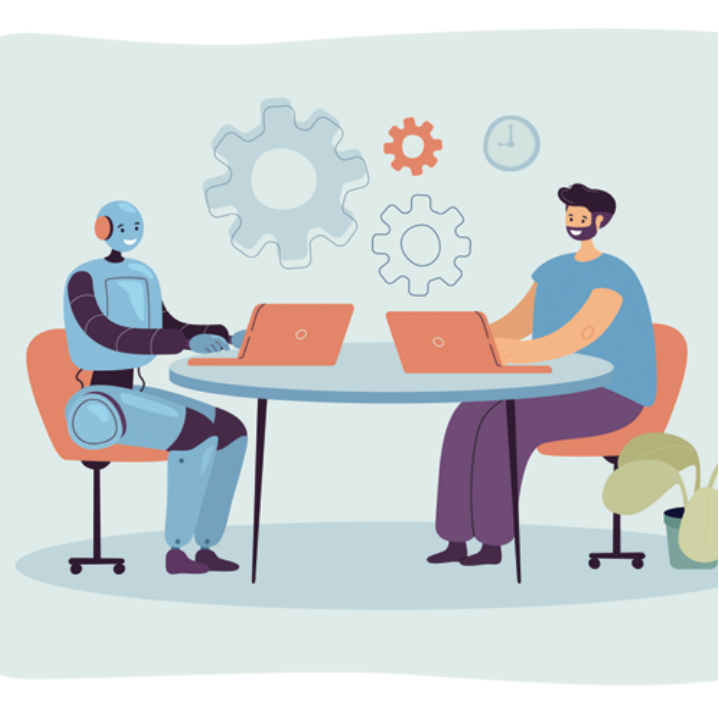
TYPES OF AI, TOOL DESCRIPTIONS, AI IN HR EXAMPLES
Generative AI
Learns the patterns and structure of training data and uses existing content and data to generate new content, including text, images, other media, and programming code. Writes Job description, employee performance goals, and interview questions.
Revises content to meet changing policies.
Conversational AI
Mimics human conversations using technologies such as chatbots or virtual agents and language processing to help bots understand users’ intent. Enables employees to easily change their personal data and view job-related information.
Allows employees to request or give job-related feedback.
Gives employees fast answers to HR questions with copilots and chatbots that gather and summarise information.
Deep learning
Performs specific analysis of HR data to build a deep understanding and provide directional insights and recommendations. Authors individualised recommendations for learning, roles, projects, dynamic teams, mentors, and peer connections.
Automation
Uses AI-driven intelligence to execute simulations that inform HR decision-making. Recommends the most appropriate benefits for specific employees.
Detects fraud within payroll processing.
APPLICATIONS OF AI IN HR
Implementing AI in HR can improve many HR functions, from
Keeping employee development and company recruiting strategy on track is essential so that employees want to stay and grow alongside the business.
recruiting and training to increasing employee engagement and retention, demonstrating its expanding role and relevance for HR teams.
Streamline recruiting
Nearly the entire hiring process can be augmented with AI, helping attract and hire the right talent while reducing overall recruitment time by weeks: • Use a common skills framework to attract, source, and hire talent on a global scale with automated processes, personalised communications, and cross-suite workflows. • Simplify the hiring process for recruiters and hiring managers with AI Recruiting Software that automates repetitive tasks, including generating unbiased interview questions and job descriptions tailored to the position. • Go beyond resume and profile keyword matching with smart recruiting analytics that identify the relevant skills a recruiter is seeking and surface suitable resumes. • Administer skills and aptitude tests to rank potential hires for job suitability. • Provide bias-free interview feedback
after evaluating an applicant. • Deploy conversational interfaces, such as recruiting chatbots, to communicate directly with candidates 24×7 and keep them engaged throughout the recruitment process. • Discover the “hidden workforce” with AI tools that search a variety of external data sources such as job boards, social media, and professional networks to infer potential candidates’ skills and invite them to apply for open roles.
Automate onboarding
After candidates are recruited, HR can use AI to pave the way for a smooth onboarding process, especially for today’s highly remote and contingent workforce that can’t do traditional, in- person sessions: • Provide 24×7 onboarding services across the globe using HR chatbots, reducing the need for human staff to field calls, e-mails, and meetings. • Create personalised, engaging new- hire encounters. • Automate data and workflows across the onboarding process through automated delivery of hiring documents, company policies, login information, and job-specific permissions.
Design talent management
Keeping employee development and company recruiting strategy on track is essential so that employees want to stay and grow alongside the business. But with hundreds or even thousands of workers, it’s nearly impossible for HR teams to understand each individual’s full capabilities and aspirations.
Here’s how AI helps HR with the talent management processes that support a future-ready workforce: • Skills frameworks: Compile comprehensive skills frameworks
(known as skills ontologies) that identify employee skill sets, match them to job requirements, and pinpoint adjacent skills to develop. • Accurate skills assessments: Use machine learning and natural language processing to assess complex human skills like creativity and emotional intelligence more objectively. • Personalised growth opportunities: Map tailored learning, mentors, assignments, and career paths based on an employee’s specific skills, interests, and aspirations. • Upskilling and reskilling: Recommend individualised training programmes to prepare employees for new opportunities and enable anytime, anywhere learning. • Talent mobility: Identify and develop internal talent by recognising employees’ transferable skills and suggesting new roles or projects, fuelling internal career mobility. • Real-time performance analytics: Conduct performance evaluations that dispense continuous, data- based feedback to help managers and employees improve in real time. • Strategic talent planning: Use powerful predictive analytics to forecast future talent needs, helping HR plan for the skills acquisition required to meet future business challenges.
Elevate employee experience
Retaining and engaging top talent is a source of competitive advantage for every company, but it’s more than helping employees discover career growth opportunities. HR can use AI to deliver satisfying interactions in several ways. • Personalised employee journeys: Customise support and resources based on each individual’s preferences, needs, and work patterns, making workers feel valued and supported at every stage of their career. • Enhanced accessibility and efficiency: Deploy tools like AI copilots to help employees access
information, complete tasks, and resolve issues quickly. By reducing the friction in day-to-day work life, employees can focus on more meaningful and satisfying tasks. • Proactive workforce wellness support: Use sensors to monitor patterns of stress, emotional state, and workload to promote mental and physical employee wellness. This can reduce burnout, absenteeism, and health-related issues. • Real-time feedback and support: Conduct continuous feedback that supply employees with real-time guidance and encouragement to stay on track with their goals. • Satisfying self-service options: Reduce the need for manual human responses with self-service capabilities that can access and manage core HR information in real time. Workers can self-initiate simple activities such as updating employee data, viewing other employees’ profiles, and interacting with time, payroll, and rewards/ recognition functions.
Generative AI helps workers with more complex self-service tasks. It can ingest company policy and procedure documents, then answer HR questions in conversational language, such as using a copilot or chatbot to answer a benefits question or explain a pay slip. It can help managers author job descriptions and create new roles.
BENEFITS OF USING AI IN HR As AI technology continues to mature, it’s becoming a more sophisticated tool for HR organisations, significantly changing how HR teams work and serve the business.
Here are a few ways human resources AI tools are adding value for employers and employees: • Speeding up HR processes, freeing resources by reducing the time and effort required for tasks such as recruitment, onboarding, and performance reviews. • Heightening efficiency and
productivity by automating low- value or manually intensive work. • Removing unconscious biases in HR text for job postings/descriptions, interview questions, performance evaluations, and compensation analysis. • Improving overall employee and candidate experiences with highly personalised interactions. • Empowering employees and managers to work faster and smarter with generative AI capabilities that can assimilate and summarise complex information and then quickly report results or output content. • Making sense of large volumes of input quickly, enabling HR to make data-driven decisions with confidence. • Connecting with other systems and combining people and operational data to make bigger-picture decisions. • Anticipating and preparing for business-driven workforce change with skills analysis and scenario planning. The number of AI applications for HR is as limitless as the imagination.
CHALLENGES AND CONCERNS WITH AI IN HR
Both HR teams and employees like the idea of using AI for tasks like new skill acquisition, development opportunities, and self-service options. They are less comfortable using it for tasks like handling sensitive data, conducting performance evaluations, or monitoring employee activity.
Employees are also concerned about transparency. They want to know how the AI technology their employer uses works, the accuracy and equity of the suggestions it generates, and the sources and outputs of data the AI tool works with.
Here are some challenges companies using AI-enabled HR technology may encounter, along with tips on how to address them.
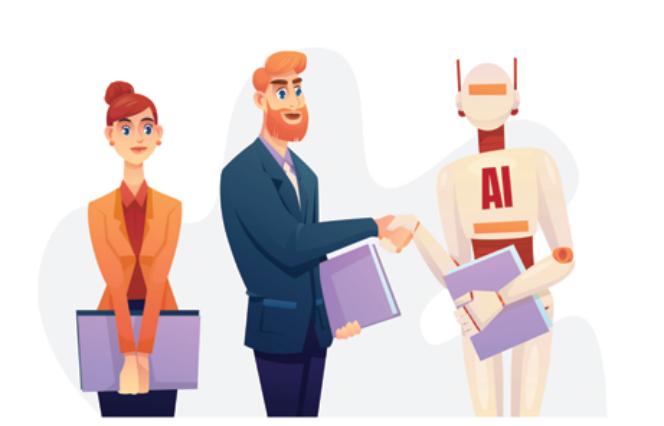
WHY AI LITERACY MATTERS Ethical considerations and bias
When not used responsibly, the algorithms in AI deep learning models can sometimes perpetuate bias. Organisations must seek out technology vendors that ground their human resources AI tools in the principles of transparency, explainability, and fairness.
For example, in talent acquisition, a responsibly managed AI tool will have built-in bias checks that identify and remove subjective language, ensuring that job descriptions are fairly written and based on job-relevant evaluation criteria.
Data accuracy, privacy, and security issues
Like all data-driven tools, AI is subject to the principle of “garbage in, garbage out.” If the data the model uses is flawed, incomplete, or nonsensical, the accuracy of what it generates will be the same. Companies hoping to harness the power of HR AI will need tools that leverage their own high- quality internal data to ensure that the system outputs are relevant to the specific context.
Data privacy and security are also major concerns in HR and AI. Mainstream AI bots have already been involved in several data breaches thanks to code vulnerabilities, particularly in open-source tools.
These concerns are especially nerve- wracking for employees who must share personal data with HR AI tools, such as when a chatbot asks about personal circumstances to assist with benefits questions. Avoid this risk by using an AI provider for HR functions that doesn’t share company data with outside large language models (LLMs).
Risks of over-reliance
Human resources is, by its very name, all about humans. Relying on AI to handle too many HR functions can create a robotic experience that lacks the human touch and leaves employees feeling disengaged. This is especially true in situations that require a high degree of compassion, where deploying AI could reduce decision-making to a numbers game.
It could also leave the company open to legal consequences. Some governments/agencies have specific regulations, such as GDPR in the EU, that prohibit using machine intelligence to make decisions that impact hiring, promotion, or salary.
For example, using ChatGPT to help write a job description poses little risk. However, relying on it to conduct a job interview or performance review, where emotional intelligence and human sensitivity are key, would fail to provide the right information and likely alienate potential and current employees.
CONCERNS OVER JOB DISPLACEMENT FOR HR ROLES
The American Psychological Association (APA)’s 2024 Work in America survey reveals that 41% of U.S. workers worry that AI will eventually make some or all of their job duties obsolete.
HR leaders can help ease team apprehension by clearly delineating which tasks AI will automate. Typically, rote, repetitive tasks can go to AI, while complex, strategic-thinking tasks tied to business objectives will need to remain in the realm of human HR specialists.
THE FUTURE OF AI IN HR
As opportunities for AI in HR continue to evolve, HR professionals will increasingly focus on strategic functions such as talent management, leadership development, employee wellbeing, and positive workplace culture. With AI handling routine tasks, HR teams can devote more time to these high-impact areas. Here are two key HR AI trends to expect in the coming years.
SHIFTING ROLES AND REDESIGNING JOBS
AI will increasingly change the structure of roles within companies. As routine tasks are automated, roles will shift toward requiring more strategic thinking, creativity, and multi-skilled capabilities. HR leaders will need to redesign jobs, merging specialised tasks into broader, more flexible roles that leverage AI tools. This shift will also create a demand for new jobs that combine business knowledge with AI and technological expertise. Discover AI solutions that automate HR tasks and help you create a future-ready workforce.
References What’s in a name? – ASOCS. https:// asocstech.com/industry50-generative- physical-ai/ Recruiting Recruiter – Expired at VĂN PHÒNG ĐẠI DIỆN CÔNG TY DAEHAN GLOBAL, PT TẠI BẮC GIANG | Saramin. https://topdev.vn/detail-jobs/recruiter-van- phong-dai-dien-cong-ty-daehan-global- pt-tai-bac-giang-2035910?src=topdev_ search&medium=searchresult