
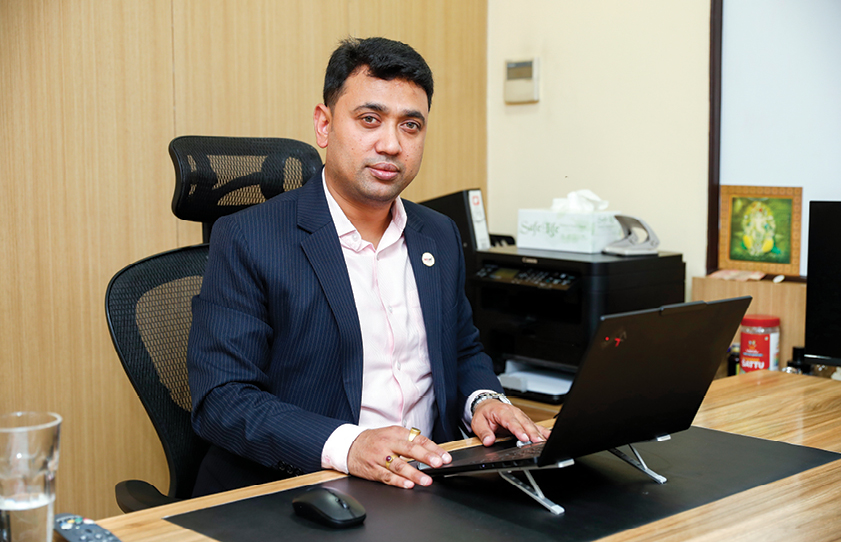
Pawan Kumar Khadka, CEO, IME Life Insurance
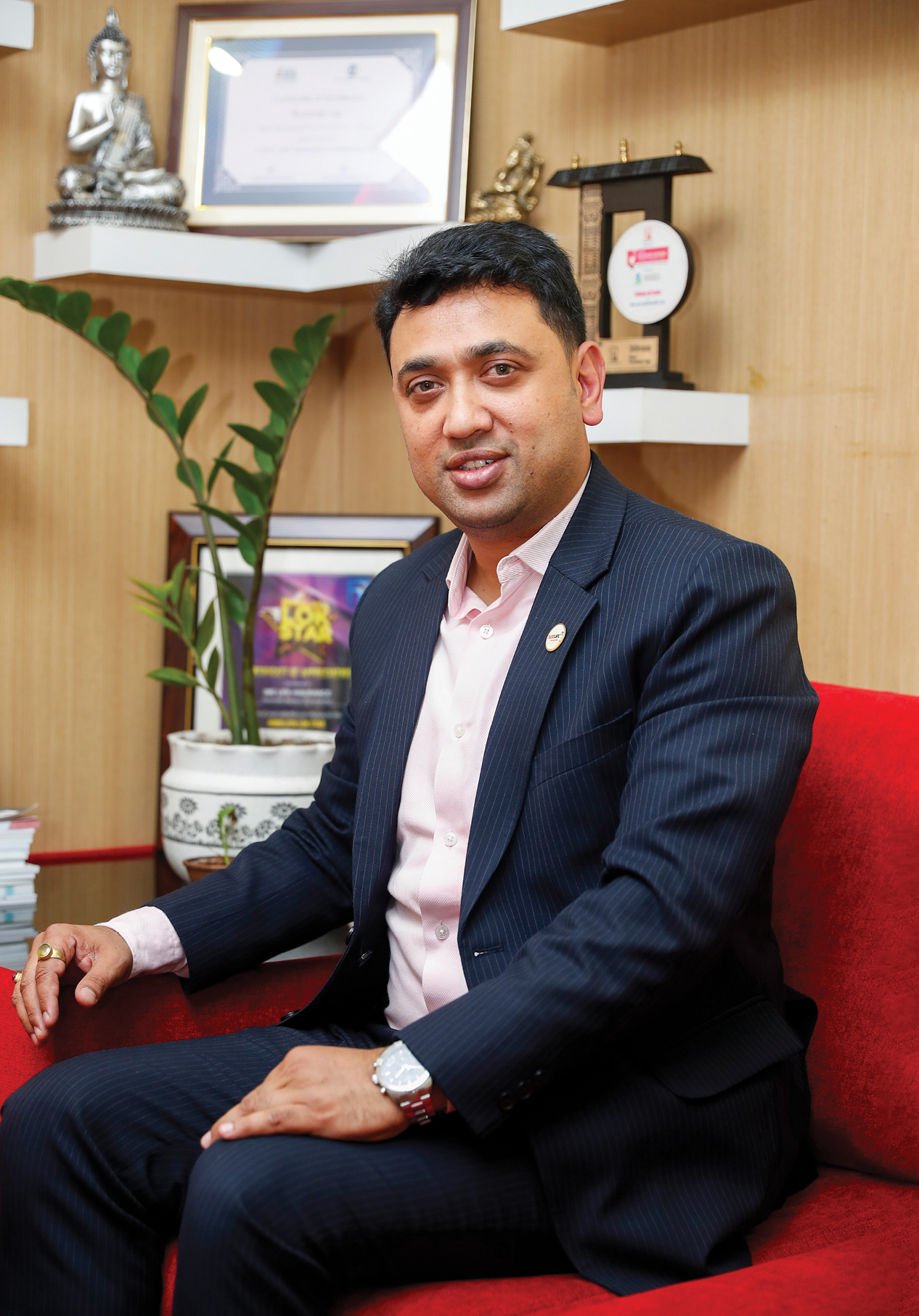 I began my first professional role as a secondary level teacher in 2003. The salary was just enough to cover my living expenses and studies. Since my qualifications at the time were insufficient for a position in the corporate sector, I did not actively seek employment elsewhere.
The job market has always been highly competitive, with over 6,000 university graduates entering the workforce annually. The limited scope demanded skills to overcome this competition. My formal public corporate debut came in 2011 at Hydro Consult Engineering Ltd as the Manager – Finance & HR. This appointment followed a series of technical tests, interviews, and reference checks, despite my professional qualification, experience in various formal sectors, and obtaining my ACCA membership.
I am thankful for the period between 2003 and 2010, which was highly instructive, teaching me that the importance of hard work, grit, patience, determination, and humility outweighs all other skills – lessons I learned while working as a teacher, entrepreneur, consultant, and manager. Other competencies, such as project management, utilising spreadsheets and software, planning, negotiation, and team management, were developed while performing duties in those early roles.
In this context, my first job was crucial in shaping me into a future corporate leader. Working across different roles, handling deadline-based tasks, and sensitively dealing with students, parents, management, and colleagues built my confidence in understanding human behaviour, practicing patience, and managing HR. Furthermore, the time management skills honed during my first job were instrumental in pursuing both higher education and a chartered degree.
From my earliest days as a student, the aspiration was to become a successful CEO. Therefore, my career trajectory, moving from the education sector to hydro, then to cement, and finally to the insurance sector, was a deliberate path rather than just a series of switches. The underlying motive throughout was to constantly learn and develop myself into an effective and successful executive.
Growth mindset
My capacity for taking calculated risks, quickly adapting, and delivering measurable results has been central to my growth. The exposure gained from diverse roles across various industries strengthened my credibility. Consistent performance and commitment to the organisations, whether at Nepal Life, Surya Life, the merged entity (Surya-Jyoti), or currently at IME Life, have helped me stand out even in a highly competitive market. Above all, a focus on problem-solving, empowering the team, providing freedom for innovation, and creating an environment to explore the best from the team enabled me to earn and sustain leadership roles.
Looking back, every role I was entrusted with has defined my professional journey. Transitioning from the cement industry to Nepal Life was a turning point, as it required embracing a high-risk shift into a marketing-driven insurance role, yet it proved to be one of my most rewarding decisions.
Delivering results there opened the path for greater responsibilities, eventually leading me to HR-Finance Head at HCEL, Corporate Market Head at Nepal Life, CEO at Bishal Cement, CEO at Surya Life, as well as guiding the organisation through the merger with Jyoti Life and serving as Senior Deputy CEO of the combined company, which was another significant achievement. Today, leading IME Life Insurance as CEO marks a proud milestone, where the focus is on transforming the company through digital innovation and a demand-driven approach.
These experiences have shaped my leadership philosophy and strengthened my commitment to the insurance sector.
Dynamism in management practices
At IME Life Insurance, the focus is on introducing management practices that enhance operational efficiency, strengthen customer engagement, and foster a performance-driven culture. This involves upgrading our digital platforms, streamlining the payment system, and implementing data-driven decision-making across all departments and sales centres.
While we emphasise product leadership by offering innovative and customer-centric insurance solutions, we also maintain disciplined cost management to ensure sustainable growth. Our approach balances delivering superior value to clients with operational efficiency, positioning IME Life as both innovative and financially robust.
Throughout my career in Nepal’s insurance sector, the emphasis has been on modernising management practices and driving organisational transformation. At Surya Life and the merged Surya Jyoti Life, the focus was on a performance-driven culture, process optimisation, and the digitalisation of operations, which enhanced efficiency and customer satisfaction.
At IME Life, we have introduced advanced digital insurance platforms, streamlined payment systems, and data-driven decision-making, setting industry benchmarks for transparency and responsiveness. Additionally, by mentoring the team and promoting a people-centric leadership approach, we are building strong managerial talent, fostering innovation, and elevating the overall professionalism of Nepal’s insurance sector.
The life insurance market in Nepal has become increasingly innovative, resourceful, and technical, particularly following the major consolidations in recent years. Mergers have created larger entities with broader product portfolios, stronger capital bases, and wider distribution networks, raising the benchmark for service and performance. Simultaneously, new players and digital entrants are driving innovation and customer-centric solutions.
In this environment, success depends on agility, strong brand trust, effective use of technology, and the ability to offer differentiated products while maintaining operational efficiency. Companies that can effectively balance these factors are best positioned to thrive in the evolving market.
Opportunities and threats
Nepal’s insurance sector exhibits several key strengths, including a growing public awareness of financial protection, an expanding distribution network, and increasing regulatory support that encourages transparency and accountability. Simultaneously, challenges persist, notably limited financial literacy among customers and relatively low penetration in rural areas.
To address these issues, we are prioritising making insurance more credible, people-centric, and affordable by upgrading digital platforms, simplifying policy processes, improving claim settlement efficiency, and introducing innovative products tailored to customer needs. Additionally, awareness campaigns and training for agents ensure that our services are not only accessible but also trusted and relevant to the people we serve.
Against this backdrop, minimising the rising lapse ratio requires a combination of proactive customer engagement, simplified processes, and value-driven products. First, educating policyholders about the benefits of continuous coverage and the long-term impact of lapses is crucial. Second, improving digital payment systems and providing flexible premium payment options make it easier for customers to stay current.
Third, timely communication through reminders, personalised support, and customer service interventions can prevent inadvertent lapses. Finally, designing products that are relevant, affordable, and aligned with customer needs ensures sustained interest and commitment, ultimately strengthening trust and loyalty in the insurance sector.
Apart from this, extending coverage to the uninsured population requires a multi-pronged approach focused on accessibility, affordability, and awareness. Insurers need to leverage digital platforms and mobile technology to reach remote and underserved areas efficiently. Developing simplified, low-cost products tailored to the needs of rural and low-income populations can make insurance more attractive and feasible. Collaborating with local communities, cooperatives, and microfinance institutions helps build trust and facilitate distribution.
Additionally, sustained financial literacy and awareness campaigns are essential to educate people about the benefits of insurance, dispel misconceptions, and encourage participation, thereby gradually expanding coverage across the country.
Investment strategies
Our investment strategy strictly adheres to the investment guidelines issued for insurers by the Nepal Insurance Authority (NIA). We are fully compliant with the requirements outlined in the Risk Based Capital and Solvency Directives 2080. We are actively seeking long-term investment projects and financial instruments that effectively address asset-liability matching. Projects offering sustainable operating income and return are prioritised across all investments. Ultimately, our strategy is guided by the necessity of safeguarding policyholder interests and enhancing credibility through bonus sustainability. Currently, we employ a diversified investment strategy, allocating capital either directly or through PEVCs (Private Equity/Venture Capital) across sectors such as the capital market, money market, hydro, agro-based industry, IT, hospitality, and medical.
The regulator is actively promoting insurance awareness through partnerships with insurers. Furthermore, the NIA has encouraged policies that advance digitalisation and policyholder-centric services, and has facilitated frequent interactions with key stakeholders. The provision allowing a deduction from taxable income for premiums up to Rs. 40,000 has significantly helped in growing the life insurance market. The government has also initiated a national insurance policy, which has assisted in the collaboration between local government bodies and insurers to raise awareness. Finally, international best practices have been successfully implemented within the industry.
Human resources gap in insurance sector & career opportunities for fresh graduates
The industry faces a bottleneck in terms of technical manpower. Therefore, prioritising insurance-related education from the early stages in the school curriculum and establishing actuarial faculties in universities appear essential for promoting the insurance industry. Furthermore, there is a need for close coordination among government agencies and regulators to allow optimal opportunities in infrastructure and innovative sectors. A proper information bureau to address the credibility of claim settlement, increasing the tax deduction limits, a reward system promoting governance practices, and innovation in product and operations will boost the morale of insurers to work towards further strengthening the insurance sector in Nepal.
For fresh graduates aspiring to build a career in the insurance sector, my advice would be to embrace learning, remain adaptable, and focus on delivering value. Start by gaining a strong understanding of insurance products, regulatory requirements, and risk management principles. Developing skills in digital tools, data analysis, and customer engagement will give you an edge in today’s evolving market. Be open to taking on challenging roles early in your career, as exposure to diverse functions (marketing, finance, and operations) helps build a solid foundation for leadership.
Most importantly, cultivate integrity, professionalism, and a customer-centric mindset, as these qualities are key to long-term success and growth in the industry.

