

Performance management is a complex and critical function within human resource management, comprising a complete cycle that spans goal setting and planning, monitoring, performance review, and feedback. The performance review or appraisal phase within this system requires a scientific approach to ensure a trustworthy, fair, and indisputable evaluation.
A top performer acts like a bee, engaging in the cross-pollination of ideas across teams, creating a motivating workplace environment, and enhancing productivity and growth. Conversely, poor performers are like a rotten potato that spoils the rest. Unless a performance appraisal is fair, an organisation’s interventions may fail to yield the right results when deploying administrative tools like the carrot, the stick, the sermon, or the nudge.
Most importantly, the monitoring phase of the performance management process gauges whether the chosen methods and procedures remain valid. Likewise, feedback helps organisations, line managers, and employees themselves identify their unique strengths and weaknesses. All of these elements within performance management are deeply interconnected and equally vital.
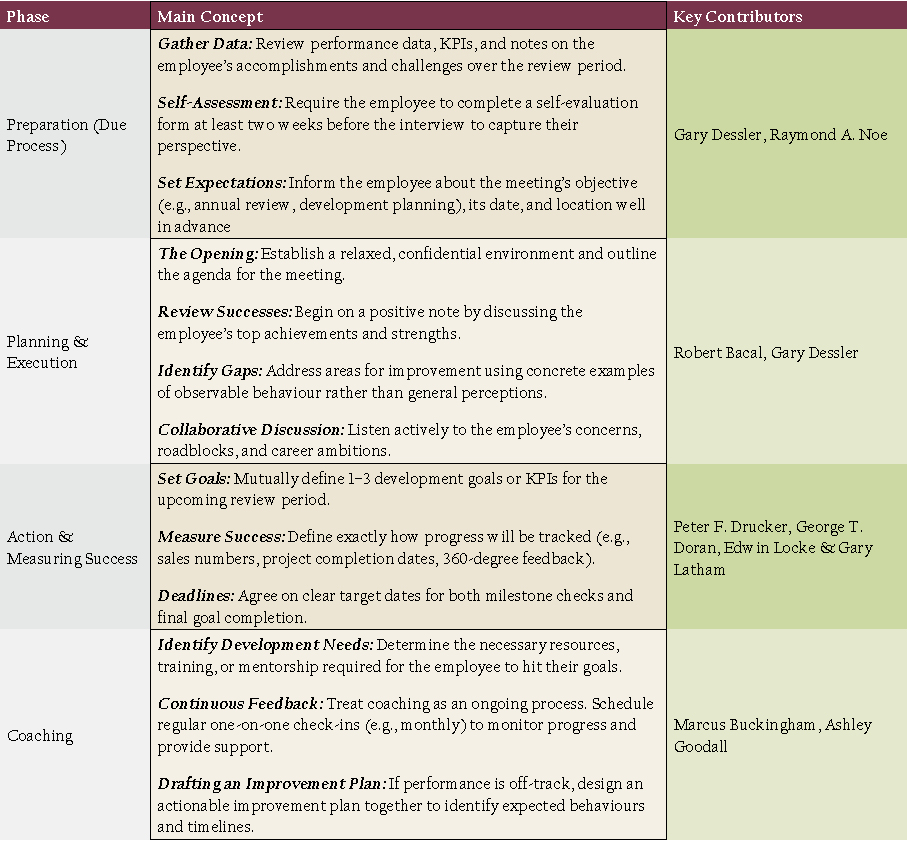 Quite often, performance management and performance appraisal are used interchangeably. However, they are distinct; performance appraisal is simply one component of performance management, which is a much broader, holistic function within HRM.
Employee performance is the multiplicative result of motivation, ability (encompassing competence and skill), and the workplace environment. Motivation itself stems directly from acknowledgment, recognition, and reward.
Human Resource Management (HRM) basically refers to the process of designing systems for the effective utilisation of human resources within companies or organisations. Therefore, managing KSOCs (Knowledge, Skills, Abilities, and Characteristics) to accomplish organisational goals is crucial in HRM. However, the effective management of human resources grows particularly complex when delving into performance management that is closely hinged upon job analysis and job design.
The root of performance management is job analysis, which serves as the research component of HRM. Through this process, Key Result Areas (KRAs), Objectives and Key Results (OKRs), and Key Performance Indicators (KPIs) are defined.
According to Dr. Saagarika Ghosal, an acclaimed HR professional from India, leading organisations across the globe increasingly treat KRAs, KPIs, and OKRs not as separate HR tools but as interconnected components of a single performance ecosystem. KRAs define where value must be created, KPIs measure whether value is actually being delivered, and OKRs help teams focus their energy on the most important opportunities and challenges at any given time.
Proper job analysis: foundation for scientific appraisal
Every job serves as the basic unit for organisational performance. A job consists of context (tasks, duties, authorities, output, performance, and standards), content (equipment, physical and social work conditions, work schedule, and organisational context), and human requirements, which are basically concerned with knowledge, skills, experiences, and personal attributes.
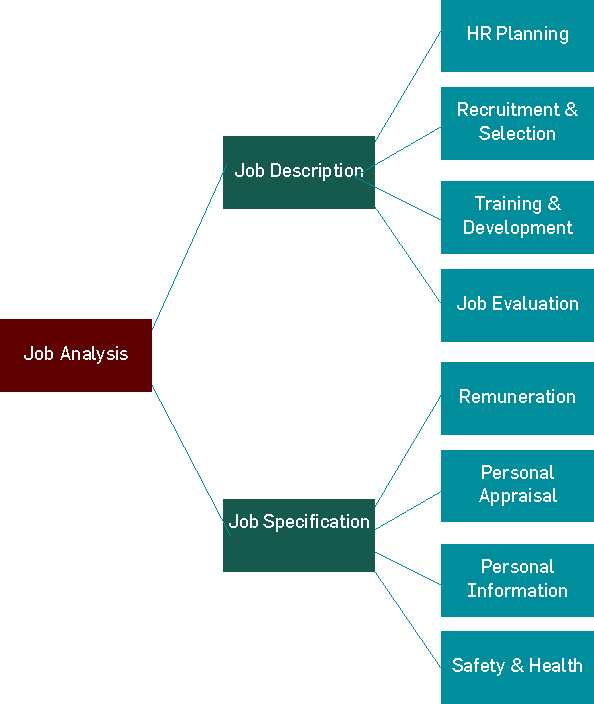
Job analysis is the research component of Human Resource Management. As an overarching investigative process, it yields two primary documents: the job description (which details what the job entails) and the job specification (which details who is qualified to do it). Job specification is more concerned with the financial worth of the job.
The job description (JD), which comprises Key Result Areas (KRAs) and Objectives and Key Results (OKRs) or Key Performance Indicators (KPIs), is the output of job analysis. Job analysis focuses on evaluating existing jobs to define what will be done, breaking down the role to create these foundational HR documents.
“Though KPIs/OKRs and KRAs are methods of gauging performance, we shouldn’t view them as an all-or-nothing choice. Instead, HR’s aim should be to figure out how to balance these complementary measures as part of your organisational goal setting and monitoring,” according to Tanya Mishra, Global CHRO, In-Solutions Global Ltd.
Fair and reliable performance evaluation
Measuring performance is a tough and complicated task in human resource management. However, there are tools and techniques for appraising performance in a more scientific way, minimising possible errors or flaws. Because jobs are the basic unit of organisational performance, a proper analysis of the job helps us design outputs and outcomes proficiently to cater to organisational goals, according to HR experts.
The KRAs, KPIs, or OKRs used for performance appraisal are defined within the job content, which comprises responsibilities and duties, authorities, Key Result Areas (KRAs), and performance standards (OKRs or KPIs).
“High-performing organisations are increasingly shifting from measuring activities to measuring outcomes. Their focus is on translating strategic priorities into measurable daily execution. This is where three complementary performance management tools – Key Result Areas (KRAs), Key Performance Indicators (KPIs), and Objectives and Key Results (OKRs) – become invaluable. Used together, they create a practical system that aligns strategy, accountability, measurement, and execution,” according to Ghosal.
 Performance indicators are designed based on a few universal metrics such as time, quantity, and quality. In addition, cost-effectiveness and satisfaction are also used in designing performance indicators. Performance appraisals based on these metrics are easily measurable when the roles defined in the jobs are clear. Most importantly, these indicators must be aligned with the authority provided to the job title. Setting performance indicators without providing the corresponding authority will not deliver the desired results. Authority in a job can manifest as spending, rewarding, approving, using, allocating, or demanding and acquiring authority.
Many organisations suffer from pseudo-authority, or just an illusion of decision-making power, where employees are not given the actual authority to make final decisions or enforce actions they believe they are authorised to handle.
When defining duties and responsibilities, duties can be understood as specific, day-to-day operational tasks performed (for example, account opening or data entry). Responsibilities are broader accountabilities and obligations (for example, meeting project deadlines or maintaining client relations), which evolve as one gains experience. Both responsibilities and duties should be actionable to substantiate the performance indicators.
Most importantly, appraisals should not be confidential, accidental, or unrelated to the work itself (such as trait-based evaluations). There are various frameworks to improve performance appraisal that are currently utilised across academia and professional bodies.
Sharing new trends in leading international organisations, Dr. Sanjay Muthal, CEO at ArgoLynx Consulting LLC, based in Chennai with an additional presence in Mumbai, India, underlined that the practice of viewing performance management as an annual appraisal exercise has shifted. Instead, leading organisations embrace an agile, business-driven approach where goals are reviewed frequently, aligned across teams, and adapted to changing market conditions.
Optimising performance
Performance optimisation is output-driven, focusing on maximising productivity, efficiency, and business results. This process is deeply connected with HR optimization, which is input-driven, though equally concerned with job design. It achieves this by using key strategies that include job rotation, job enrichment, job enlargement, and job simplification. Implementing these strategies not only minimises employee-related risks within organisations but also results in higher-quality work, better organisational efficiency, and a distinct competitive advantage.
In this respect, every job should be inherently motivating to garner high performance. However, employee behaviours and traits must also be carefully managed, as they directly determine workplace productivity and organisational success.
Furthermore, while safety and health are traditionally included in the framework of job specifications, since physical health issues are predominant concerns during recruitment and selection, it is also important to note that mental well-being is now given priority as a new dimension in HR optimisation. An employee may fail to meet performance expectations not because of a lack of competence, but due to an excessive workload, role ambiguity, poor supervisory support, workplace conflict, burnout, and chronic stress.
Consequently, the emerging perspective on achieving organisational goals is no longer solely focused on maximising employee output. Instead, it seeks to optimise sustainable performance by actively aligning organisational goals with employee capability, engagement, and overall well-being.
FROM METRICS TO MEANING
Building Performance Frameworks that Actually Work
 Shilpi Saxena
Across years of leading human capital functions in organisations spanning multiple geographies, I have observed one pattern repeat itself with striking consistency: companies invest heavily in performance frameworks, only to watch them quietly fail. Scorecards are designed, workshops are conducted – yet 12 months later, appraisal cycles generate more resentment than insight.
The design is almost never the problem. The failure rests in alignment, in cadence, and in the courage to hold the framework accountable.
The Vocabulary Problem
KPIs, KRAs, and OKRs are not synonyms, yet most organisations treat them as interchangeable. This is not a semantic inconvenience – it is a structural flaw.
They have to be thought of as nested layers of intent. KRAs define territory – what a role owns. A Head of Procurement owns supplier relationships, cost optimisation, and procurement efficiency. That is the mandate. KPIs are the instruments measuring how well someone navigates that territory – on-time delivery rates, cost variance, supplier quality scores. OKRs add the third dimension: aspiration. While KPIs measure today’s performance, OKRs ask where you are pushing this quarter.
Together they answer three essential questions: What do you own? How well are you doing it? Are you ambitious enough?
The Architecture of Alignment
Effective performance architecture follows a disciplined cascade. Any structuring of performance management begins with the organisation’s annual business goals – concrete strategic priorities, not values statements. From those, departmental OKRs are built: one inspiring qualitative objective supported by three to four measurable key results. Next targets need to be set and at roughly 70% achievability. If teams consistently hit 100%, it means that you are setting budgets, not OKRs.
From OKRs, role-level KRAs are to be defined – four to six per role, spanning both functional and behavioural dimensions. Next comes construction of individual KPIs using the SMART-V filter: Specific, Measurable, Achievable, Relevant, Time-bound – and Verifiable. This last criterion matters most. If a KPI cannot be independently validated through data, it will be contested at every appraisal. KPIs should be consciously capped at five per role. Scorecards with 40 metrics measure everything and manage nothing and should be avoided.
One rule I hold without exception: no KPI without a parent KRA, no KRA without a traceable business goal. If one cannot draw that line, the metric does not belong on anyone’s scorecard.
Give It a Heartbeat
A framework without rhythm is just paperwork. What needs to be built is a non-negotiable operating cadence: 15-minute weekly OKR check-ins, monthly KPI dashboard reviews, quarterly OKR scoring and resets, and a half-yearly KRA relevance check. A simple traffic-light system – green, amber, red – keeps performance visible and conversations honest without drowning anyone in meetings.
The Uncomfortable Truth About Managers
The framework is only as strong as the managers running it. Before any rollout, organisations should invest in enhancing the manager’s conversation capability and not limited just to tool training. I personally suggest 3R model which works well: Reflect on what was agreed, face the Reality of where numbers stand, and Recharge with what changes and support are needed. This 30-minute honest conversation outperforms any scorecard.
Consequences Close the Loop
Finally, outcomes should be linked to real decisions – increments, growth opportunities, and where necessary, structured interventions. When employees see the framework driving fair, transparent results, they stop treating it as an HR exercise and start owning it as their professional compass. This shift – from compliance to commitment – is when performance management truly begins and sustain successfully.
(Shilpi Saxena is a senior human capital leader with multi-geography experience across South Asia. She specialises in performance transformation, talent architecture, and building people-first cultures at scale)
International Practices, Key Concepts & Implementation Approaches of KRA, OKR & KPI
 Dr. Sunil Kode
Organisations across the world use structured performance management tools such as Key Result Areas (KRAs), Objectives and Key Results (OKRs) and Key Performance Indicators (KPIs) to align individual, team and departmental performance with business priorities. These three concepts are closely connected, but each has a different purpose. A simple and effective sequence is KRA → OKR → KPI.
KRAs define the areas of responsibility, OKRs define the goals to be achieved and KPIs measure performance and progress.
Significance of Concepts
Key Result Areas (KRA) This process consists of the broad areas of responsibility and expected contribution for a role, department, or function. KRAs provide role clarity and form the foundation for performance planning and evaluation. They are usually stable over a longer period but should be reviewed when business priorities or organisational structures change.
Example: KRAs of an HR Manager may include talent acquisition, employee engagement, learning and development and compliance.
Objectives and Key Results (OKR) This process is a goal-setting framework which combines qualitative, inspiring objectives with measurable key results. The objective describes what an organisation, team or individual wants to achieve, while the key results define how success will be measured. OKRs are often reviewed quarterly to support agility and focus.
Example: Objective: Improve customer experience. Key Results: Increase customer satisfaction score by 15%, reduce average response time by 30% and achieve 90% closure of customer complaints within the agreed service level.
Key Performance Indicators (KPI) process is measurable metrics used to evaluate the performance of an individual, team, department or organisation. KPIs focus on quantifiable outcomes such as operational efficiency, quality, revenue growth, customer satisfaction, safety, productivity or cost performance. Effective KPIs should be SMART: Specific, Measurable, Achievable, Relevant and Time-bound.
Example: For a finance team, KPIs may include budget variance, reporting cycle time, forecast accuracy and overdue receivables.
International Practices
KRA is the process which is extensively used in performance appraisal systems across a wide spectrum of multinational corporations to align employee responsibilities with organisational priorities and establish role clarity. It aids the basis for setting individual goals and evaluating contributions.
The OKR process has achieved wide international acceptance through technology companies like Google and has since been implemented by organisations worldwide. OKRs boost alignment, innovation and agility by encouraging regular performance, ambitious goals and regular performance reviews. Contrasting traditional annual performance process, OKRs are mostly reviewed quarterly, enabling organisations to respond quickly to changing business conditions.
Globally, KPI processes are adopted to drive strategic execution. Corporations in Europe and North America commonly use KPIs for operational monitoring and business performance management. Industries viz manufacturing, retail, banking and healthcare depend heavily on KPI dashboards for data-driven decision-making.
Implementation Approach
Start with organisational strategy: Define the strategic priorities and expected business outcomes.
Define KRAs: Translate strategic priorities into departmental and role-based areas of responsibility.
Set OKRs: Identify the most important improvement goals for the period and define measurable KRs.
Select KPIs: Choose a limited number of meaningful indicators that measure progress and outcomes.
Set targets and ownership: Assign clear owners, timelines, data sources and review frequency.
Review regularly: Use monthly or quarterly reviews to track progress, identify risks and agree corrective actions.
Keep improving: Review whether KRAs, OKRs and KPIs remain relevant as business needs change.
Conclusion
OKRs, KRAs, and KPIs are complementary processes which support effective performance management across the organisation. Whereas OKRs drive strategic goal achievements, KRAs define areas of responsibility and KPIs measure performance outcomes. Once implemented effectively, these processes augment organisational alignment, improve accountability, and boost a culture of continuous improvement and high performance across the organisation.
(Dr. Kode is Ex Vice President HR at Wilo Mather and Platt Pumps, India)
From Annual Appraisals to Continuous Performance
Making KRAs, KPIs, and OKRs Work Together
 Saagarika Ghosal
Every meaningful transformation begins with a simple question: How do we know whether we are truly succeeding? For many organisations, this question lies at the heart of performance management. Yet, despite significant investments in people and processes, performance often remains an annual ritual rather than an everyday discipline.
Across many workplaces, appraisal season arrives with a rush of forms, hurried rating discussions, and lengthy debates over scores. Once the process is complete, everyone returns to business as usual until the next cycle. Unfortunately, this traditional approach rarely improves organisational performance. As industries become more competitive – from commercial banking and telecommunications to manufacturing, healthcare, hydropower, and technology – organisations can no longer rely on activity-based reporting. Simply stating that employees conducted training sessions, visited customers, or attended meetings says little about whether customers stayed loyal, revenue increased, operational efficiency improved, or safety standards were strengthened.
High-performing organisations are increasingly shifting from measuring activities to measuring outcomes. Their focus is on translating strategic priorities into measurable daily execution. This is where three complementary performance management tools – Key Result Areas (KRAs), Key Performance Indicators (KPIs), and Objectives and Key Results (OKRs) – become invaluable. Used together, they create a practical system that aligns strategy, accountability, measurement, and execution.
The journey begins with KRAs, or Key Result Areas. KRAs define the few critical areas where a role must consistently deliver results. They answer a fundamental question: Why does this role exist? Rather than listing day-to-day tasks, KRAs describe the outcomes that are essential for organisational success.
Imagine a series of agricultural terraces carved into a hillside. If the terraces are poorly designed, no amount of irrigation will produce a healthy harvest. KRAs serve a similar purpose in organisations. They establish the fields where success must be cultivated.
Consider a branch manager in a commercial bank. Their primary KRAs might include Deposit Growth, Credit Quality, Customer Experience, Compliance, and People Leadership. A plant head in a manufacturing company may focus on Production Efficiency, Product Quality, Workplace Safety, and Cost Management. In a hospital, a nursing superintendent’s KRAs could include Patient Care Standards, Staff Management, Infection Prevention, and Clinical Quality. While the specific areas vary across industries, the principle remains consistent: KRAs identify the few responsibilities that cannot fail if the organisation is to achieve its objectives.
Well-designed KRAs also solve a common organisational challenge – role ambiguity. In many organisations, employees gradually accumulate unrelated responsibilities and are eventually evaluated on everything and nothing. Clear KRAs reduce this confusion by establishing stable areas of accountability that remain relevant over time.
Once KRAs define where results are expected, KPIs, or Key Performance Indicators, explain how success will be measured within each area. A KRA without KPIs is like a destination without a map – it identifies where to go but offers no way to determine whether progress is being made. For example, under the Deposit Growth KRA, a bank might monitor KPIs such as net deposit growth, CASA ratio, number of new salary accounts opened, and campaign conversion rates. Within the Credit Quality KRA, indicators could include Non-Performing Loan (NPL) percentage, recovery rates, and turnaround time for credit reviews. Similarly, a hydropower project may measure its Safety KRA through indicators such as Lost Time Injury Frequency Rate (LTIFR), near-miss reporting rates, and safety audit closure times. In a fast-moving consumer goods (FMCG) distribution business, Customer Experience could be monitored using On-Time-In-Full (OTIF) delivery performance, customer complaint resolution time, and repeat order rates.
Many organisations struggle not because they lack KPIs but because they either measure too little or far too much. Some rely on vague assessments such as ‘overall performance is satisfactory’, while others create lengthy dashboards containing dozens of indicators that nobody regularly reviews. Effective performance management requires selecting only the few indicators that genuinely support decision-making.
Equally important is defining every KPI clearly. Each indicator should specify its calculation method, data source, reporting frequency, target value, and accountable owner. Without this discipline, performance discussions often become debates over conflicting numbers instead of constructive conversations about improvement.
While KRAs and KPIs provide stability and measurement, organisations also require flexibility to respond to changing priorities. This is where OKRs, or Objectives and Key Results, play a vital role. If KRAs represent the long-term foundation of a role, OKRs represent focused short-term initiatives. They help organisations concentrate on strategic priorities over shorter cycles, typically every quarter. For example, a digital payment company might establish an objective such as ‘Make merchant payments effortless for everyday customers’. Supporting Key Results could include increasing active merchants by 20%, reducing payment failures below 0.5%, and achieving 90% same-day merchant onboarding within key markets.
Unlike annual performance plans, OKRs encourage continuous execution through weekly progress reviews, mid-quarter adjustments, and end-of-quarter reflection. Instead of asking only whether targets were achieved, teams also examine what they learned, what obstacles emerged, and what should change during the next cycle.
Many high-performing organisations intentionally separate OKRs from compensation decisions. This encourages employees to pursue ambitious goals without fearing that every missed stretch target will negatively affect their appraisal. The emphasis shifts from perfection to learning, innovation, and continuous improvement.
Despite the advantages of these frameworks, implementation often faces cultural challenges. Managers may hesitate to have honest performance conversations. Employees sometimes perceive metrics as mechanisms for punishment rather than improvement. Teams may even manipulate numbers to meet targets – for example, closing customer complaints without resolving underlying issues or accelerating sales while neglecting proper credit assessments.
These challenges cannot be solved by introducing more complicated performance systems. Instead, organisations need stronger management discipline. The process should begin with strategic priorities, identify the critical KRAs required to deliver those priorities, select a limited number of meaningful KPIs, and introduce quarterly OKRs wherever agility and innovation are essential.
Equally important is establishing a consistent performance rhythm. Monthly coaching conversations, regular feedback sessions, and transparent progress reviews create a culture of continuous improvement. Performance should become an ongoing dialogue rather than an annual surprise.
When these three frameworks work together, performance management evolves from administrative paperwork into a powerful management system. KRAs establish accountability by clarifying what each role is expected to achieve. KPIs introduce measurement discipline by objectively tracking progress. OKRs inject focus, alignment, and momentum by directing attention toward changing strategic priorities.
Organisations that successfully integrate these elements create something that every leader seeks but few achieve – clarity. Strategic objectives communicated in the boardroom are translated into meaningful responsibilities at branch offices, manufacturing plants, project sites, hospitals, and customer service teams without losing their original intent.
Globally, leading organisations increasingly treat KRAs, KPIs, and OKRs not as separate HR tools but as interconnected components of a single performance ecosystem. KRAs define where value must be created, KPIs measure whether value is actually being delivered, and OKRs help teams focus their energy on the most important opportunities and challenges at any given time.
As organisations continue to navigate rapid technological change, increasing customer expectations, and intense competition, sustainable success will depend less on annual appraisal forms and more on building a culture of accountability, measurement, learning, and execution.
Ultimately, good management is not about creating more reports. It is about converting strategic goals into clear priorities, aligning people around shared outcomes, measuring progress consistently, and enabling timely course correction. When organisations achieve this balance, performance becomes intentional rather than accidental and excellence becomes a repeatable habit rather than an occasional achievement.
Performance Management Systems
Moving Beyond Appraisals to Performance Excellence
 Tanya Mishra
Performance management has evolved significantly over the past decade. Leading organisations no longer view it as an annual appraisal exercise but as a continuous process of aligning individual performance with organisational strategy, developing talent, and fostering a culture of accountability and growth. For organisations in Nepal, where structured HR practices are still evolving, implementing a modern Performance Management System (PMS) presents an opportunity to build high-performing teams while creating transparency and fairness.
A well-designed PMS begins with clarity of purpose. Employees need to understand what success looks like, how their work contributes to organisational goals, and how their performance will be assessed. This is where three important concepts come together:
Key Result Areas (KRAs)
Key Performance Indicators (KPIs)
Objectives and Key Results (OKRs)
KRAs define the broad areas of responsibility for a role. For example, an HR Manager›s KRAs may include talent acquisition, employee engagement, compliance, and learning & development. KRAs answer the question: What am I responsible for?
Once KRAs are established, the next step is to develop KPIs, which are measurable indicators used to evaluate performance within each KRA. For instance, recruitment turnaround time, employee retention rate, training completion, or customer satisfaction scores are examples of KPIs. Good KPIs should follow the SMART framework – they must be Specific, Measurable, Achievable, Relevant, and Time-bound. In practice, this means targets should be clear, quantifiable, and realistic, while still being stretch targets that encourage higher performance. A strong PMS typically limits employees to six to seven targets so that focus remains sharp and performance is manageable.
Increasingly, global organisations are adopting Objectives and Key Results (OKRs) to complement KPIs. While KPIs measure operational performance, OKRs drive strategic change and innovation. An objective defines an ambitious goal, while key results are measurable outcomes that demonstrate success. For example:
Objective: Improve employee experience.
Key Results:
- Increase employee engagement score from 72% to 85%.
- Reduce voluntary attrition by 15%.
- Achieve 95% completion of development plans.
Unlike KPIs, OKRs encourage stretch goals, cross-functional collaboration, and organisational agility.
A Practical Performance Management Process
Leading organisations typically follow a continuous performance cycle:
1. Goal Setting
Managers and employees jointly define KRAs, KPIs, and, where appropriate, OKRs at the beginning of the performance period. Targets should be SMART and limited to six to seven key priorities to ensure focus, accountability, and measurable outcomes.
2. Continuous Check-ins
Rather than waiting for the annual review, managers conduct monthly or quarterly one-on-one discussions. These conversations focus on progress, challenges, support required, and changing priorities.
3. Coaching and Feedback
Modern performance management emphasises coaching over evaluation. Feedback should be timely, specific, balanced, and focused on behaviours and outcomes rather than personalities. Managers should recognise achievements as frequently as they address performance gaps.
4. Mid-Year Review
A structured review allows goals to be recalibrated if business priorities change. This is particularly important in today’s dynamic business environment.
5. Year-End Evaluation
Performance is assessed against agreed KPIs and OKRs using objective evidence, measurable outcomes, and behavioural competencies. Many leading organisations now supplement manager evaluations with 360-degree feedback for leadership and managerial roles.
Conducting Effective One-on-One Discussions
One-on-one meetings are the cornerstone of a successful PMS. They should be regular, confidential, and future-focused. Effective managers begin by asking employees to reflect on their achievements, challenges, and support needs before sharing their own observations. These discussions should conclude with clear action plans and agreed timelines.
Managing Difficult Performance Conversations
One of the biggest challenges for managers is addressing underperformance. Successful organisations encourage managers to have conversations early rather than allowing issues to accumulate. The discussion should focus on facts, examples, and expectations, while maintaining empathy and respect. Employees should be encouraged to share their perspective, and improvement plans should include clear goals, coaching support, and review milestones. Difficult conversations are most productive when they are developmental rather than punitive.
Evaluating Performance Fairly
A credible performance management system combines measurable business outcomes with behavioural expectations. Organisations should avoid relying solely on ratings. Instead, they should assess what employees achieved, how they achieved it, their collaboration, innovation, customer focus, and contribution to organisational values. Calibration meetings across departments help reduce bias and ensure consistency in evaluations.
The Way Forward for Nepal
As Nepali organisations continue to professionalise their HR practices, performance management should be viewed not as an administrative requirement but as a strategic business process. Digital performance platforms, AI enablement, continuous feedback, coaching cultures, and data-driven decision-making are becoming the global standard. Organisations that successfully integrate KRAs, KPIs, and OKRs will help build future ready workforce. Regular review of targets, mid-year appraisals, targets linked to organisational goals, and transparent communication will improve performance and strengthen employee engagement, leadership capability, and organisational resilience.
The future of performance management lies in creating conversations, not merely completing forms. Organisations that embrace this philosophy will be better positioned to attract, develop, and retain high-performing talent in an increasingly competitive business environment.
KPI, KRA, OKR
Measuring What Actually Moves the Business
 Kunal Wadhwani
Most organisations do not have a measurement problem. They have a translation problem. Research summarised over the years in the Harvard Business Review puts the failure rate of strategy execution somewhere between 60% and 90%. The strategy is usually sound, the budget adequate, the leadership willing. The thread is lost somewhere between the boardroom and the frontline. KPI, KRA and OKR are three different attempts to hold that thread.
It helps to stop treating them as rivals. A Key Result Area is the arena you are accountable for, the handful of domains where your role must deliver, whether you are in finance, operations or people. A Key Performance Indicator is the gauge that tells you how you are doing inside that arena. An Objective and its Key Results pair an ambition with the proof that you are moving toward it. KRAs define where to look, KPIs tell you the score, OKRs push you somewhere you have not been. Different jobs, not competing tools.
The OKR discipline traces back to Intel and reached the wider world through John Doerr, who carried it into Google and later documented it in Measure What Matters. What the best adopters have in common is rarely the software. It is the operating habits: every objective has a named owner, progress is reviewed on a short and honest cadence, and goals are kept deliberately ambitious. One hard lesson travels across every market I have worked in. The moment you tie stretch goals directly to bonuses, people stop stretching and start sandbagging. Ambition and fairness pull in opposite directions, so keep the two systems apart.
For practical implementation, a few principles hold up under pressure. Derive KRAs from strategy, not from old job descriptions, or you simply measure yesterday. Cascade by line of sight rather than copy and paste, so a frontline target visibly connects to a company priority. Choose fewer, sharper metrics; when only about one in seven employees can clearly state the goals they are chasing, the answer is rarely more dashboards. And test every metric with one question: does it change a decision, or does it just decorate a report?
This is where humility matters. A scorecard is not performance. A framework is only as good as the conversation it triggers between a manager and the person doing the work. The numbers are the beginning of that conversation, not its conclusion. KPI, KRA and OKR each earn their place only when they connect daily effort to something the business can feel, in margin, in service, and in the discretionary energy people choose to bring.
Measure what moves the business. Then go and have the conversation the measurement made possible.
(Kunal Wadhwani is the author of Engagement Economics (endorsed by Dave Ulrich) and a former Group CHRO with 24+ years of C-suite HR leadership across the GCC, UK, Africa, and India.)
Beyond Measurement
Making KPIs, KRAs, and OKRs Work for Business Success
 Dr Sanjay Muthal
In my three decades of working with organisations across different stages of growth, I have learned that performance management is not about creating more metrics – it is about creating more meaning. The main focus was to create fair practices by design, that can become the culture through KPI’s and personalisation in each department is possible by intent. Whether we call them KRAs, KPIs, or OKRs, these frameworks are only as effective as the conversations, clarity, and accountability they inspire.
One of the biggest misconceptions organisations make is treating KPIs, KRAs, and OKRs as interchangeable. They serve distinct but complementary purposes. KRAs (Key Result Areas) define the broad areas in which an individual or function is expected to deliver outcomes. KPIs (Key Performance Indicators) measure how effectively those responsibilities are being executed through quantifiable indicators. OKRs (Objectives and Key Results), popularised by global technology organisations, are designed to drive strategic transformation by setting ambitious objectives supported by measurable outcomes.
To make it easier, consider an analogy from my love for cricket. Think of batting as the batter’s responsibility – this is the KRA: what am I responsible for? Moving to the batting average, strike rate, and number of boundaries, these measure performance – how my performance is measured is the KPI. Lastly, what transformation we want to achieve is measured via OKRs. Drawing again from the cricket grounds, I would say winning the championship by becoming the highest-scoring batting unit in the tournament, complete with milestones, is the analogy.
Leading international organisations have shifted away from viewing performance management as an annual appraisal exercise. Instead, they embrace an agile, business-driven approach where goals are reviewed frequently, aligned across teams, and adapted to changing market conditions. In my previous organisation, I introduced daily, weekly, and monthly catch-up calls to discuss our employees’ professional lives. By providing a platform that clarified not only what they were expected to achieve but also why it mattered, overall performance improved significantly.
However, adopting global practices does not mean simply introducing an OKR template. Successful implementation begins with strategic clarity. Every organisational objective should cascade into functional priorities and individual goals while maintaining flexibility for innovation. Leaders should avoid measuring everything. Instead, they should focus on a handful of indicators that truly influence business strategy. For instance, because my organisation’s primary ambition was to create a safe workplace, our key OKR was achieving zero accidents through superior safety protocols.
Another important lesson is balancing outcomes with behaviours. Numbers tell us what has been achieved, but leadership, collaboration, learning agility, and customer centricity explain how those results were delivered. Sustainable high performance is built when organisations recognise both dimensions.
Technology and Artificial Intelligence are also reshaping performance management. Modern HR platforms provide real-time dashboards, predictive analytics, continuous feedback mechanisms, and data-driven insights that enable managers to identify risks early and coach employees more effectively. Yet, technology should support – not replace – human judgement. Meaningful conversations between managers and employees remain the cornerstone of performance excellence.
As organisations navigate increasing uncertainty and rapid business transformation, the future of performance management lies in continuous alignment rather than annual evaluation. KRAs provide direction, KPIs measure operational excellence, and OKRs accelerate strategic change. Together, they create a performance ecosystem that is transparent, agile, and purpose-driven.
The true measure of success is not whether an organisation has implemented KPIs, KRAs, or OKRs. It is whether every employee understands how their daily work contributes to the organisation’s larger purpose. When performance frameworks create alignment instead of administration, organisations move beyond measuring work – they inspire people to create lasting business impact.
We establish visible systems using tools like KPIs, which build organisational credibility for the long run.
(Muthal is CEO at ArgoLynx Consulting LLC)

