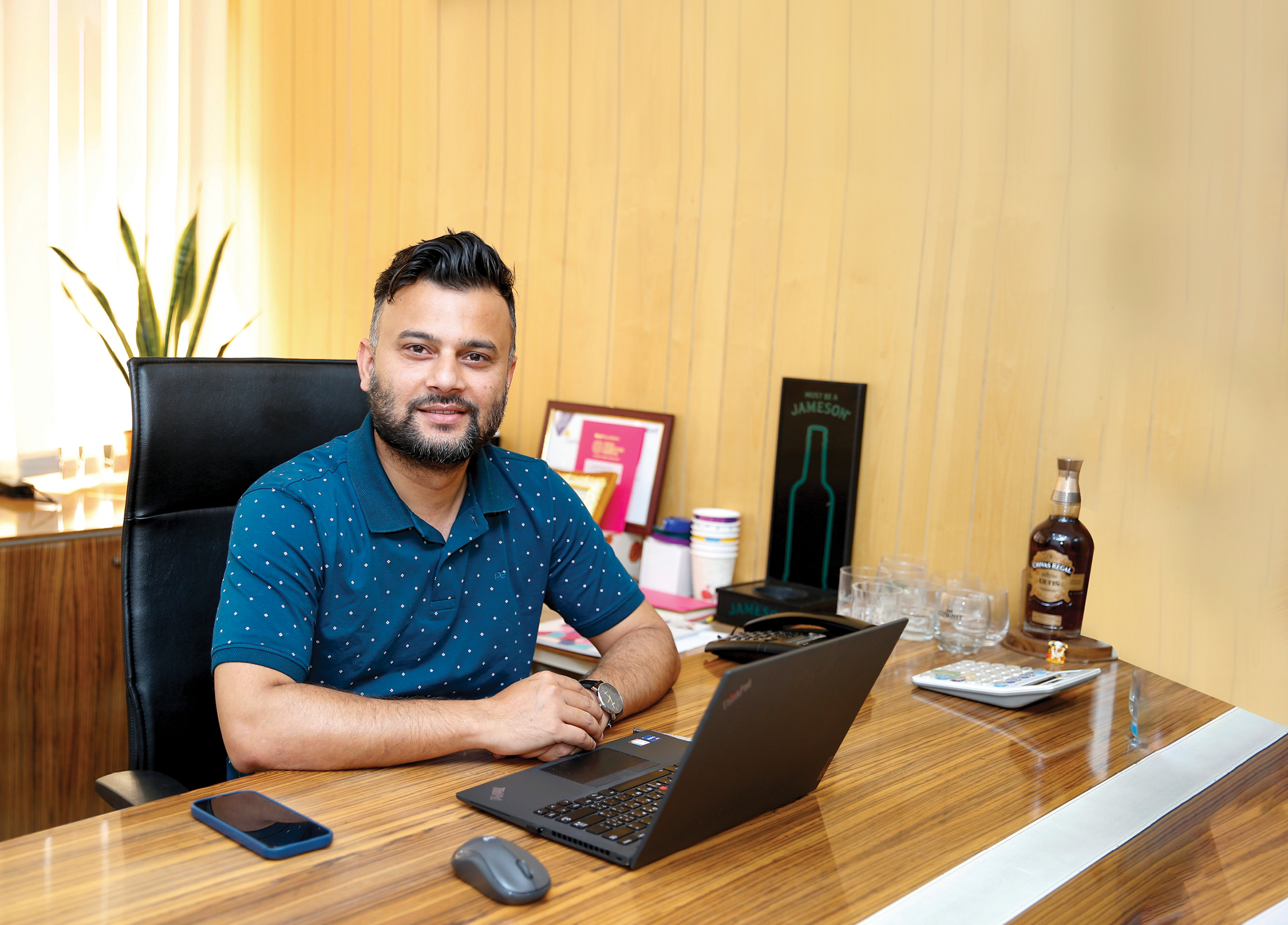
 With over 10 years of experience in marketing and a proven track record in driving business growth and managing profit & loss, Saurav Bhattarai honed his expertise in leading high-impact initiatives and delivering measurable results. His career spans across prominent multinational corporations, where he has successfully managed substantial portfolios, including iconic brands like Khukri Rum, Himalaya Purifying Neem Facewash, and Dabur Honey, among others.
Bhattarai is deeply passionate about leveraging consumer insights to craft innovative and strategic marketing solutions. Currently, as the Country Business Development Manager for Pernod Ricard in Nepal, He oversees and drives the brand’s strategic vision, focusing on market expansion, sales growth, and activation strategies. In this dynamic role, he has been expanding his global perspective, learning best practices from international markets, and sharpening his leadership skills in driving sales and business development.
Bhattarai’s experience continues to be shaped by the fast-evolving consumer landscape and the exciting challenges of growing iconic brands in the vibrant Nepali market. The HRM Nepal caught up with Bhattarai to learn about the various dimensions of shaping the popularity of brand in Nepali market. Experts:
Q: How would you assess your professional journey as a business development manager at Pernod Ricard?
A: My journey at Pernod Ricard has been both dynamic and deeply rewarding. It has allowed me to evolve from a marketing-focused professional into a business leader with a broader commercial lens. As the Business Development Manager for Nepal, I’ve had the opportunity to drive strategic growth, implement global practices with a local touch, and strengthen our market position across multiple channels.
What makes this role especially fulfilling is the balance between strategy and execution – from working closely with distributors and retail partners to designing market-specific activations for premium brands like Chivas, Jameson, Absolut and The Glenlivet etc. The role constantly challenges me to be agile, innovative, and commercially astute.
Beyond numbers, the real highlight has been the people – building a capable team, fostering partnerships, and contributing to a culture that celebrates both performance and creativity. Overall, it’s been a journey of learning, leading, and delivering impact.
Q: You’ve a decade long career in branding and marketing; what are your significant contributions/achievements as a branding and marketing professional?
A: Throughout my career in branding and marketing, I’ve had the opportunity to work with a diverse portfolio of brands – ranging from heritage products like Khukri Rum to global FMCG powerhouses like Dabur Nepal and Himalaya Wellness. My core contribution has always been building brand relevance and resonance across consumer segments.
One of my key achievements was revitalising brand communication and visibility for Khukri Rum, aligning the brand with modern sensibilities while retaining its legacy appeal. I’ve led 360-degree campaigns, crafted go-to-market strategies, and executed on-ground activations that not only strengthened brand equity but also translated into strong commercial impact.
At Himalaya, I worked on product positioning, marketing campaigns, and retail visibility, helping drive penetration across urban and rural markets. What sets my work apart is the ability to bridge creativity with consumer insights, ensuring every campaign or activation not only looks great but also delivers measurable results.
These experiences laid a strong foundation for my current role, where I now blend marketing precision with commercial execution to grow some of the world’s most iconic brands.
Q: How do you leverage consumer insights in developing marketing strategies?
A: Consumer insights are at the heart of every effective marketing strategy. I firmly believe that understanding what drives consumer behaviour – their needs, aspirations, and pain points – helps craft campaigns that truly connect and convert.
At the start of any strategy, we deep dive into quantitative data like sales trends, category performance, and purchase patterns, as well as qualitative inputs from market visits, trade partners, FGDs (focus group discussions), consumer feedback, etc. These insights help us identify opportunities, whether it’s positioning a brand differently, localising activations/ campaigns, or innovating with formats and price points.
For example, in Nepal’s evolving alcobev landscape, we’ve used insights to tailor our activations by outlet type, optimise product assortment, and even guide promo mechanics – ensuring we meet consumers where they are, with what they want. This insight-led approach ensures that our strategies are not just creative, but also relevant and commercially effective.
Q: Making sales deal is an interdisciplinary job and equally tough to perform. How has Pernod Ricard been shaping the Nepal market?
A: Absolutely, closing a sales deal today goes far beyond price and product – it’s about value creation across the chain. At Pernod Ricard, we’ve been actively shaping the Nepal market by combining strong brand building with smart commercial strategies.
We’ve driven growth through innovative activations, strategic partnerships with the trade (both On-Trade and Off Trade), and consistent brand storytelling – whether it’s premium experiences with Chivas or engagement through Jameson events. Our sales incentive programmes have further empowered the trade by creating shared success goals, boosting motivation and performance.
On top of that, we’ve focused on availability, visibility, and advocacy – ensuring our brands are not just on shelves but also in consumers’ minds. Through a combination of data-led targeting, consumer promotions, merchandising, and menu listings, we’re making our brands aspirational yet accessible.
This integrated approach has helped us not only increase market share but also elevate the entire premium spirits category in Nepal.
Q: Could you shed light on the current scenario of liquor market in Nepal based on the evolving landscape of branding and marketing?
A: Nepal is a dark market; this presents a unique challenge – but also an opportunity – for brands to think creatively and engage consumers in more meaningful ways.
Over the years, the market has evolved significantly. Consumer experiences, innovative POSM (Point of Sale Materials), and impactful ‘last 3 feet’ marketing have played a crucial role in shaping brand recall and influencing purchase behaviour. We focus heavily on in-store visibility, menu listings, bar placements, and experiential activations to drive differentiation and relevance.
With increasing consumer exposure to global trends, there’s a growing appetite for premiumisation, storytelling, and experiential consumption. We’ve leaned into this shift – leveraging insights to design tailored activations, elegant visibility elements, and immersive consumer touchpoints that go beyond just selling a bottle.
In this dynamic environment, it’s not just about what the brand says – but how and where it says it. And that’s where innovative branding and strategic trade marketing have made a meaningful impact in Nepal’s alcobev landscape.
Q: Consumer awareness and brand preferences have shifted considerably over the years. In your experience, how valuable is branding to consumers today, and how sensitive are they to brand perception?
A: Today, branding is everything. Consumers are more informed, more exposed, and more emotionally driven than ever before. A brand is no longer just about the product – it’s about what it represents, how it makes consumers feel, and the experiences it offers.
In my experience, particularly in a market like Nepal, brand perception strongly influences consumer choice, especially in the premium and luxury segments. With increasing global exposure and evolving lifestyles, consumers are now looking for authenticity, purpose, and identity in the brands they choose.
Brand loyalty is built on more than taste or price – it’s shaped by consistency, storytelling, visibility, and association. Whether it’s how a brand is displayed at retail, how it’s presented in a bar, or the kind of event it’s associated with – every touchpoint matters.
That’s why we invest deeply in consumer education, in-bar experiences, and curated brand worlds. Because when branding is done right, it not only builds preference – it builds aspiration and trust.
Q: What are the key strengths and gaps you’ve identified in branding and marketing in Nepal?
A: Nepal’s branding and marketing landscape is evolving fast. There’s a strong sense of creativity, agility, and local relevance. Brands have become more experience-led, with innovative POSM, digital engagement, and retail activations – even in a restricted environment.
Take Jameson Patan Fest as an example. It was a powerful blend of culture, music, and storytelling – driving both brand awareness and engagement in a way that felt organic and memorable. These kinds of activations are becoming a strength in Nepal’s market.
However, the gaps lie in data-driven planning and sustained brand building. Many campaigns are short-lived, missing out on the opportunity to build long-term equity. There’s also room to improve in consumer insight integration and digital consistency.
To move ahead, brands must balance creative expression with strategic continuity – making each consumer interaction part of a larger story.
Q: What kind of culture and strategy do you follow, from ideation to the implementation of business development?
A: For me, business development is a blend of vision, agility, and collaboration. I follow a culture where ideas are encouraged from all levels – whether it’s from a trade partner, field team, or internal brainstorming. Good ideas can come from anywhere.
Strategically, it starts with consumer and market insights. We identify real opportunities, align them with our brand goals, and then co-create solutions – whether it’s a placement drive, visibility campaign, or incentive programme.
Implementation is all about clarity, consistency, and ownership. I believe in strong alignment across functions – sales, marketing, supply, and trade partners – to bring ideas to life effectively. Regular feedback loops and performance tracking help us adapt quickly.
The goal is to not just drive numbers, but to build long-term value and relationships – for the brand, the trade, and the consumer.
Q: How do you combat counterfeit products being sold under the name of popular brands?
A: Counterfeit is a serious challenge, especially for premium brands. We tackle this through a mix of technology, awareness, and collaboration.
We use secure packaging features, such as unique barcodes, QR verification, and tamper-proof seals to help consumers and partners identify genuine products. Our field teams also regularly conduct market audits and work closely with global legal teams to monitor and report counterfeit activity.
Equally important is educating our trade partners and consumers – helping them spot fakes and understand the value of buying authentic products. It’s an ongoing effort, but critical for maintaining brand trust and product integrity.
Q: What are the fundamental aspects that business development managers shouldn’t overlook?
A: Business development isn’t just about chasing numbers – it’s about building sustainable growth. Some key fundamentals that should never be overlooked are:
Q: Understanding the consumer – Know who you’re selling to and why they’d choose your brand.
A: Strong trade relationships – Long-term success depends on trust and collaboration with partners.
Flawless execution – Even the best strategies fail without consistent, on-ground delivery.
Data-driven decisions – Back your instincts with insights to spot real opportunities and gaps.
Team alignment – Sales, marketing, finance – everyone should be on the same page for true impact.
At the heart of it, it’s about balancing short-term wins with long-term brand and business value.
Q: How are technological advancements and innovations shaping the future of branding and marketing? Are they more of a challenge or an opportunity?
A: Technological advancements are transforming branding and marketing, offering vast opportunities for deeper consumer insights and more personalised experiences. As a Business Development Manager, I’ve seen how AI, data analytics, and automation allow brands to engage consumers more effectively, whether it’s through targeted campaigns or real-time interactions. This is especially relevant for local brands in Nepal, where localised experiences can make a significant impact.
Emerging technologies like AR and VR also offer unique ways to engage consumers, creating memorable, immersive brand activations. However, these advancements come with challenges, such as data privacy concerns and the rapid pace of change. Staying compliant with regulations and ensuring data security are critical, especially as consumer expectations shift towards more personalised and transparent interactions.
While these innovations present a learning curve, they ultimately represent an opportunity for brands to build stronger connections with consumers. Success lies in embracing these technologies thoughtfully, ensuring they align with consumer needs while maintaining trust and engagement.
Q: With the shift in promotional platforms, how are digital channels and other tools influencing business development?
A: The shift to digital channels has had a profound impact on business development, especially in markets like Nepal. Digital platforms such as social media, search engines, and e-commerce have created new opportunities for direct consumer engagement and brand visibility. Digital tools allow us to reach a broader audience and track campaign performance in real time, optimising strategies for better outcomes.
Social media influencers and content creators, for example, are essential for activating brand campaigns and driving consumer engagement. Additionally, tools like marketing automation and data analytics enable us to personalise messaging and streamline customer interactions, enhancing both efficiency and effectiveness in reaching target markets.
Ultimately, digital channels have made it easier for brands to scale and innovate, providing a direct link to consumers, fostering deeper relationships, and creating valuable opportunities for business growth.
Q: Finally, do you have any interesting insights you would like to share with our readers?
A: One key insight I’ve gained from my journey is the importance of adaptability in today’s rapidly evolving business landscape. Whether you’re managing a local brand in Nepal or working with global giants like Pernod Ricard, the ability to quickly pivot and adjust strategies is crucial. In a world driven by technology and consumer behaviour shifts, flexibility allows businesses to stay relevant and thrive.
Another fascinating trend is the rise of consumer-centric marketing, where the focus is not just on pushing a product but on creating meaningful experiences. By leveraging data and digital tools, we can deliver personalised content and services that genuinely resonate with consumers, building lasting relationships rather than short-term transactions.
Finally, I’d encourage brands to embrace sustainability as a core value. It’s no longer just about business growth – it’s about responsible growth. Consumers today are more conscious of the environmental and social impact of their choices, and brands that align with these values will not only stand out but also build trust and loyalty over time.