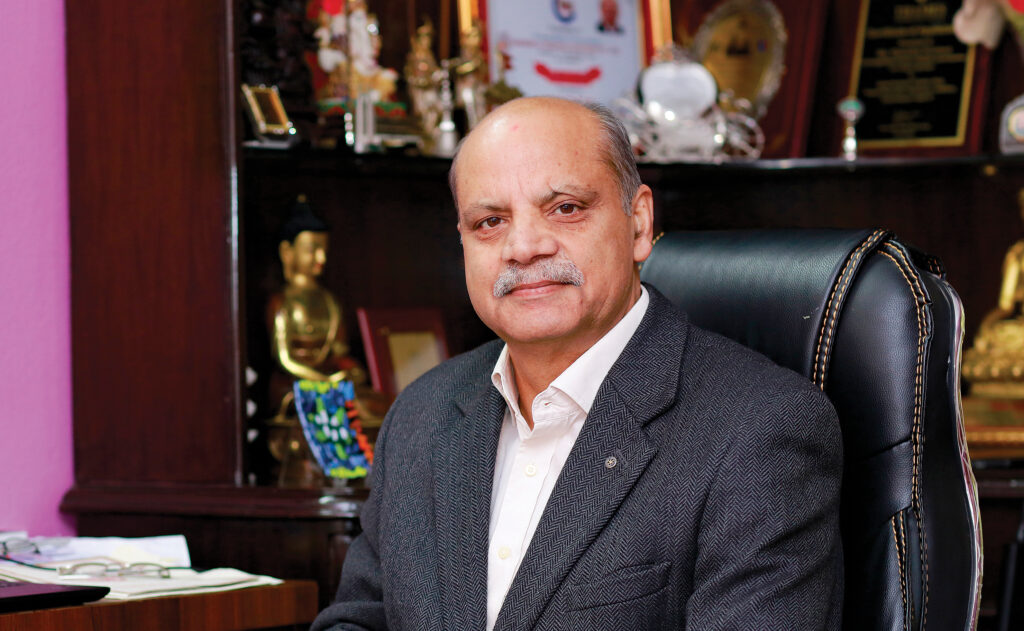
Gaurab Hamal, Deputy General Manager of Marketing and Brand Management at CG Electronics, has served the company for over five years. He also lectures on management at Islington College. Hamal possesses diverse marketing experience across the automotive, spirits/liquor, telecommunication, and electronics/home appliance sectors. The HRM Nepal recently interviewed Hamal to explore various dimensions of sales and marketing. Excerpts from that interview are provided below.
 Q: How do you assess the current landscape of the electronics market in Nepal?
A: The consumer electronics market in Nepal is growing steadily, driven by increasing urbanisation, rising disposable income, changing lifestyles, and widespread internet/mobile penetration.
The Nepali consumer electronics market is projected to reach approximately $1.85 billion in 2025, with a compound annual growth rate (CAGR) of 4–5% through 2030. This market includes mobile phones, laptops and tablets, home appliances, wearables and audio devices, with the telephony segment being the primary contributor at around $1.38 billion.
Currently, the Nepali electronics market is characterised by a trend towards brand localisation, a shift towards online purchasing, and increased sales driven by financing schemes. Market preferences are also evolving, with growing demand for energy-saving products like inverter-based and eco-friendly electronics due to rising electricity costs. Furthermore, urban areas show increasing demand for AI and IoT-enabled appliances for smart integration.
Key challenges facing the market include import dependency, leading to price volatility; limited service networks in rural areas; the impact of electricity load-shedding (intermittent in some areas) on appliance usage; high customs duties on certain electronic products; and a lack of subsidies and limited local research and development or innovation in electronics.
Q: Where does CG Electronics position itself amidst growing market competition?
A: CG Electronics stands as a leading and well-structured business vertical within the Chaudhary Group (CG). It has established itself as a dominant, vertically integrated entity in Nepal’s electronics and home appliance market. To maintain competitiveness amidst increasing challenges from e-commerce platforms and international brands, CG Electronics is strategically leveraging its established legacy, robust distribution capabilities, and strong local adaptability.
Strong brand legacy & local trust
Wide retail footprint & dominance in distribution system
Vertical integration advantage
Local customisation & affordability
Wide after sales network
Q: CG has introduced several global brands in the Nepali market. What unique value propositions do you offer to encourage consumers to choose CG-supplied brands?
A: CG adopts a ‘Made in Nepal’ and glocal approach, actively promoting the values of ‘Trusted Global-Local Partnerships’. We are advancing with an affordable, value-driven pricing structure, supported by a strong after-sales service network and a nationwide dealer and showroom presence. Additionally, we offer easy financing and EMI schemes, emphasise energy-efficient and eco-friendly models, and provide a one-stop shopping experience.
Q: How do you align your product offerings with the evolving preferences and choices of your customers?
A: To enhance the consumer experience, we’ve aligned CG Electronics’ Brand & Product Strategy with current consumer trends and a digital-first, omnichannel approach. We’ve launched and upgraded cgdigital.com.np into a robust e-commerce platform offering real-time inventory, instant EMI eligibility checks, home delivery, and free online installation scheduling. This platform also maintains synergy between offline showrooms and online shopping, providing physical reassurance alongside digital flexibility.
We are offering smart and connected IoT and voice-controlled appliances and products. These are energy-efficient, eco-conscious, and star-rated products.
To ensure service reliability and local support, we’ve expanded authorised service centres to all seven provinces. We offer home service within 24–72 hours in over 50 districts and have launched online warranty registration, WhatsApp support, and on-call diagnostics.
Moreover, we’ve combined one-stop, family-centric product bundles such as seasonal offers (e.g., ‘Dashain Combo Pack’ – TV + rice cooker + fan), with targeted marketing for newlyweds, first-time renters, and parents. We aim to be positioned as a lifestyle enabler, not just an electronics seller. We are also nurturing our mantra of ‘Local Values, Global Quality’.
Q: From your experience as a seasoned marketing professional, what are the key drivers of effective marketing in the electronics sector?
A: Effective marketing in the electronics sector, particularly in emerging markets like Nepal, necessitates alignment with rapidly evolving technology trends, consumer expectations, and purchasing behaviours.
Customer-Centric Value Communication is key, focusing on solutions to genuine problems (e.g., ‘inverter AC for low power zones’, ‘smart TV that runs YouTube even on slow wi-fi’). Branding with emotion can also be highly effective (e.g., ‘A refrigerator that even runs on solar – perfect for your village home.’).
An Omni-Channel Presence (Online + Offline) is crucial, accounting for the ROBO (Research Online, Buy Offline) customer behaviour. This requires effective marketing integration across various platforms, including presence on Daraz online, social media, and retail outlets, ensuring a consistent brand experience at all sales touchpoints.
Since electronics are visual products and customers want to see them in action, it’s important to utilise high-quality product photos, demo videos, ‘how-to’ guides, unboxing content, and comparison videos. Collaborating with tech influencers and reviewers on platforms like YouTube and TikTok can also be highly beneficial.
Promotional strategies that prove most effective include 0% interest EMI schemes, festive discounts (Dashain, Tihar, 11.11), and combo offers (e.g., TV + soundbar or AC + inverter). It’s vital to communicate affordability, accessibility, and strong after-sales service, not just discounts.
Finally, tailoring marketing by region, language, and demographics is essential. This involves using local languages, cultural symbols, and festive themes to resonate with specific audiences.
Q: What strategies does CG Electronics employ in executing ATL (Above-The-Line) and BTL (Below-The-Line) marketing for different brands?
A: CG Electronics implements a hybrid Above-The-Line (ATL) and Below-The-Line (BTL) marketing strategy to effectively reach diverse customer segments across Nepal, from urban tech-savvy youth to rural families. Their approach is tailored by brand tier, product category, and target geography, ensuring both mass visibility and localised engagement. Below is a detailed breakdown of the strategies CG employs in executing ATL and BTL marketing across its electronics portfolio:
- Television Advertising: Primarily targets a nationwide audience, with a focus on placements during festivals and major sports events.
- Radio Promotions: Aims for semi-urban and rural areas where TV or internet penetration is lower, driving awareness about local showrooms, discount events, 0% interest EMI, and festival schemes.
- Print & Magazines: Utilised to appeal to the urban middle and upper classes, focusing on brand image and sharing brand stories.
- In-Store Engagement, Pop-up & Mall Activation: Involves live demonstrations, new product launches, and targeted events within malls and modern trade outlets.
- Roadshows & Van Campaigns, Door-to-Door/Community Marketing: In smaller towns, CG frequently employs local agents or dealer networks for personalised outreach and trust-building initiatives.
To reach mass consumers, digital hoardings, highway boards, and in-shop branding are implemented throughout the year.
Q: In the current context, many brands are leaning toward push marketing strategies rather than traditional advertising. How effective is this shift in your view?
A: The shift toward push marketing strategies – especially in the electronics sector – is not only effective but also increasingly essential in competitive and price-sensitive markets like Nepal. However, its effectiveness depends on how well it is targeted, supported, and integrated with other tactics (like digital, in-store, and community-based engagement). Push marketing is becoming more effective because:
Greater Influence at the Point of Sale (POS): Direct engagement allows for more immediate impact where purchase decisions are made.
Crucial Inventory Movement in Electronics: The rapid pace of innovation in the electronics business quickly phases out older models. Push strategies, such as dealer targets, bundling, and retailer bonuses, are effective in moving stock faster than relying solely on brand advertising to generate POS demand.
Effectiveness of Push Efforts in Various Markets: In many markets, direct push efforts like dealer incentives, mobile demo vans, and roadshows generate significant traction, often proving more effective than ATL advertising alone.
Immediate Consumer Insights from Ground-Level Push Campaigns: Campaigns conducted at the ground level, involving promoters, WhatsApp marketing, and SMS offers, provide immediate and valuable consumer insights.
Agile Adjustments Based on Feedback: Brands can rapidly adjust pricing, positioning, or product displays based on direct dealer and customer feedback, a flexibility not offered by mass media campaigns.
Q: Based on your experience, how effective has digital marketing been for CG Electronics?
A: Digital marketing has become increasingly effective for CG Electronics, particularly over the last 3–5 years, as Nepali consumers have shifted online for research, comparison, and purchasing decisions – especially in urban and semi-urban areas.
While CG Electronics is traditionally known for its strong offline retail network, the company has made notable progress in digital adoption, and its digital marketing efforts have delivered tangible results.
We have recognisable digital footprints across many digital marketing platforms, including:
- CG Digital’s own website (cgdigital.com.np) has experienced increasing traffic, particularly during seasonal campaigns.
- SEO and Google Ads campaigns are strategically employed to capture high-intent buyers searching for terms like ‘CG TV price’ or ‘inverter fridge Nepal’.
- Engaging consumers on social media, CG Electronics maintains a very active presence on platforms such as Facebook, Instagram, TikTok, and YouTube, targeting various demographics.
- Localised and personalised communication is achieved through WhatsApp, Viber, emailers, and SMS marketing for purposes like EMI reminders, new arrival alerts, and store-specific promotions.
- Influencer & Creator Collaborations involve partnering with tech influencers and Nepali content creators to promote smart TVs, ACs, refrigerators, and washing machines. This also includes creating product reviews and unboxing videos in the Nepali language to build trust, especially with first-time buyers and users.
- Focusing on Performance-based Marketing & Retargeting, CG Electronics utilises Facebook Pixel, Google Ads, and Meta Boosting to retarget users who abandon their carts, promote specific models during launches, and drive conversions during flash sales.
Q: With technology evolving rapidly, how can consumers make informed and wise purchasing decisions?
A: When making informed purchasing decisions in Nepal’s rapidly evolving electronics market, consumers encounter unique opportunities and challenges. These challenges stem from factors such as limited local manufacturing, high import duties, brand dominance, and after-sales service concerns. Therefore, customers should carefully consider certain factors before purchasing appliance products. But at CG Electronics we follow some fundamental principles:
- Access the real needs of customers by sourcing various primary and secondary information and feedback.
- Promote buying from reputable sellers with warranty.
- Price & Value Index: Often, older but proven models offer the best value in Nepal (less flashy, more reliable).
- Check the Service & Repair Ecosystem: Don’t just buy features; buy supportability also. Customers should ask themselves before purchase decisions: Is there a local service centre nearby? Are spare parts and accessories easy to find? How responsive is customer service?
- Leverage social reviews & references/referrals from friends, family, and community.
- Avoid Grey Market/Unauthorised Imports, and always check for proper invoices, warranties, and official assurances.
Q: After-sales service is crucial for customer satisfaction. How has CG Electronics integrated this component with its sales and marketing strategy?
A: Absolutely right – after-sales service is a critical pillar of customer satisfaction, especially in markets like Nepal, where service quality and accessibility can significantly impact a brand’s reputation. CG Electronics, as one of Nepal’s largest electronics brands and distributors, has strategically integrated after-sales service into its broader sales and marketing approach to cultivate trust, loyalty, and repeat business.
Here’s how CG has aligned after-sales service with its overall sales and marketing framework:
Branding After-Sales as Part of the Value Proposition:
- CG prominently markets ‘CG Care’ – its centralised after-sales service – as a core selling point.
- Ads, in-store promotions, and product brochures often include: Free installation, Extended warranty, Nationwide service support, Multi-Channel Support through toll-free numbers, WhatsApp, and web forms, CG Elex for various services and support.
- Satisfied customers are encouraged to leave positive testimonials about CG Care.
- System-based customer after-sales status and updates.
Q: What is CG Electronics’ current market share in Nepal’s electronics sector, and how is it emerging as a key vertical within the CG Group?
A: While exact consolidated market share figures are not publicly disclosed, CG Electronics demonstrates clear dominance in consumer appliance segments, supported by numerous international brand partnerships and its own homegrown brands. We claim a predominant market share of over 50% of the overall electronics market in Nepal. CG Electronics is emerging as a key vertical within the Chaudhary Group (CG Group) due to its integrated role in retail, manufacturing, digital commerce, and brand partnerships.
CG Electronics is one of CG Group’s most visible and accessible businesses to the average Nepali household, offering products like TVs, refrigerators, ACs, washing machines, and kitchen appliances. It directly connects the group to millions of consumers across urban and rural Nepal, making it an important pillar of the group’s brand perception and trust. This vertical integration allows greater control over pricing, logistics, customer experience, and brand loyalty – a rare advantage in Nepal’s fragmented electronics market.
While the CG Group operates in over 32 countries and across multiple sectors (hospitality, banking, food, real estate, education, etc.), consumer electronics ranks among its top revenue contributors within Nepal. CG’s electronics vertical benefits from high turnover, consistent repeat demand, and festival-driven buying cycles – all crucial for the group’s revenue stability.
Q: How frequently does CG Electronics invest in research and development to foster innovation in electronic products within Nepal?
A: Since CG Electronics primarily deals with international brands, we don’t conduct complete R&D for product innovation. However, we do invest significantly in product localisation and assembly innovation. An example is our TV assembly plant, which adheres to our international brand partners’ production standards and is continuously updated as per their requirements. This allows CG Electronics to customise electronic products specifically for the Nepali market, incorporating features such as voltage stabilisation, enhanced energy-saving capabilities, and durability for the Himalayan climate.
By localising TV assembly for brands like LG, TCL, and our own Sensei and CG-brand TVs, CG Electronics is actively involved in technical optimisation and minor R&D related to design, display specifications, and user interfaces based on consumer feedback. This includes locally relevant firmware customisation, UI translations, and pre-loaded Nepali apps, all requiring a collaborative R&D approach.
CG’s partnerships with brands such as TCL, LG, Beko, Midea, Godrej, Black + Decker, Kent, Elica, Crompton, and Burly often involve joint planning and adaptation of global models for the Nepali market.
Through CG Digital (e-commerce) and CG Care (after-sales platform), CG Electronics has invested in AI-based customer service automation, predictive service scheduling, and smart appliance tracking via QR and IoT-based systems. These innovations enhance the service experience and signify a shift from purely hardware-based R&D to more service-centric innovation.
At CG Industrial Park, R&D functions are integrated into the production and testing lab facilities. These focus on quality control and material optimisation, component testing, minor design tweaks, and energy efficiency adaptations.
While CG Electronics may not possess a standalone R&D lab like global giants, it continuously invests in applied R&D through local assembly, feature adaptation, digital platform development, and collaborative innovation with its international partners.
Q: What new products can customers expect from CG Electronics in the near future?
A: Many new, innovative consumer appliance products have recently been introduced to the Nepali market, tailored to the preferences and needs of Nepali consumers. For instance, CG Electronics recently launched the first Karaoke QLED TV in Nepal, the CG Meridia 55″ Karaoke QLED TV, as part of the ‘Level Up’ campaign. This product is well-positioned as Nepal’s first all-in-one entertainment TV, ideal for social gatherings and family entertainment.
Additionally, there has been an expansion of CG Google Certified Android TVs across various sizes and series, building upon earlier Google-certified models already in the market. CG Electronics also introduced the Midea Microwave Inverter with Quattro Magnetron. This refers to a high-performance microwave oven technology developed by Midea, a leading global appliance manufacturer. The Midea Microwave Inverter with Quattro Magnetron delivers continuous, precise power, resulting in even cooking and defrosting, better food texture (avoiding overcooked edges), and enhanced energy efficiency.
CG Electronics also introduced new LG NanoCell TV models in 43″, 55″, and 65″ sizes for Nepal, offering a premium yet value-driven alternative to QLED for Nepali households. Furthermore, the LG wi-fi-based Microwave Oven (the first in its category in Nepal) has been launched, allowing consumers to control and monitor cooking remotely, making the process easier and more precise without guesswork.
Through its exclusive partnership with LG, CG Electronics is the key enabler of AI-powered LG products in Nepal, ranging from washing machines and refrigerators to smart TVs and ACs powered by ThinQ technology. CG is pioneering the local introduction, marketing, after-sales support, and customisation of next-generation LG devices to suit Nepal’s unique market needs.
Future versions are expected to include smart (IoT-enabled) and inverter-compatible variants, broadening cooling solutions beyond traditional fans and ACs under the Burly Brand.
It is widely anticipated that CG will expand its in-house smart appliance lineup – possibly including energy-efficient inverter refrigerators, microwaves, air fryers, induction cooktops, and more, across many of its brands.