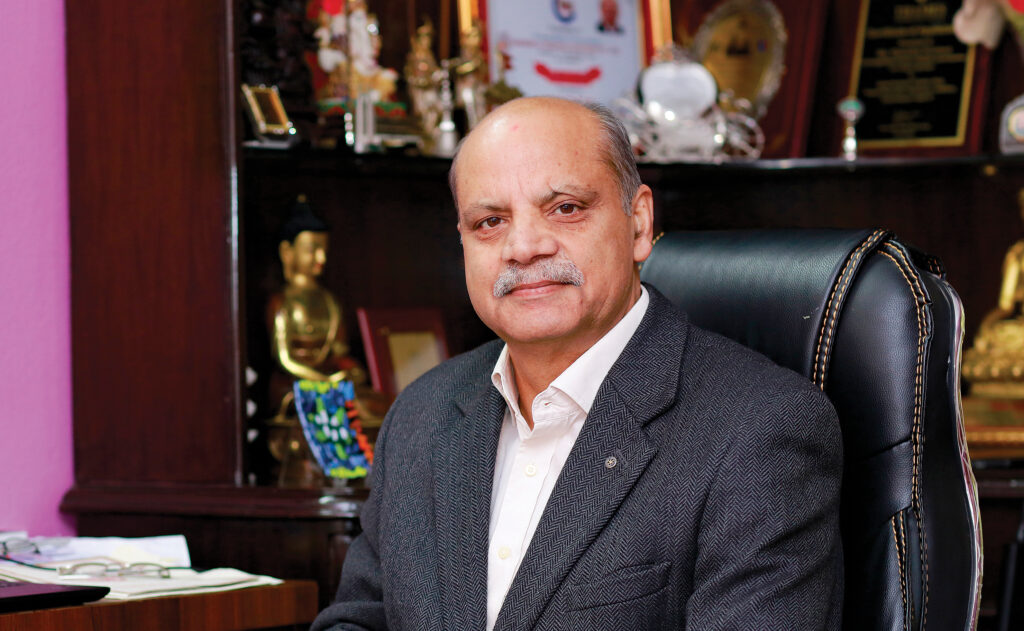
Vishal Surana is a dynamic and results-oriented professional with significant experience in IT, branding, and marketing. Currently, he holds the position of Brand Manager at Panchakanya Group, where he spearheads brand strategy and execution for one of Nepal’s most recognised industrial conglomerates. His responsibilities include managing integrated marketing campaigns, corporate communications, product positioning, branding, and digital marketing strategies. Surana’s association with Panchakanya Group dates back to 2007, where he initially served as an IT Manager before transitioning to his current role as Brand Manager in 2016.
Surana has a proven track record of collaborating with cross-functional teams to enhance brand awareness and customer engagement. Additionally, he oversees Below-the-Line (BTL) and Above-the-Line (ATL) promotions, vendor management, and the implementation of innovative marketing tactics to improve market penetration. The HRM Nepal engaged in a conversation with Surana on a broad spectrum of topics concerning brand promotion, its effectiveness, and sustainability. Excerpts:.
Q: Can you describe the core philosophy and identity of Panchakanya as a brand?
A: At Panchakanya, our commitment to ‘reinforcing the nation’ goes beyond a slogan – it defines who we are. More than a brand, we are a legacy rooted in trust, quality, and innovation, closely aligned with Nepal’s journey of progress. Grounded in integrity and guided by a forward-looking vision, we aim to be part of every home, every skyline, and every milestone of national development. Our philosophy bridges heritage and modernity, with every product and service reflecting our promise of quality and responsibility to society.
Q: What are the major USPs of Panchakanya as a popular Nepali brand?
A: Panchakanya has long been a catalyst in Nepal’s industrial journey – becoming the first in the country to receive GreenPro Certification for steel. Guided by the principle of ‘Always First, Always Ahead’, we’ve pioneered innovations across sheltering solutions from HDPE, uPVC, CPVC, and PPR pipes to Stainless Steel Water Tanks and Light Gauge Steel structures. With over 50 years of trust behind us, our diverse portfolio meets the evolving needs of modern infrastructure. More than a manufacturer, Panchakanya is a symbol of trust and reliability – deeply connected to communities, professionals, and the nation’s progress.
Q: What are some key elements that have contributed to your brand’s success?
A: Consistency, credibility and community engagement. We’ve built a reputation not overnight, but over decades – by delivering on promises, adapting with the times, and maintaining strong ethical foundations. Our ability to blend traditional values with modern vision is what sets us apart.
Q: What are the key strategies that Panchakanya Group has adopted to promote its brand?
A: We focus on value-driven storytelling, strategic partnerships, and digital-forward branding. By showcasing how our products touch lives – from a rural home to a skyscraper – we create emotional resonance. We’ve also leaned into architect and builder engagement programmes to foster loyalty within the professional community.
Q: What are the marketing strategies that have been the most effective for your brand?
A: At Panchakanya Group, the most effective marketing strategies have been those that seamlessly combine our legacy of trust with modern, purpose-driven communication. We’ve witnessed remarkable impact through on-ground engagement initiatives like dealers and plumber meets, engineer connect programmes, and site activations – these aren’t just events; they’re relationship-building platforms that foster trust with our key stakeholders.
Simultaneously, our digital platform has grown strategically, leveraging product-focused campaigns, educational content, and innovation storytelling – notably around milestones.
We also amplify our presence through participation in major expos, CSR partnerships, building communities house, educating children and consistent messaging around quality, trust and sustainability. This integrated approach – bridging legacy, innovation and human connection – continues to reinforce Panchakanya as a trusted, future-ready brand.
Q: How do you engage and build long-term relationships with your customers?
A: We focus on consistent communication, reliability, and staying connected beyond the point of sale. Initiatives like plumber meets, engineer engagement programmes, and dealer support help us build trust on the ground. By being responsive and regionally attuned, we turn customer interactions into lasting partnerships.
Q: What steps are you taking to personalise customer experiences?
A: We’re leveraging CRM tools, feedback loops, and region-specific campaigns to ensure that our customers feel heard. Whether it’s a contractor or a homeowner, we tailor our communications and services to their unique needs and expectations.
Q: Can you share an example of a successful brand campaign and its impact?
A: One of our most successful brand campaigns was Panchakanya Group’s first-ever TVC, featuring five young girls with humming and soothing tune. The simplicity, emotion, and innocence portrayed in the ad resonated deeply with the Nepali audience. Even decades later, the melody remains iconic – still hummed and remembered – proving its timeless connection with the brand. This campaign played a pivotal role in establishing Panchakanya as a trusted and household name in Nepal.
Another notable campaign was the ‘Ma Hu Panchakanya’ print advertisement series, launched in collaboration with individual plastic and steel dealers across the country. The concept of aligning personal identity with the brand – “I am Panchakanya” – struck a powerful chord among our dealers and customers. It wasn’t just about products anymore; it was about trust, pride, and partnership. This campaign gained massive traction and further solidified our reputation as a dependable and relatable brand in the industry.
Q: How important are social media and digital marketing in your branding strategy?
A: It’s indispensable. Social media allows us to humanise the brand, tell stories in real-time, and connect with a younger, digitally native audience. Digital is not just a channel – it is a two-way mirror into our audience’s mindset.
For a legacy brand like Panchakanya, staying active and agile in the digital space is not a choice – it is a necessity to stay future-ready. In today’s world, where short videos (reels) help people remember brands and online engagement builds trust, social media and digital marketing are key to keeping our leadership strong. We’re also using AI tools to better understand our audience, personalise our content, and make smarter marketing decisions. This approach not only helps us connect with today’s customers but also inspires the next generation of buyers, partners, and innovators.
Q: What platforms have been the most effective for reaching your target audience?
A: We leverage a mix of static creatives, short-form reels, and visually engaging video content to communicate our brand narrative and product value. Lead Ads on both platforms have delivered strong results – enabling precise geo-targeting, high-quality lead generation, and deeper customer insight. Retargeting campaigns have consistently driven strong conversion rates.
YouTube continues to serve as our knowledge-sharing hub, where we publish commercials, customer and dealer testimonials, as well as in-depth interviews – ensuring our audience gets valuable insights about our products and initiatives. TikTok, while high in reach and cultural relevance, presents unique challenges. Its entertainment-first algorithm often dilutes informative content, making it harder for audiences to access accurate product information. We’re currently exploring strategic approaches to harness its potential while maintaining message integrity.
Q: How have AI and technology influenced your branding efforts?
A: We fully recognise the accelerating impact of AI and emerging technologies in the branding landscape. As brand managers, we’ve already begun integrating AI into key areas such as content creation, video production, and concept development – reshaping how we ideate and execute campaigns. While full-scale adoption will be a phased journey, we’ve confidently taken the first steps. At Panchakanya Group, our focus remains clear: to harness AI as a creative enabler while ensuring our content stays authentic, relatable, and emotionally resonant with our audience.
Q: Could you describe your process for brainstorming or curating innovative campaign ideas?
A: We begin by aligning on the campaign objective – be it awareness, product promotion, or audience engagement. Ideas are then co-created with inputs from sales, design, and customer feedback, offering a 360° brand perspective. We closely track consumer trends and real-world insights, knowing that a single spark can ignite a powerful idea. Concepts are filtered for brand fit, relevance, and impact, then crafted into stories that resonate emotionally while highlighting the product’s value.
Q: How do you adapt your brand to evolving consumer preferences?
A: We actively listen – through surveys, social media, market insights, and direct feedback from the field. Our marketing and product teams work hand-in-hand to ensure every innovation is aligned with evolving lifestyles. As homeownership dreams change, so do we – offering not just durable solutions, but also emotionally resonant experiences that connect with today’s aspirations.
Q: How does your brand contribute to social responsibility and sustainability?
A: We follow a strict no-greenwashing policy – what we communicate, we deliver. Our commitment to ethical sourcing, transparency in advertising, and alignment with global sustainability goals ensures that our brand doesn’t just speak of values, but actively lives them. Additionally, the company’s CSR strongly focuses on five core areas: education, environment, women empowerment, health and sanitation, and skill development – further reinforcing our dedication to ethical and sustainable growth.
Q: What steps have you taken to ensure ethical and sustainable branding?
A: As a brand manager, I see it as my responsibility to ensure that our brand promise aligns with our brand policy and practice. Transparency is non-negotiable. Every sustainability claim we make is backed by real action, whether it’s through GreenPro-certified products, eco-conscious manufacturing, or our CSR efforts.
We also ensure that our messaging reflects ethical sourcing, social responsibility, and long-term value creation, not just market appeal. Our goal is to position Panchakanya not only as a market leader, but also as a values-driven brand that consumers and partners can trust.
Q: What inspired you to pursue a career in brand management?
A: As a team player and strong communicator, I’ve always sought a career that’s dynamic, expressive, and rooted in bringing ideas to life – both visually and emotionally. Though I began in IT, I soon discovered my true passion lay in creativity, storytelling, and the way brands shape perception. This led me to make a bold shift into brand management, where I could translate ideas into campaigns, strategies, and visual identities that truly connect with people.
What draws me to branding is its power to evoke emotion, build trust, and become part of everyday life. Brand management has allowed me to blend creative thinking with strategic execution – fostering meaningful relationships, collaborating across teams, and contributing to a brand’s lasting impact.
Q: What challenges do you face as a brand manager in a competitive market?
A: The biggest challenge in today’s saturated media landscape is standing out. With endless reels, trending stories, and content flooding every platform, cutting through the noise requires more than creativity – it demands clarity. Consumers have short attention spans and shifting priorities, so brands must be both relevant and memorable.
At the core, it all comes down to the ‘WHY’. If a brand’s purpose, promise, and reason for existing aren’t clearly defined and consistently communicated, it risks becoming just another name in the scroll. Equally important is aligning internal teams and stakeholders around this WHY – ensuring cohesion across platforms, campaigns, and touchpoints.
The real challenge in brand management lies in striking the balance: staying original yet emotionally resonant, adapting to trends without losing identity, and remaining authentic in every expression.
Q: What advice would you give to aspiring brand managers?
A: Be curious, be courageous, and be consistent. Learn to listen – to customers, data, and trends – but also know when to trust your creative gut. A brand is a story you see, feel and connect. Own that story.