
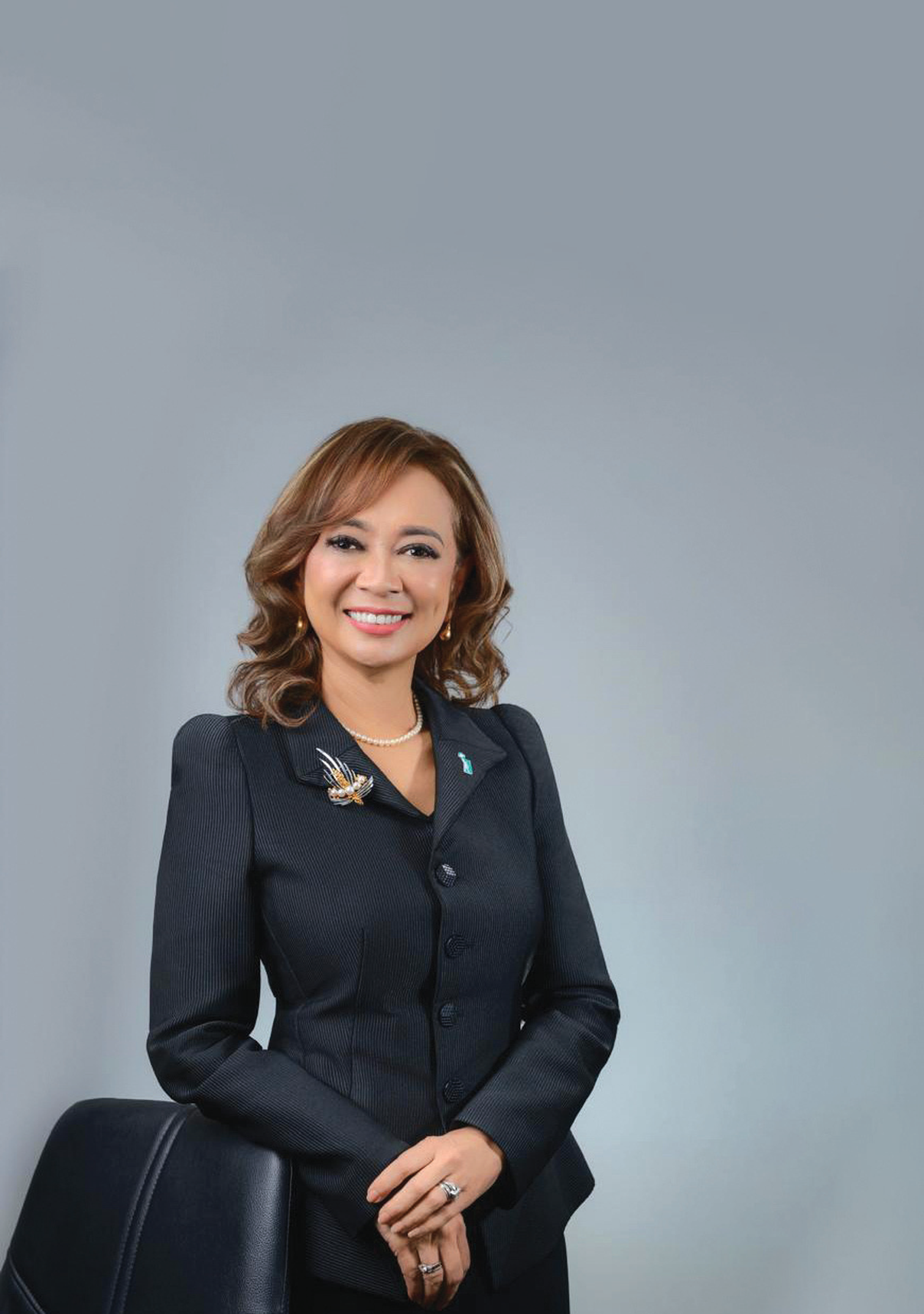
Norlida (Oli) Azmi brings a wealth of experience in the domain of Human Capital Strategy & Governance. She has worked across complex, regulated multinational environments in the Asia-Pacific region and the Middle East, with leadership tenures spanning London, Riyadh, Doha, Dubai, Abu Dhabi, and Malaysia. Those chapters shaped her approach to cross-cultural leadership, regulatory nuances, and the fundamental responsibility leaders carry in fast-moving environments.
Her expertise spans human capital and succession governance; culture, conduct, and leadership accountability; workforce strategy in the context of AI and Industry 5.0; oversight of human capital sustainability as a driver of long-term enterprise value; and cross-border leadership across ASEAN and emerging markets. Throughout her career, she has worked closely with boards and C-suite teams to align people strategy with long-term business resilience.
For Azmi, the work often centres on helping leaders make sense of complexity and translating strategy into culture, and culture into performance. As a certified Executive Coach to senior leaders, she remains deeply connected to the realities of CEO leadership and board-management dynamics.
The HRM Nepal caught up with her to discuss human capital strategy, change management, organisational culture, and leadership. Excerpts:
You have had a rather unconventional career journey – from banking, risk and operations to strategy and eventually human capital leadership, followed by board and advisory roles. Looking back, what did those experiences outside HR teach you that ultimately made you a better human capital leader?
The varied experiences gave me a holistic perspective and the language that the different stakeholders related to. Banking taught me that risk is a people problem before it is a process problem. Operations taught me that strategy only exists when someone executes it. Strategy taught me to ask what the business actually needs before I propose a programme.
This has shaped how I entered the people function; I never came to HR with a people agenda. I came with a business lens. That is why I could speak the CEO’s, the other CXOs and the non-HR language.
In a right-sizing exercising at a major organisation, my business case came not from the size of the workforce or the multiples of payouts, but from the increased productivity, payback period and how we reposition our presence in the country.
HR has traditionally been viewed as a support function, while you have operated at the intersection of business strategy and human capital. What needs to change – in the mindset of CEOs, boards and HR professionals – for human capital to be treated as a core source of competitive advantage rather than an administrative function?
CEOs must stop treating talent as a cost line and start treating it as an asset base that needs investments. Boards must ask about capability with the same rigour they apply to capital. HR professionals must earn the right to be heard by understanding the P&L and the wider ecosystem. All three shifts are needed. One single shift cannot bring sustainable impact.
Why do many HR professionals still struggle to earn a permanent seat at the strategic decision- making table? Is the problem with the CEO’s perception of HR or with HR itself?
Both, but I would start with HR. Too many HR leaders bring activity reports when the CEO wants business insight with confident advisory inputs. Executive presence is credibility, not performance. You earn it by saying what you will do, doing it, and repeating it. CEOs then have to make room for that voice. Perception follows evidence.
WE BEGAN TO SEE SHIFTS IN BEHAVIOUR THAT EVENTUALLY TRANSLATED TO BETTER BUSINESS OUTCOMES.
You have been involved in major organisational transformations, including changes in operating models, organisational structures, governance, culture and workforce capabilities. In your experience, why do transformation programmes so often focus on systems and structures but underestimate the human side of transformation?
Systems and structures are visible and easy to measure. Behaviour is not. Leaders also assume that announcing a change means people have adopted it. They have not. Every transformation asks people to give up something familiar. If nobody addresses that loss, resistance goes quiet and the programme stalls. I have seen this repeatedly.
In a transformation project I was involved in, the leaders stating the desired transformation but do not model or live it, failed to connect with the people and the programme was initially met with much scepticism and resistance. Only when the top leader began engaging with the people in smaller groups and translating to how it would impact them and how the leader would support the transition, did we begin to see shifts in behaviour that eventually translated to better business outcomes.
The role of the CHRO has evolved significantly – from managing people policies to influencing strategy, culture, risk and organisational performance. What should a contemporary CHRO be capable of bringing to the CEO and the board that goes beyond traditional HR expertise?
Four things beyond HR expertise. First, business, financial fluency and these days technology/AI fluency. Second, a view on risk, including culture risk, conduct risk and key-person risk. Third, the courage to challenge the CEO with evidence. Fourth, a forward view of organisational design and workforce capability. The board does not need a policy custodian. It needs a strategic counterpart.
AI is rapidly changing jobs, skills, organisational structures and even the way decisions are made. How should HR leaders balance the efficiency promised by AI with the uniquely human dimensions of judgement, empathy, creativity and leadership?
Use AI to remove friction, not to remove accountability. AI can handle volume, pattern and
speed. Keep people in charge of decisions that affect careers, dignity and trust. HR leaders, once aligned with the overall business vision and the operating model, should also be honest with employees early about which roles will change. Silence breeds fear and reduces engagement as well as motivation. Transparency builds the trust that adoption depends on.
If technology can automate recruitment administration, payroll, employee queries, analytics and many other traditional HR activities, what should HR ultimately be responsible for that technology cannot – and perhaps should not – replace?
Trust, judgement and stewardship of culture. Technology can process a case such as grievance. It cannot sit with a manager who is struggling with competing priorities. It cannot decide whether a hard call is fair. It cannot model integrity from the front. HR should also own the ethics of how AI is used on people. That responsibility should not be outsourced to a third party.
Organisations increasingly talk about employee experience, customer experience and organisational culture as interconnected. In practical terms, how can an organisation create a culture in which employee experience actually translates into better organisational and customer outcomes, rather than becoming another HR initiative?
Culture is never owned by HR and we must stop running it as an HR initiative. It’s the daily behaviours of our people so we must give it to line leaders with business targets. Then link it to what customers actually feel, such as service quality, resolution time and consistency.
Employees deliver the culture they experience. If leaders say one thing and do another, even external stakeholders will eventually notice. Culture is what happens when nobody is watching.
What distinguishes organisations that genuinely embed diversity, equity, inclusion and belonging from those that merely practise it as corporate messaging?
Embedded DEIB shows up in decisions. Look at the profiles of who gets hired, who gets promoted, who gets sponsored, who sits in succession slates and who is paid what. Genuine organisations measure these things and act on the gaps. Leaders own the outcomes beyond just financial prudence.
And DEIB goes beyond gender. It goes to generations, capabilities. And thoughts.
Messaging organisations have a campaign and a calendar. Real ones have data and consequences.
ESG discussions often concentrate heavily on the environmental dimension, while the “S” – human capital, employee wellbeing, diversity, labour practices and social impact – is sometimes less rigorously measured. What should boards and senior executives be looking for when assessing the social dimension of ESG?
Boards must go beyond events that has the “S” agenda or a photo opportunity. What is the intent. Ask for the data behind the narrative. Look at turnover in critical roles, pay equity, safety record, training investment, engagement trends and leadership pipeline depth. Ask how the workforce is affected by strategy and technology change. Then ask whether management acts on what the data shows. Disclosure is easy. Accountability is the test.
You have now moved from being a senior executive to working as an independent director and board adviser. How does your understanding of human capital change when you sit on the other side of the table, as a board member responsible for governance, oversight and long-term value creation?
Leadership depth below the C-suite is the quiet vulnerability. It rarely appears on the risk register until something breaks.
As an executive I asked how to make it work and what are the KPIs that I have to achieve in the people agenda. As a director, I ask how we know it is working and what could go wrong. My job shifts from doing to oversight and stewardship. I have to ask sharper questions and accept that I cannot see everything.
From your international experience, what are the three or four human-capital priorities Nepali organisations should focus on if they want to build globally competitive organisations?
Governance depends on good information, so I care a great deal more about the quality of what reaches the board. As an NRC Chair, I am also interested in how the CEO and management, and not just the CHRO, view and manage the people programmes.
These priorities span geographies, though the priority may differ i) Build managerial depth. Strong first- and mid-level
managers are the engine of any organisation. Invest in them early. ii) Design HR systems around the business. Start
From a board perspective, what human-capital issues do you believe boards still underestimate – succession, leadership pipeline, organisational culture, workforce capability, employee wellbeing, remuneration, or something else?
simple and practical. Do not import a large framework that no one truly understands, much less executes. iii) Create a reason for talent to stay and to return.
In my view, culture and succession. Boards review remuneration and compliance well. They often review culture through surveys alone, which is a lagging signal. Succession is frequently treated as a once- a-year exercise rather than a continuous pipeline discipline.
With many people working abroad, organisations can offer meaningful work, growth and fair reward, and build routes for returning talent to contribute. iv) Adopt digital tools with people in mind. Train
people alongside the technology so digitalisation raises capability and does not just cut cost.

