THE MOUNTAIN RESILIENT ECONOMIC DEVELOPMENT SOUNDING NATURAL

AS HIGHLIGHTED IN The HRM (Vol. 5, Issue 12, Bhadra 2083), Small and Medium-sized Enterprises (SMEs) represent the foundational pillar of national economic resilience and the essential driver of inclusive development. In Nepal, however, SMEs generate merely 22% of GDP, falling significantly short of the 40% average observed in comparable emerging economies. This deficit highlights a critical structural
flaw: the systematic decline of domestic production in the face of low-cost foreign imports, coupled with remittance-driven consumption that temporarily boosts state revenues. Relying on import tariffs for fiscal viability constitutes an unsustainable strategy, generating growth that is fundamentally jobless, rootless, and vulnerable to external shocks. Achieving macroeconomic stability and sustainable growth requires transitioning from a
consumption-oriented, import- dependent framework toward a high-value, production- and export-led economic model.
As articulated by Rosalind Bryce PhD (Professor and Director of the Centre for Mountain Studies at the University of the Highlands and Islands, Scotland) during her research on Cultural Heritage and Governance for Climate Resilient Communities, Nepal’s mountain landscapes offer a living environmental laboratory.
The Kanchenjunga Conservation Area (KCA) spanning 2,035 km2 across eastern Nepal stands out as a premier destination for transforming nature-based Micro, Small, and Medium Enterprises (MSMEs) into drivers of sustainable economic growth.
1. NATURE-BASED MSMES: UNLOCKING HIGHLAND NATURAL CAPITAL
The KCA is rich in high- value, non-timber forest products (NTFPs), bio-resources, and niche agricultural commodities that provide high potential for value- addition, local job creation, and export expansion.
Tea, large cardamom, essential oils, from surrounding belts, and high-altitude organic vegetables.
2. ECO-TOURISM & CULTURAL HERITAGE: LIVING ENVIRONMENTAL LABORATORY
Medicinal and Aromatic Plants (MAPs) & NTFPs:
KCA harbours over 137 non-timber forest products and 30 high-priority medicinal herbs, including Alainchi (Large Cardamom), Chiraito, Kutki, Panchaule, Maikopila, Bikh, Bikhma, Sunpati, Bhuichuk, Khokim, Majitho, Malingo, Okhar, Lokta, and Argeli. Developing local processing plants (such as the Dhupi essential oil extraction enterprise in Ghunsa and Bhuichuk juice units) converts raw herbal extracts into high-value exports.
KCA offers an immersive experience where dramatic landscapes intersect with ancient indigenous traditions, rare wildlife, and sacred geography.
Key Ecological & Biological Highlights are:
Topography & Glacial Lakes:
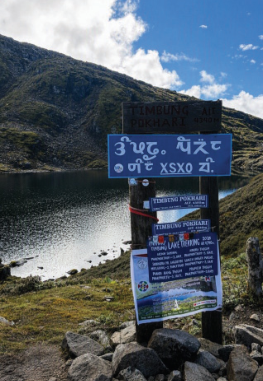
Anchored by Mt. Kanchenjunga (8,586 metres, the world’s 3rd highest peak), the landscape is carved by high- altitude glacial lakes, including Nangama, Tchherchhen, Pabuk, Tiptala Sinjema, Hans Pokhari, Nagpokhari, Timbung Pokhari, and Tin Pokhari.
Cardamom Fibre & Eco- Handicraft s:
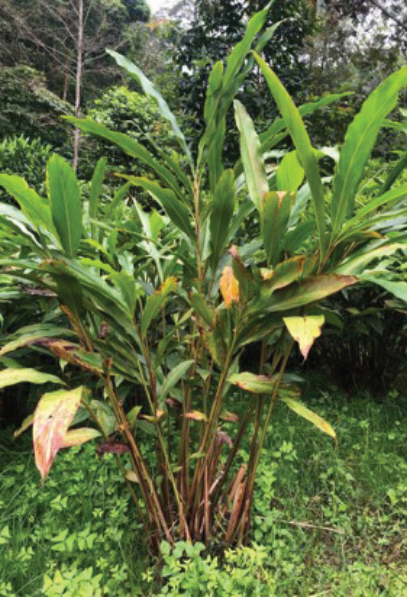
Beyond the crop, waste stems and leaves of Large Cardamom are being upcycled into world-class, biodegradable handicraft s and eco-products, creating a signature, sustainable brand under the Sustainable Kanchenjunga banner.
Flagship Fauna:
KCA harbours globally critical populations of Snow Leopard (an umbrella carnivore species), Red Panda (an indicator species for temperate oak-rhododendron habitats), Himalayan Black Bear, Musk Deer, Pahare Monkey, Nayaur (Blue Sheep), and Ratuwa (Barking Deer). It is designated an Important Bird Area (IBA) harbouring 252 bird
Niche Agro-Dairying & Cash Crops:
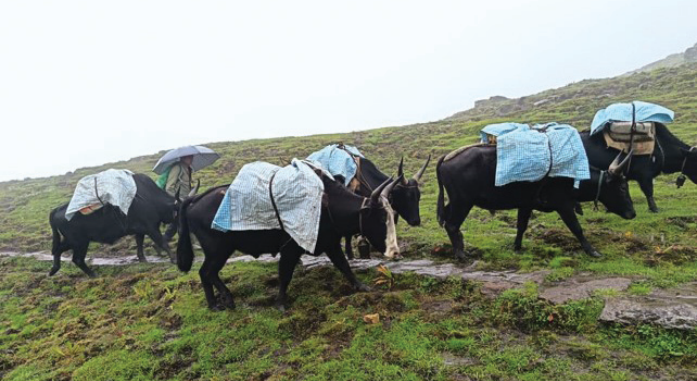
High-altitude pastoral systems generate premium niche products, including artisanal Yak Cheese, Chauri Churpi, Orthodox Organic
↑ Pic 1: Rare Yak. Photo Credit: Hans Shahi, 2026
species, including eight globally threatened species.
Flora & Forest Systems:
Subtropical Sal-Chilaune forests at lower altitudes transition into Quercus-Katus- Bhote Champ (1,200-3,500 metres), Thingre-Gobre Salla conifers (2,800-3,500 metres), rare Larch-Juniper mixed stands along the Ghunsa and Tamor rivers (3,000-3,700 metres), and 21 distinct species of Rhododendron stretching to the tree line.
Cultural & Living Settlements
Indigenous Heritage:
Home to high-altitude Limbu, Walung, and Sherpa communities practicing pastoral transhumance across alpine rangelands.
Historic Human Settlements:
Includes Yangma, among the world’s highest human habitations at 4,200 metres along with Olangchungola, Khambachen, Ramjer, Lonark, and Ghunsa
Spiritual Anchors:
Features the 400-year- old Diki Chholing Gumba in Olangchungola alongside regional spiritual hubs like the Pathibhara Devi Temple.

3. STRATEGIC ALIGNMENT WITH THE KCA MANAGEMENT PLAN
The KCA Management Plan (2077/078-2081/082) provides a community-led operational framework to harness these economic opportunities while safeguarding ecological integrity.
↑ Pict 2: Rare Medicinal Plant, Tin Pokhari, Taplejung, Photo Credit: Hansh Shahi, 2026
Key Management Interventions & Economic Drivers
Community-Based Governance:
KCA stands as Nepal’s pioneer model for community-managed protected areas, governed by the Kanchenjunga Conservation Area Management Council (KCAMC). Management is executed through a capillary network of seven User Committees, 26 Conservation Community Forest User Groups, 35 Mother Groups (Aama Samuha), and five Cooperatives.
Eco-Tourism Infrastructure:
Upgrading circuit trekking infrastructure (e.g., Suketar- Ghunsa North Base Camp and Suketar-Yamphudin South Base Camp routes), establishing community homestays, constructing trail bridges, and running local guide, cook, and hospitality training programmes.
Sustainable Financing:
Achieving long-term fiscal
← Pict 3: Timbung Pokhari, Taplejung. Photo Credit. Pratik Devkota, 2026
independence by promoting regulated hunting management of Nayaur (Blue Sheep) and Ratuwa, alongside eco-tourism levies and herb-based enterprise revenue.
the high Himalayas, these rare orthodox tea plantations offer unique eco-tourism experiences, blending sustainable agricultural landscapes with high-value rural enterprise development.
Tri-National Peace Park Vision:
Koshi Tappu Wildlife Reserve:
Positioning the KCA to form a transboundary “Tri-National Park” linking Nepal’s KCA, India’s Khangchendzonga National Park, and China’s Qomolangma National Nature Preserve in Tibet establishing an international centre of excellence for scientific high-mountain research.
Lowland Ramsar wetland site complementing KCA’s alpine birding routes.
5. WHY KANCHENJUNGA DESERVES UNESCO BIOSPHERE STATUS
Nepal currently possesses no designated UNESCO Biosphere Reserves (BR). Established under UNESCO’s Man and the Biosphere (MAB) Programme, the BR represents an internationally recognised framework that harmonises biodiversity conservation, sustainable economic development, and cultural heritage preservation distinguishing itself from conventional national parks that strictly prioritise preservation over human activity. To achieve this balance, it employs a strategic three-tier zoning model:
4. INTEGRATED EASTERN KOSHI TOURISM CIRCUIT
To maximise MSME revenue retention, nature-based tourism in KCA links directly with the broader Koshi Province Curative & Eco-Tourism Circuit:
Pilgrimage Destinations:
High-volume spiritual hubs like Pathibhara Temple and Barahachhetra, creating steady demand for local hospitality MSMEs.
• Core Area: Strictly protected for ecosystem conservation. • Buffer Zone: Surrounding the core, used for ecologically sound activities (e.g., eco- tourism, research). • Transition Area: The
Ilam Orthodox Tea Estates:
The tea gardens of Ilam serve as a vital anchor for regional eco-tourism and agro-enterprise. Positioned along the scenic foothills of
outer layer where local communities, enterprises, and managers collaborate on sustainable resource management.
Significance to Nepal and the Kanchenjunga Conservation Area (KCA)
i) Nepal’s Current Status: Zero Biosphere Reserves
Despite possessing 10 UNESCO World Heritage Sites (including Sagarmatha and Chitwan National Parks), Nepal currently has no officially designated UNESCO Biosphere Reserves.
ii) Why the KCA is the Ideal Candidate
The Kanchenjunga Conservation Area (KCA) is uniquely positioned to become Nepal’s first UNESCO Biosphere Reserve:
• Community-Led Governance: Managed directly by local communities through the Kanchenjunga Conservation Area Management Council (KCAMC), matching UNESCO’s participatory core principle. • Living Laboratory: The KCA spans altitudes from 1,200 metres to 8,586 metres, hosting rare fauna (Snow Leopard, Red Panda),
KCA BRINGS TOGETHER BIODIVERSITY, INDIGENOUS CULTURE, COMMUNITY GOVERNANCE AND HIGH- MOUNTAIN ECOSYSTEMS.
indigenous Limbu and Walung cultures, and alpine ecosystems. • Transboundary Strategic Value: KCA borders India’s Khangchendzonga National Park and China’s Qomolangma Reserve, providing a natural anchor for a tri-national biosphere corridor.
iii) Benefits of UNESCO Biosphere Designation for KCA
• Global Visibility & High- Value Eco-Tourism: Elevates KCA’s status on the world stage, attracting conscientious travellers,
Structural Dimension Wester Ross Biosphere (Scotland) Kanchenjunga Conservation Area, Nepal
Governance Paradigm Community-driven, bottom-up participatory management model
Community-led management via the KCAMC, User Committees, and Mother Groups (Aama Samuha)
Socio-Ecological System Low-density highland settlements integrated with marine and terrestrial ecosystems
High-altitude remote human habitations (Yangma,֤ Olangchungola)֤ amidst alpine ecosystems
Tourism Framework Eco-tourism centred on natural heritage, dark sky parks, and Gaelic cultural landscapes
Mountain trekking, living indigenous culture (Limbu, Walung, Sherpa), and ancient heritage (Diki Chholing Gumba)
Enterprise & Branding UNESCO eco-labelling for croft ing products, local craft s, and sustainable products
Sustainable enterprise branding for֤ Alainchi֤ craft s,֤ Dhupi֤ essential oils, Yak Cheese, and organic herbs (Chiraito), essential oil, Large Cardamom, Ecotourism,
researchers, and scientific expeditions. • Unlocking Green & Climate Finance: Access to international climate adaptation funds, carbon offset schemes, and conservation grants tailored for biosphere reserves. • Brand Premium for Local MSMEs: Provides a globally recognised eco-label for KCA products such as Alainchi (Large Cardamom), Yak Cheese, Chauri Churpi, organic teas, and non-timber forest products (NTFPs).
entire value chain of local Micro, Small, and Medium Enterprises (MSMEs) as a direct dividend for environmental stewardship. By transposing this framework to KCA, Nepal can leverage eco-tourism and nature-based enterprise development to turn biodiversity conservation into a catalyst for inclusive regional growth. The following strategic outlook compares the established operational metrics of Wester Ross with the nomination potential of the KCA:
Community-Driven Management:

↑ Pict 4: Yak Herding. Photo Credit. Pratik Devkota, 2026
iv) Relevance of the Wester Ross Biosphere Reserve (Scotland)
Wester Ross was established through a bottom-up approach where local residents, rather than top-down state bodies, defined the boundary and priorities. This aligns with KCA’s local governance structure led by User Committees and Mother Groups (Aama Samuha).
During field research for the international MONTAGE project in the Kanchenjunga region, Natasha Hutchison, Chief Executive Officer of the Wester Ross UNESCO Biosphere Reserve in the Scottish Highlands, observed that the Kanchenjunga Conservation Area (KCA) possesses all the hallmark attributes of an exemplary UNESCO Biosphere Reserve. She highlighted KCA as a vibrant, living landscape where rich cultural heritage, extraordinary biodiversity, resilient mountain communities, and local micro-economies intersect. In her assessment, securing a UNESCO Biosphere designation would enable KCA to achieve sustainable economic development while simultaneously safeguarding its natural ecosystems and expanding economic opportunities for local residents.
Tourism via Cultural & Natural Heritage:
Wester Ross leverages its mountain landscapes, dark skies, and Gaelic heritage to drive sustainable tourism without damaging fragile habitats. Similarly, KCA can pair high- mountain trekking with living culture (e.g., Olangchungola, Diki Chholing Gumba).
Local Product Branding:
Wester Ross uses its UNESCO designation to add market value to local enterprises (e.g., croft ing, sustainable seafood, regional craft s). KCA can replicate this framework to market its niche products such as cardamom-leaf craft s, Large Cardamom, Chauri Churpi, Dhupi essential oils, and organic Chiraito as certified, sustainable highland exports.
A key driver of this model is economic incentive: the Wester Ross Biosphere Reserve receives an estimated half a million visitors annually, generating substantial financial rewards across the
6. STRATEGIC POLICY
RECOMMENDATIONS
To establish the Kanchenjunga Conservation Area (KCA) as Nepal’s flagship UNESCO Biosphere Reserve (BR) under UNESCO’s Man and the Biosphere (MAB) Programme, the existing core strategies must be expanded to align with the MAB framework’s three core functions: Conservation, Development, and Logistical Support
a. Establish a High-Mountain MSME Incubator
Operationalise the MAB Development Function by converting local bio-resources into high-value exports through community-led micro-enterprises.
Actionable Execution • Concessional Micro- Finance & Cooperative Integration: Transition existing community revolving funds and Mother Group (Aama Samuha) savings into structured financial cooperatives. Capitalise these hubs with seed funding to offer low-interest micro-loans for mountain enterprises. • Technical Upgrading & Value Addition: Supply solar-powered drying units, essential oil distillation apparatus (e.g., Dhupi),
and carding machinery to upgrade local processing. Support cottage industries in turning Large Cardamom waste stems into eco-craft s, processing Bhuichuk juice, and producing artisanal Yak Cheese and Chauri Churpi. • Digital Inclusion & Direct Market Access: Establish e-commerce readiness and supply chain linkages with urban hubs and global fair-trade buyers to bypass intermediary markups.
b. Implement “Brand Kanchenjunga” UNESCO BR Eco-Labelling
Leverage UNESCO BR designation to command a market premium for regional agro-products and handicraft s, fostering sustainable livelihoods.
Actionable Execution • Origin & Sustainability Certification: Formulate a regional certification mechanism under the Kanchenjunga Conservation Area Management Council (KCAMC). Certify those products such as Chiraito, Kutki, organic Orthodox Teas, and cardamom-leaf woven items originate from climate-resilient, non-extractive community management. • Brand Alignment with MAB Guidelines: Integrate official UNESCO Biosphere branding onto eco-certified packaging, establishing a recognised standard for bio-trade and eco-tourism hospitality services.
c. Expand Transboundary Research Alliances & “Living Laboratory” Logistics
Harness KCA’s geography to serve MAB’s Logistical Support Function, driving academic
tourism, field science, and transboundary monitoring.
Actionable Execution • Tri-National Science Corridor: Capitalise on KCA’s position bordering India’s Khangchendzonga Biosphere Reserve and China’s Qomolangma National Nature Preserve in Tibet. Establish an international high- mountain research hub (e.g., building on the Khambachen research station initiative) to coordinate joint studies on climate change, glacier dynamics, and transboundary wildlife movements (e.g., Snow Leopard, Red Panda). • Academic Eco-Tourism Revenue Chains: Formalise research travel packages with domestic and international universities (building on models like the MONTAGE project). Direct logistical demand (guides, porters, homestays, field equipment rentals) straight to local hospitality MSMEs.
← Pict 5: Large cardamom is a world-renowned spice crop. Nepal is a leading global producer, with Taplejung producing the most. Photo Credit: Pratik Devkota. 2026
d. Formalise Payment for Ecosystem Services (PES) & Hydropower Benefit-Sharing
Secure sustainable internal financing to maintain the MAB Conservation Function without over-relying on external aid.
Actionable Execution • Catchment Protection Revenue Retention: Establish a legal Payment for Ecosystem Services (PES) framework mandating that a fixed percentage of revenues from hydropower projects along the Tamor, Ghunsa, Simbuwa, and Kabeli river basins be channelled into the KCA Community Conservation Fund. • Reinvesting in Community Resilience: Allocate PES dividends directly to local User Committees to finance snow leopard livestock insurance schemes, forest fire prevention, climate hazard early-warning installations (for GLOFs and landslides), and non-timber forest product (NTFP) nursery propagation.
Reference: Department of National Parks and Wildlife Conservation, & Kanchenjunga Conservation Area Management Council. (2020).֤ Kanchenjunga Conservation Area management plan (B.S. 2077/078–2081/082). Ministry of Forests and Environment, Government of Nepal.
Neupane is a former Chairman of the Nepal Stock Exchange (NEPSE). He is currently serving as Research Fellow at Baya Himalaya, a policy research institution in Nepal.