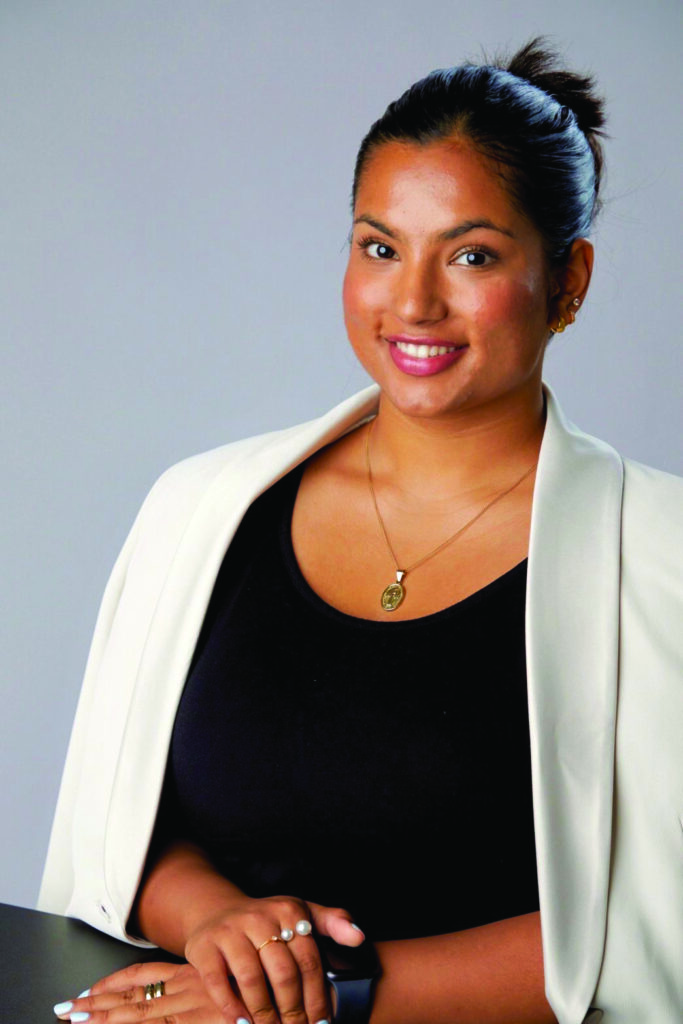
 Kresha Koirala is a fashion designer originally from Nepal and now based in New York City. Her journey into fashion began with curiosity, as she was always drawn to clothing not just for its beauty, but as a vessel for identity, emotion, culture, and memory. Over time, that curiosity evolved into a deeper passion for design and storytelling. Most importantly, she never believed in staying within a single lane, a mindset that profoundly shaped her path in this field. She intentionally explored diverse facets of the fashion industry, including luxury fashion, licensing, production, commercial apparel, costume design, and runway experiences. Each opportunity taught her something unique and helped her understand fashion far beyond just design.
At this stage, KSTBYKRESHA represents her creative identity and long-term vision. Koirala has yet to officially launch it as a business, but she is currently building the foundation through ideation, execution, industry experience, and a stronger understanding of who she is as a designer. Her goal is to one day create something of her own that reflects culture, confidence, craftsmanship, and connection. The HRM Nepal caught up with Koirala to learn about her journey into the fashion world. Excerpts.
Q: You ventured into the fashion industry immediately after graduation. What inspired you to pursue entrepreneurship instead of a conventional career path?
A: I would say my journey has been a balance of both. After graduation, I entered the fashion industry professionally, but even before that I was always seeking opportunities to learn. During summer breaks, winter breaks, weekends, and throughout college, I tried to stay involved wherever I could, gaining professional experiences because I genuinely love being busy, learning, and growing.
What inspires my entrepreneurial vision is not the idea of rushing to start a brand, but the desire to build something meaningful when the time is right. I believe a strong brand should come from experience, purpose, and clarity. Right now, I am focused on learning from the industry, understanding different categories, and strengthening my design voice.
For me, entrepreneurship is not only about ownership. It is about responsibility. It means knowing what you stand for, who you are designing for, and why your work matters.
Q: Why did you choose New York City as the foundation for building your brand? What opportunities does NYC offer to emerging designers?
A: Fashion exists everywhere, and I believe every place has its own language of style, culture, craftsmanship, and storytelling. Every city, every community, and every tradition offer something unique to learn from. As I continued designing and discovering my own voice, I realised that understanding different perspectives would ultimately make me a stronger designer.
I experienced this firsthand while studying abroad in Florence, Italy. Beyond being from a culturally diverse country like Nepal, expanding my fashion career in a city like New York, and my coursework in fashion history and styling, I challenged myself to step outside my comfort zone by connecting with local brands, working on editorials, and immersing myself in the culture. I was also fortunate to volunteer at Milan Fashion Week, where I witnessed the craftsmanship, collaboration, and precision behind one of the world’s most respected fashion platforms. Those experiences broadened not only my understanding of fashion, but also my appreciation for how deeply culture influences design.
New York, however, offered something different. It is a city that constantly challenges you to grow. It is fast-paced, diverse, resilient, and offers opportunity. While it is certainly not an easy place to build a career, I have always believed that growth happens when we step outside our comfort zone.
I first came to New York to study Fashion Design at Marist University, where I was grateful to receive scholarship support and a strong education. Marist gave me more than technical skills; it gave me the confidence to explore, ask questions, collaborate, and continuously challenge myself both creatively and personally.
Over time, New York became the place where everything began to come together. The classroom provided the foundation, while the city became my teacher. Through internships, New York Fashion Week, commercial fashion, costume design, networking opportunities, designing and presenting my own work, I was able to experience the industry from many different perspectives.
What I appreciate most about New York is the respect it has for ambition, creativity, and hard work. It is a place where people from different cultures and backgrounds come together through a shared passion to create, innovate, and inspire. As an emerging designer, being surrounded by that energy has continually encouraged me to learn, grow, and become the best version of myself.
Q: Could you introduce KSTBYKRESHA? What is the brand’s design philosophy, and what distinguishes it in the commercial fashion market?
A: KSTBYKRESHA is my long-term creative vision. The name carries deep personal meaning because it is inspired by the initials of my parents and my little dog, whom I lovingly consider like my little brother. My family has been the foundation of my journey. Their belief, sacrifices, and support made it possible for me to pursue fashion far from home.
The idea behind KSTBYKRESHA is rooted in gratitude, identity, and storytelling. I want the brand to eventually represent fashion fusion, unisex design, cultural connection, and thoughtful garments that make people feel connected, confident and comfortable.
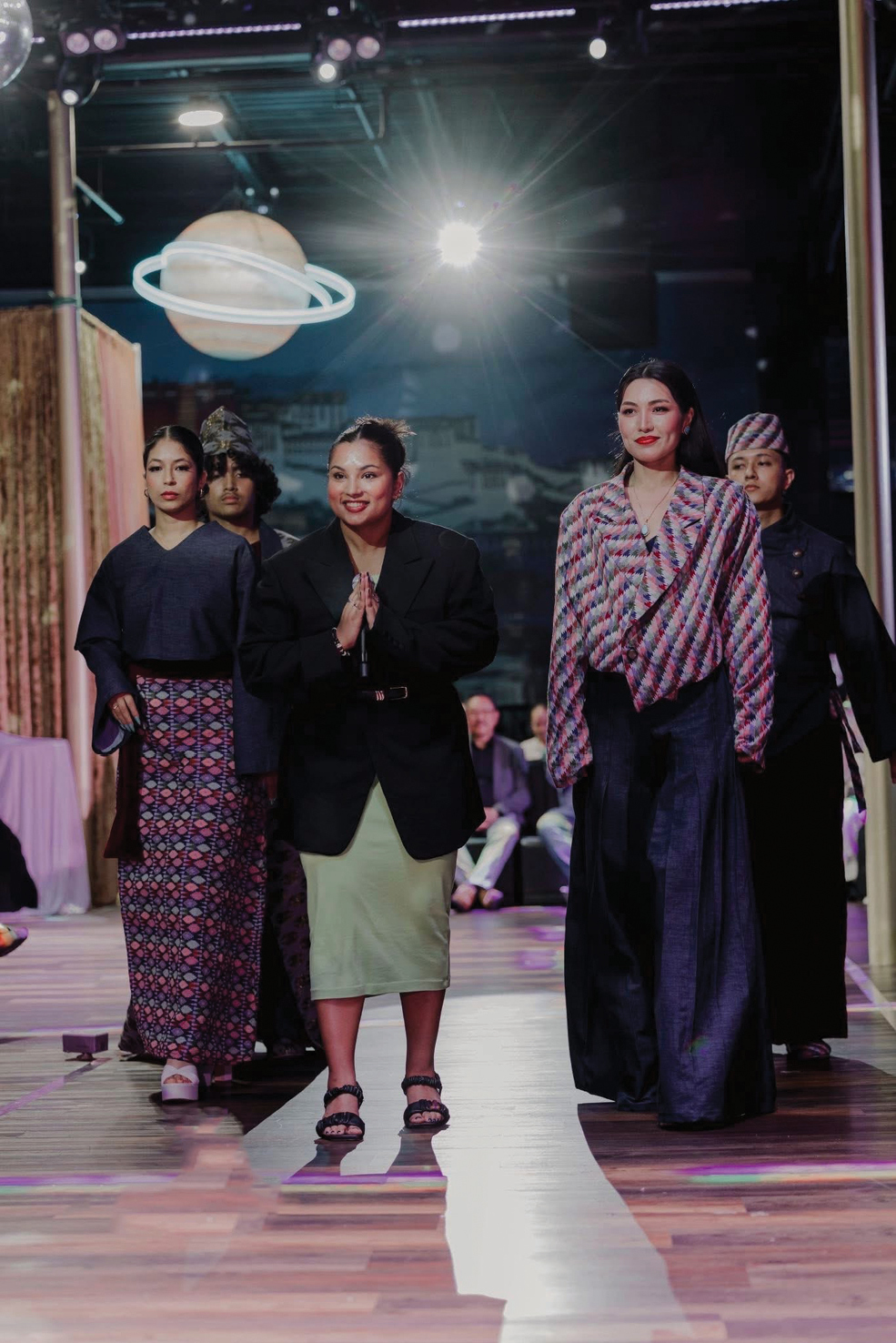
One of my most personal collections is NAYA YORK. ‘Naya’ means ‘new’ in Nepali, and the collection became my love letter to both Nepal and New York. It explores the feeling of belonging to two places at once, combining Nepali inspiration with the energy and contemporary spirit of New York.
My design philosophy is about creating fashion that bridges cultures rather than separates them. I am interested in garments that feel meaningful, wearable, expressive, and inclusive. What distinguishes my vision is the balance between personal storytelling and commercial understanding.
Q: As an emerging designer featured at New York Fashion Week, could you share your journey to reaching this global platform? What were the major challenges and turning points?
A: Being able to present my work during New York Fashion Week Festival organised by The Model Experience was a very meaningful moment in my journey. It came during a period of my life that was personally and professionally challenging, which made the opportunity even more special.
Before that, I had presented my collection at the Silver Needle Runway and also showcased my designs through Fashion Expression: Journey to USA, where I connected with Nepali audiences in New York and Maryland. Those opportunities helped me understand how powerful it can be when people see their culture and story represented through fashion.
For New York Fashion Week Festival, I presented six looks from two design perspectives. One was Armor of Confidence, which explored body image, insecurity, strength, and confidence. The other was NAYA YORK, my ode to Nepal and New York. One of my designs was also selected to be featured in Times Square Billboard which felt immensely special.
The biggest challenges in design are always the fit, execution, and storytelling. As a designer, I create everything from concept to final garment: sketching, research, patternmaking, muslin fitting, fabric sourcing, cutting, sewing, and final adjustments. Designing for different models and body types taught me how important fit and adaptability are.
Fashion often looks beautiful from the outside, but behind every finished garment are months of research, sketching, patternmaking, fittings, revisions, sourcing, construction, problem-solving, patience, and persistence. What people see on the runway or in photographs is only the final chapter of a much longer journey.
My experiences have always taught me that meaningful design is not about creating something perfect on the first attempt. It is about embracing the process, learning through every challenge, and staying committed to the story I want to tell even when it almost feels like I want to give up. Every adjustment, every setback, and every decision become part of the garment itself. By the time a collection reaches the runway, it carries not only the finished design, but also the time, care, resilience, and intention that brought it to life and that’s also why all my designs are very special to me.
Q: Commercial fashion in New York is highly competitive and influenced by fast-changing consumer trends. How does KSTBYKRESHA balance creativity with commercial viability?
A: Commercial fashion is extremely competitive, especially in New York. Trends move quickly, customers evolve, and brands must constantly balance creativity with business needs.
What I have learned through my industry experience is that being a designer is not only about having your own ideas. It is also about understanding the brand, the customer, the market, and the purpose behind the product. A strong designer must be creative, but also adaptable.
My own design identity is rooted in storytelling, colour, culture, and confidence while balancing the preppy aesthetic. However, working in commercial fashion has taught me how to translate creativity into something more practical for a specific customer.
I have faced rejection and challenges, but I have also learned that persistence matters. Every opportunity has taught me to keep improving, keep listening, and keep showing up. For me, balance comes from knowing who I am creatively while also respecting the needs of the customer and the business.
Q: Artificial intelligence and digital technologies are transforming the fashion industry. How do you see these technologies reshaping the future of fashion design?
A: I believe artificial intelligence and digital technology can become powerful tools in fashion when used thoughtfully and rightfully. I do not see AI as something that replaces human creativity. I see it as something that can support efficiency, research, ideation, and execution.
During my internship at Centric Brands in 2023, I was given a project in an AI-focused innovation challenge with other fellow interns from different departments. Our team developed a concept for how AI could be incorporated into the fashion business, and we were fortunate to win the project. That experience opened my eyes to how technology can support collaboration and problem-solving.
Fashion design is still deeply human. A designer brings emotion, memory, culture, intuition, and lived experience into the process. AI can help with mood boards, research, organisation, visualisation, and efficiency, but authenticity still comes from designer and that no one can take away.
I am also interested in continuing my education in artificial intelligence so I can better understand how to use it responsibly in design. I believe the future belongs to those who can combine creativity with technology without losing the human story behind the work and not taking it as a tool to cheat but rather to support and maintain efficiency.
Q: Looking ahead five to 10 years, what is your vision for KSTBYKRESHA?
A: In the next five to 10 years, I hope to continue growing as a designer and building a stronger foundation for KSTBYKRESHA. I still have so much to learn, and I believe growth never truly ends.
My vision is to eventually build KSTBYKRESHA into a brand that represents fashion fusion, cultural storytelling, and inclusive design. I want it to honour Nepal, while also reflecting the global perspective I have gained through New York and my industry experiences.
Before launching something fully, I want to be intentional. I want to strengthen my skills, understand the business side more deeply, become financially stable, and build a clear brand identity. Capital, experience, and execution all matter when creating something sustainable.
Beyond clothing, I hope KSTBYKRESHA can one day become a platform that supports young creatives and emerging professionals. I know and understand how difficult it can be to navigate the industry, and I hope my journey can eventually help others feel encouraged to keep going.
Q: Reflecting on the evolution of the fashion industry over the past decade, what transformative changes do you anticipate in the next 10 years?
A: Over the past decade, fashion has become faster, more digital, more global, and more connected. Social media has changed how trends begin, how designers share their work, and how consumers discover brands.
In the next 10 years, I believe fashion will become even more focused on individuality, technology, sustainability, and cultural storytelling. Consumers are no longer only buying products; they are connecting with values, identity, and meaning.
I also think the future of fashion will require designers to be more versatile. Designers will need to understand not only sketching and garment construction, but also digital tools, production, branding, customer behaviour, and global communication.
At the same time, I hope fashion continues to make space for authenticity. Trends will always change, but meaningful design has the ability to last because it connects to something deeper.
Q: Sustainability has become a defining issue in the global fashion industry. How is KSTBYKRESHA integrating sustainable practices into its design, sourcing, and production processes?
A: Because KSTBYKRESHA is still in the development stage, sustainability is something I want to build into the foundation from the beginning rather than add later as an afterthought as it is of great value to me.
For me, sustainability begins with intention. It means designing thoughtfully, avoiding unnecessary waste, valuing quality, and creating pieces with meaning. In my own design process, I try to be mindful of fabric use, yardage, fit, and construction because every material carries value.
I also believe sustainability includes emotional longevity. When a garment carries a story or makes someone feel confident, they are more likely to value it and keep it.
As I continue growing, I hope to explore responsible sourcing, small-batch production, artisan collaboration, and ways to honour craftsmanship. Sustainability is a journey, and I want to approach it with honesty, responsibility, and continuous learning.
Q: The fashion industry is increasingly driven by social media, digital influencers, and e-commerce. How have these platforms influenced your brand-building and customer engagement strategies?
A: Social media has made fashion more accessible. It allows emerging designers to share their work, process, inspiration, and story without waiting for traditional approval. For someone still building, that access is powerful.
For me, digital platforms are not only about promotion. They are a way to document growth, connect with people, and share the meaning behind my work. When I share designs like NAYA YORK, I am not only showing garments; I am sharing a piece of my identity, culture, and journey.
At the same time, social media can create pressure to move quickly or appear more established than you are. I try to remind myself that genuine growth takes time. My goal is to build a presence that feels honest, thoughtful, and connected to the work.
As KSTBYKRESHA continues to evolve, I hope to use digital platforms to create community, share process, highlight cultural storytelling, and connect with people who believe fashion can be both personal and universal.