
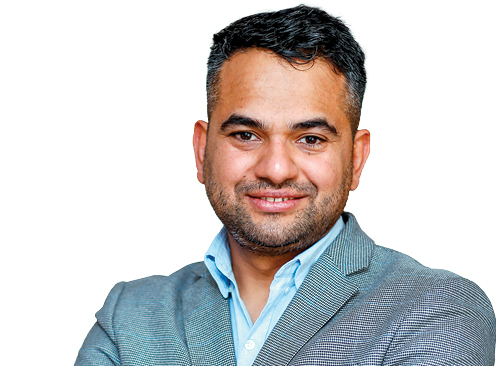
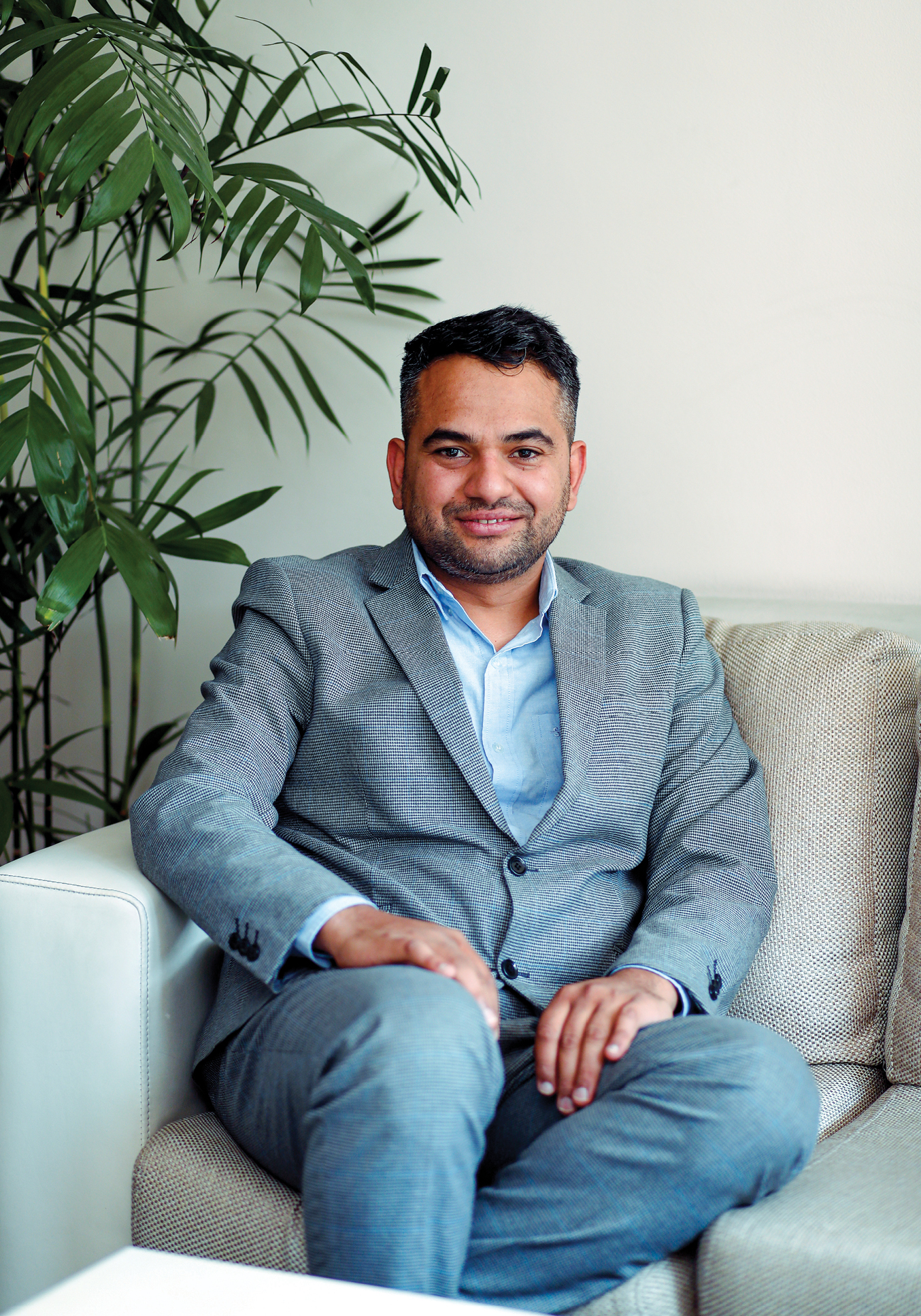
Subash Sapkota is the CEO of Yeti Airlines, a major domestic carrier in Nepal. A Chartered Accountant by profession, Sapkota served as the CEO of eSewa Pvt. Ltd. under the F1Soft International Group for over five years before departing in 2022.
Recognised for his strategic and innovative mindset, Sapkota advocates for the delegation of authority over the centralisation of power. Open-minded and committed to corporate governance, he successfully convinced the Board to transition Yeti Airlines from a family-run business into a public limited company.
The HRM Nepal caught up with Sapkota to discuss Yeti Airlines’ new strategies for sustainability, resilience, brand value, and other overarching corporate goals. Excerpts of the interview follow.
 Q: Airlines have been facing a challenging period due to repeated external shocks, with the COVID-19 pandemic serving as a major adversary in recent times. Furthermore, prolonged tensions in the Middle East are dampening aspirations by affecting tourist inflows, while Aviation Turbine Fuel prices continue to surge. How do airline companies cope with these mounting pressures?
A: Currently, the domestic airline market serves approximately 50 lakh passengers with an annual growth rate of 10-12%. In this context, the market is primarily supply-driven, meaning an airline’s volume depends on its fleet size. Although the active population is declining due to foreign employment and abroad studies, airlines are operating at survival pricing rather than profitable levels. Pricing remains discouraging. Even the dominant player with a 60% market share is unable to secure high profits. Yeti Airlines ranks second in market share, and we are also maintaining operations with only marginal profits.
After the COVID-19 pandemic there has been gradual improvement every year after 2021. Further, the recent tensions and the global oil price shock is beyond the control of our Board and management. Normally, fuel costs are adjusted within fares, essentially passed on to travellers, on a monthly basis based on fuel prices. However, the exponential increase in fuel prices could discourage travellers due to expensive fares and reduced flight frequency. However, there has been no such impact on the volume of travellers so far.
Q: You have highlighted the competitive market scenario among domestic airlines. How are you competing with the dominant market player?
A: The domestic airline market is more or less competitive, as profit is limited and efficiency is paramount. Among domestic carriers, Buddha Air leads Yeti and Shree Airlines in terms of market share. Buddha holds a 60% market share, while Yeti and Shree Airlines hold 25% and 24%, respectively. As I mentioned previously, the domestic market is supply-based. If we increase the number of aircraft in our fleet, we can attract more passengers.
Q: The tensions in the Middle East are likely to impact the inflow of foreign tourists, as most international airlines operating here are from that region. Do you think domestic carriers could be affected by this change in the inflow of foreign tourists?
A: It is said that booking cancellations from April are high, and the entire tourism industry might face adversity due to Middle East tensions. I believe the contribution of foreign tourists to domestic carrier usage is not that significant, at around 10-12%. However, it will affect the profit margins of domestic airlines, as they rely heavily on USD fares for profitability. In this spectrum, domestic airline profits could plummet further.
Domestic carriers may not face survival issues, but they will be unable to generate profit. The impact of the oil price shock caused by escalating tensions in the Middle East would be huge. There have been projections that around 20% of airlines worldwide could shut down if tensions are prolonged. Previously, when fuel prices shot up to $100 per barrel, nearly 15-20% of airlines were shut down. A similar scenario may repeat.
Q: Do you think airline companies need to discuss pricing strategy given the current situation?
A: Interactions are held on a regular basis. As domestic carriers have been operating in survival mode, the fares they offer are at a bare minimum, intended only to cover operating costs.
Q: As the middle-income population is expanding in the country, what approaches are you taking to attract them to use air transportation?
A: We are taking various approaches. We have been collaborating with different hotels in Pokhara to offer more affordable packages. We also began providing discounts to senior citizens last October. While these are not significant discounts, there is a marginal difference in fares for them. Our primary objective is to help the country’s tourism sector thrive, and as an airline service operator, we are open to collaborating with various stakeholders within the tourism ecosystem. We are very proactive in working as a key component for the development of a vibrant tourism sector.
Q: Based on your experience with consumer behaviour, are travellers lured more by integrated packages or cheaper fares?
A: Most Nepali passengers choose lower fares, with the exception of loyal customers and those who trust specific brands. Different customer segments have varying needs. Domestic tourism infrastructure has been built across the country, and the number of star hotels has increased significantly. Airlines are the most effective way to connect these infrastructures. Nepalis who can afford to travel abroad are encouraged to travel within Nepal by airlines and other facilities. In this regard, airlines have been playing a crucial role. Nepal’s tourism industry has survived through domestic travellers even during tough times, such as the insurgency.
Q: In the current scenario, must airlines opt for adding more aircraft to their fleets to expand their business?
A: Definitely. We have been constrained by regulatory challenges regarding aircraft procurement. We are required to purchase aircraft that are less than 15 years old. However, demand for aircraft in the international market has increased massively since the COVID-19 pandemic relative to production. Production of the ATR 500 has ceased, and production of the ATR 600 has been minimised. ATR used to deliver 75-80 aircraft annually before 2019, but that has plummeted to 35-40, meaning they are operating 50% below their pre-pandemic capacity.
Other manufacturers, such as Airbus and Boeing, have similar stories. Conversely, aircraft demand remains high. For example, IndiGo in India, which had 200 aircraft before the pandemic, has now more than doubled its fleet. Air India also added more than 100 aircraft to its fleet following the pandemic. Such massive expansion has occurred in many countries over the last four to five years. Consequently, both aircraft availability and pricing are constraining our expansion. With regulatory flexibility, we could add two to three aircraft to our fleet.
Q: Why has the Civil Aviation Authority of Nepal issued such regulations on aircraft procurement?
A: This regulation is somewhat antiquated, dating back some two and a half decades. Civil Aviation Authority of Nepal (CAAN) likely issued such a restrictive regulation due to a lack of human resources and technical inspection capacity for aircraft, perhaps guided by the assumption that such age limits would compel the purchase of newer aircraft. Such regulations require periodic review over time. However, there remains a strong perception that older aircraft are accident-prone, which is not true.
Despite this, no one in the regulatory authority takes the initiative to change this provision, fearing blame due to the predominant narrative surrounding ‘old aircraft’. If such provisions are not revisited, we have no choice but to optimise our existing fleet. The upgrading of runways and aeronautical ground lighting systems has made it easier to operate night flights, which has helped us increase flight frequencies and optimise our full potential.
Q: How are you going to diversify your products to optimise the use of your aircraft?
A: We have not decided yet, but we have been mulling over the regional sector (Kathmandu, Pokhara, or Bhairahawa to different cities in India) considering the growth in tourist influx between the two countries. In this spectrum, our role could be significant for regional connectivity in the future. We have been evaluating the prospects, but due to a lack of an adequate number of aircraft, it is difficult to jump into regional sectors. However, regional connectivity remains our next target.
Q: The financial situation of Yeti Airlines was poor when you joined in 2023. How did you navigate those difficult times?
A: It was immediately after the Pokhara incident, and the company was in a struggling phase. When I joined as CEO, Asian Life Insurance invested as a major shareholder. We are now moving forward toward an Initial Public Offering (IPO). Our objective is to strengthen the balance sheet. Although it began as a family-run business starting from a small venture, the market size has expanded over the years. This scale demands capital injection and a corporate structure.
My efforts within the company are focused on developing it as a corporate institution by onboarding institutional and some retail investors (via private placement) before issuing the IPO to the general public. We have already been able to raise some funds through private placement. We are now moving ahead to apply to the Securities Board of Nepal (SEBON) for IPO approval.
Q: How robust is the corporate client base of Yeti Airlines?
A: We have a fairly good number of corporate clients. We have made a significant effort to reinforce our brand image and gain trust by abiding by regulatory compliance and safety protocols. We have worked to understand the underlying reasons for the fatal crash and mitigate the risks highlighted by the investigation report. We collaborated with the manufacturer (ATR) on a joint project to improve maintenance capability, provide maintenance training, and enhance pilot capacity. The issues flagged as risks in the investigation have been addressed as completed checklist activities.
Q: As you have been concentrating your efforts on the corporatisation of Yeti Airlines, how long might it take according to your plan?
A: We are very close to achieving this goal. The company is led entirely by the second generation, and the average age of the Heads of Department (HoDs) is around 40-42 years. This second-generation leadership team is like-minded, proactive, habituated to a learning culture, and eager for change. Team conversations focus on making activities more productive. Previously, there was more reluctance than acceptance regarding any proposal. The young generation of leadership is proactive and strives to implement best practices. The scenario is already established where this young leadership works differently. They do not compromise on regulatory compliance or safety.
Additionally, we onboarded external and corporate investors, which changed the Board composition and functional practices compared to family-owned businesses. Management independence has prevailed. We are transitioning to operate as a public company, similar to banks and insurance companies in Nepal.
Q: What is the major difference between being confined as a family-owned business and operating as a corporate entity? What lessons can other family-run businesses learn to help them transform?
A: Earlier, there was a trend to remain as a family-owned business primarily to compromise on compliance. Other challenges included the availability of professional individuals, team compatibility, and the personal likes or dislikes of the owner toward employees. Now, compliance requirements have tightened for family-owned businesses as well, leaving no room for compromise.
Furthermore, the scaling of businesses over the last decade has been significant, making them difficult to manage as family-run entities. For example, a cement factory whose sales volume was once confined to $300 million now exceeds $3 billion. Along with this growth, firms require professional management, opinions, and services. In this scenario, corporatisation helps gain trust from the government, tax authorities, regulators, consumers, and other stakeholders. It is certain that if we run companies with professional management, they will achieve sustainable and organic long-term growth.
Typically, entrepreneurs take both calculated and non-calculated risks. However, professional management always operates based on calculated risks. Further, corporatisation ensures company governance and gains the trust of external investors. Corporatisation offers multiplier benefits to initial promoters as the increased scale accumulates more profits and generates more wealth.
Q: Have you found that the availability of professional individuals is still an issue within companies?
A: The primary reason for this is a lack of investment in talent by companies. They do not groom individuals or provide sufficient opportunities. Organisational investment in the training and development of competent personnel is equally critical for cultivating human resources for vital management and technical positions.
Q: How can we change the reluctance of organisations to invest in their people?
A: If you look at the example of Yeti Airlines, there are around 600 human resources, combining both technical and non-technical staff. There is a lack of job rotation in our organisation. Personally, I practice the delegation of authority to the Heads of Department (HoDs) with a ‘zero file’ mindset at the CEO level. The HoDs themselves make decisions or conclude tasks from their end, except for some crucial issues.
Normally, in our culture, HoDs do not want to conclude tasks themselves and prefer to transfer them to upper management, while CEOs and senior management often enjoy that. There has been a problem on both sides – those who assign and those who work. If asked about the number of trainings attended after formal education, employees often lack interest in enhancing their skills or broadening their knowledge.
Conversely, organisations are reluctant to invest in people due to a lack of motivation caused by high turnover and the costs of training and development. Another fundamental aspect killing performance is an insular mindset, which creates negative consequences and pollutes the workplace environment. In organisations, there is an 80:20 scenario where 20% do 80% of the work, but it is difficult to filter employees due to legal and emotional hindering circumstances.
In addition, there is a huge gap between industry needs and academia. Looking at practices in other countries, there are short-term MBA and top-up courses. Even in the Tata Group India, a three-month managerial course is mandatory for each promotion. When markets become competitive and profit margins decline, seeking efficiency requires moving in that direction. I believe the new government will provide regulatory ease.
Yeti Airlines has a 25-year legacy. My focus is on the delegation of authority, training and development, fair performance evaluation, and reward and recognition. We are committed to making Yeti Airlines the first choice for customers, not just in sales volume. Our team is working toward that goal. Brand value has been created, and results are moving in a positive direction.
Q: Reflecting on your own career, why did you choose the struggling aviation sector over a rapidly growing tech company?
A: For myself, it represented both a challenge and an opportunity. After serving as CEO of a reputed brand for six years, the company had reached ‘autopilot’ mode. Upon leaving the F1Soft Group, I had two options to explore new challenges. Move to a completely new sector or start my own enterprise. As a CEO, my job is to focus on management aspects rather than the technical specifics of aviation. The primary role of a CEO is people management. One must identify the right people and place them in the right positions to deliver results. I have been implementing what I learned at eSewa. My experience there taught me to maintain a startup mindset, make quick decisions, delegate authority, and find competent professionals to run the company.
Moreover, coming from a finance background, I personally believe that the core purpose of a company is to generate profit if it is in business. My personal capacity is fully utilised in resource optimisation and better utilisation of assets. Thus, I have been leading the organisation in a positive direction as CEO.

