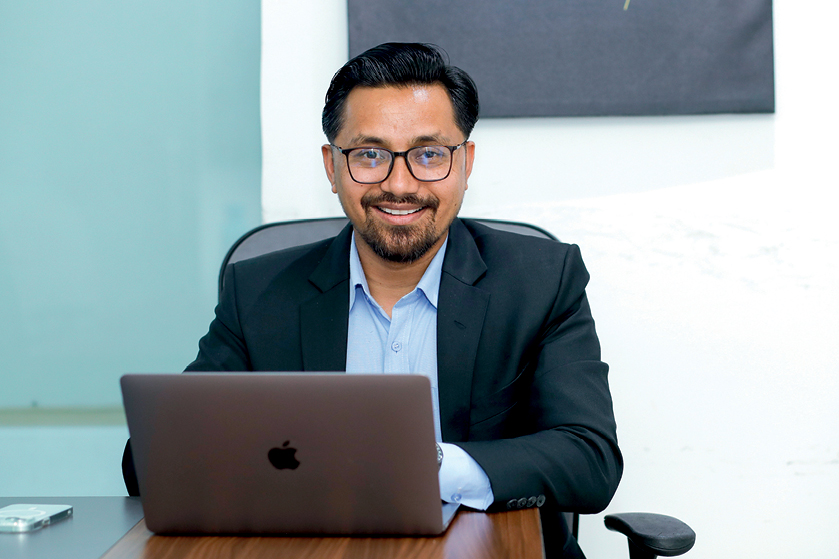
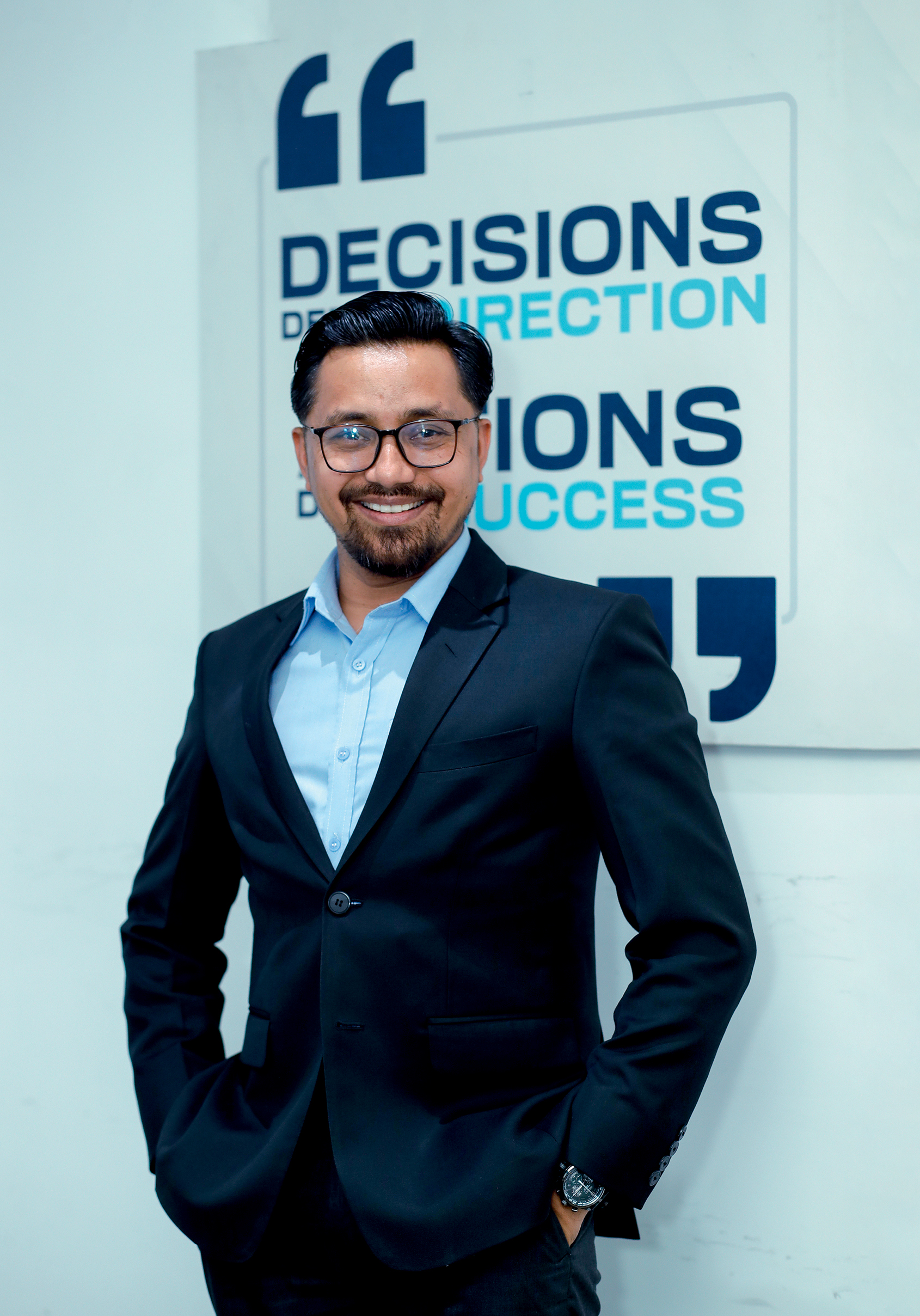
 Prakash Subedi is a versatile marketing professional whose career spans consumer goods, advertising, smartphones, and technology services, including roles at Chaudhary Group, vivo Nepal, Xiaomi Nepal, and InfoDevelopers, before transitioning into the automotive and electric-mobility sector. Holding an MBA in Marketing, he now oversees brand communication and charging infrastructure at MAW Vriddhi, the authorised distributor of Foton Motor in Nepal, while also managing the country’s expanding EV charging network.
In this conversation, he argues that EV marketing in Nepal has evolved beyond merely promoting a product. It is now about building confidence in a comprehensive ecosystem encompassing vehicle quality, charging access, after-sales readiness, warranty assurance, and customer education as the market shifts from early excitement to serious ownership evaluation. The HRM Nepal sat down with Subedi for a comprehensive discussion on brand and marketing strategies, execution, brand loyalty, and sustainability, among other topics. The excerpts of the interview follow:
Q: Could you briefly share your professional journey with us?
A: My professional journey has been shaped by continuous learning, adaptation, and working across several highly distinct, high-growth sectors: consumer goods, advertising, smartphones, technology services, and, currently, electric mobility. Each industry has taught me unique lessons about consumer behaviour, competition, distribution dynamics, and brand trust.
I began my career on the brand and communications side with Chaudhary Group, and also spent time on the agency side, which provided me with a strong foundation in media planning, media buying, and client servicing. I then transitioned into the smartphone industry, initially as Brand Manager at vivo Nepal. There, I led the brand’s positioning and managed the launch of multiple product lines, including the Y, V, S, and Apex series. My responsibilities included close oversight of consumer segmentation, brand visibility, ROI tracking, KPI monitoring, sales-team training, and media campaigns, which helped establish vivo among the top three brands by sales with a 12% market share, and as the leading brand in terms of visibility.
Later, I joined Xiaomi Nepal, where I focused equally on after-sales experience marketing and the premium segment of the Xiaomi range. During my tenure, I helped expand the retail network to more than 12 authorised Mi ‘touch-and-feel’ stores, launched the Mi Zone campaign to strengthen brand visibility, and introduced the TV and laptop series, positioning Xiaomi as the number one brand for the 19th consecutive quarter. More recently, as Head of Marketing at InfoDevelopers, a technology services company, I navigated a B2B environment where credibility, trust, and long-term relationships take precedence over mass-market reach.
These are intensely competitive categories where consumer attention shifts rapidly, teaching me the critical value of speed, clarity, consistency, and ground-level execution. Today, at MAW Vriddhi, I apply these insights and strategic perspectives to the automotive and EV sector. My role as Head of Marketing & Charging Infrastructure allows me to combine brand communication with tangible ecosystem development. In Nepal’s EV transition, marketing extends far beyond selling vehicles. It is about building customer confidence in the technology, expanding the charging network for maximum convenience, ensuring service reliability, and providing long-term ownership support.
Q: How would you assess Nepal’s EV ecosystem, especially in the country’s shift toward clean transportation?
A: Nepal’s EV ecosystem is undergoing a major transformation. A few years ago, electric vehicles were viewed as a niche product for early adopters. Today, they have firmly entered the mainstream across passenger vehicles, commercial vans, and urban mobility.
The primary catalyst for this shift is Nepal’s natural advantage in clean energy. Our electricity is largely hydropower-based, whereas our petroleum fuel must be imported. Consequently, EV adoption supports three national priorities simultaneously, which are reducing fuel imports, utilising domestic electricity, and lowering urban pollution. Public reporting has consistently highlighted this momentum, which is further driven by supportive hydropower availability, tax policies, cost savings, and national EV adoption targets.
Recent customs data confirms that this shift is real. According to the Department of Customs, Nepal imported 7,434 EV units worth approximately Rs. 18.20 billion between mid-July 2025 and mid-March 2026, while imports of internal combustion engine (ICE) vehicles declined over the same period. This indicates that the customer shift toward electric is a genuine behavioural change rather than a passing marketing trend.
At the same time, the market is entering a maturity phase. Previously, customers primarily inquired about range and price. Now, their queries focus on after-sales service, battery life, resale value, service networks, charging infrastructure availability, safety, warranty terms, and brand credibility. This is a healthy evolution, signalling that Nepal’s EV market is transitioning from initial excitement to serious ownership evaluation.
The major challenges ahead include expanding highway and remote-region charging infrastructure, ensuring after-sales readiness, managing battery lifecycles, training specialised technicians, maintaining policy consistency, and driving consumer education. While the opportunity is enormous, the brands that succeed will be those that build a complete ecosystem, rather than those that simply sell vehicles.
Q: What are the essential elements of a marketing strategy that is both effective and sustainable in the long term?
A: A sustainable marketing strategy rests on five foundations: clear positioning, customer insight, consistent communication, experience-led engagement, and long-term trust.
First, a brand must clearly define what it stands for and why customers should trust it. Second, marketing should not begin with a product brochure. It must start by understanding the customer’s problems, lifestyle, concerns, aspirations, and usage patterns. Third, because customers experience a brand across multiple touchpoints, including digital platforms, showrooms, events, influencer content, news, and word of mouth, the messaging must remain consistent across all channels.
Fourth, experience-led marketing is critical. In the automotive and EV sectors especially, consumers believe what they experience firsthand. Test drives, after-sales service quality, charging convenience, and continuous ownership support are far more persuasive than conventional advertising alone. Fifth, long-term trust is indispensable. While discounts can drive short-term sales, trust establishes lasting market leadership. In the EV sector, that trust stems from the credibility of the importing conglomerate, the scale of investment behind the brand, warranty assurances, charging network availability, service capabilities, spare parts availability, transparent information, and responsible customer engagement.
Q: What are the key USPs that have enabled the MAW brand to maintain its dominant market position?
A: To understand MAW’s market position, you really have to start with the group’s heritage. MAW began in 1964 as Morang Auto Works, a single automobile workshop in Biratnagar. Over more than six decades, it has grown into one of Nepal’s largest and most diversified conglomerates. Today, the group represents more than 20 globally recognised brands across the automotive, construction, and engineering sectors, supported by a nationwide network of over 600 touchpoints. This means MAW is a part of everyday life for millions of Nepalis. That scale and legacy form the foundation upon which everything else is built.
So, when people ask what our real USP is, my honest answer is that it is not any single product or campaign. It is the strength of our entire ecosystem and the culture that holds it together. At MAW, we constantly return to one simple idea: People First. It is this culture that turns our team’s collective effort into a synergistic effect on our outcomes.
If I had to identify our specific strengths, the first is legacy and trust. Six decades in this industry, beginning with Morang Auto Works in 1964, have given us a level of credibility that a newcomer simply cannot buy overnight. Customers know we run a disciplined business, that our after-sales support is dependable, and that we will continue to stand behind them years from now.
The second is our multi-brand, multi-segment capability. Through MAW Vriddhi, we operate across passenger EVs, commercial EVs, and charging infrastructure. This allows us to understand very different kinds of customers, from an individual buying their first electric car to a fleet operator or an institution managing dozens of vehicles.
The third is our after-sales and service network. In Nepal, people do not simply buy a vehicle, they buy peace of mind. A robust service and spare-parts ecosystem is often the deciding factor in a sale and it is an area where we are determined to lead.
The fourth is our commitment to charging infrastructure. MAW Vriddhi operates one of Nepal’s largest CCS2 DC fast-charging networks, with more than 200 charging points strategically placed along highways, tourism routes, and key travel corridors. Charging confidence is one of the biggest factors in a customer’s decision to go electric, so this matters enormously.
The fifth is the way we build the brand itself. We do not just list features. We create immersive experiences such as test drives, events, digital engagement, and customer education that help people understand what an EV actually means for their daily lives and running costs.
Ultimately, what ties all of this together is our People First culture. Strategy, networks, and infrastructure are all vital, yet it is our teams who translate them into an experience the customer can actually feel. When good people work toward a shared purpose, their efforts multiply. That, more than anything else, is what keeps MAW ahead.
Q: How is MAW Vriddhi positioning its brand in Nepal around sustainability, electric mobility, and environmental responsibility?
A: MAW Vriddhi is positioning itself as a primary enabler of Nepal’s clean-mobility transition. For us, sustainability is not just a marketing theme. It is deeply interconnected with our products, infrastructure, customer education, and long-term responsibility.
Nepal has a unique opportunity. We generate domestic hydropower and face a pressing need to reduce our dependence on imported fuel. EVs directly serve this national agenda. Our role, therefore, is to make EV adoption practical, reliable, and accessible.
We focus on three core pillars: electric vehicles, charging infrastructure, and customer confidence. Vehicles provide the mobility solution, charging infrastructure eliminates range anxiety, and customer education builds long-term trust.
In the commercial EV segment, this focus becomes even more critical. Electric vans, pickups, buses, and logistics vehicles can significantly lower operating costs for businesses while contributing to cleaner cities. Through Foton, our focus segments include electric trucks, vans, pickups, mini-buses, and ambulances, categories where the environmental and economic case for going electric is strongest.
Q: Consumer preferences and brand awareness have evolved significantly. How important is brand value to consumers today?
A: Brand value has become extremely important. Previously, many customers were price-sensitive first and brand-sensitive later. Today, especially in the EV sector, consumers are far more discerning.
They now ask critical questions: Who is the distributor? Will the company remain in Nepal for the long term? Is the battery warranty reliable? Is service readily available? Is there an accessible charging infrastructure? What is the resale value? Is there good parts availability? These questions demonstrate that customers are no longer just purchasing a product. They are investing in trust.
In the EV market, brand value matters even more because the technology is still relatively new for many users. A strong brand mitigates apprehension and gives customers the confidence that they are making the right long-term decision.
Q: What are the major factors that influence consumers when choosing a particular brand?
A: In Nepal’s automotive market, the primary factors influencing buyers are price, product features, driving range, design, after-sales service, spare parts availability, warranty terms, financing options, resale value, charging infrastructure access, and peer recommendations.
However, the weight assigned to each factor varies significantly by customer segment. A personal EV buyer is more likely to prioritise design, range, comfort, safety, and brand prestige. Conversely, a fleet or commercial buyer focuses heavily on the total cost of ownership, charging time, range, down payment requirements, service downtime, parts availability, and overall operational savings.
Social proof has also become incredibly powerful. Today, consumers thoroughly analyse online reviews, influencer opinions, YouTube videos, Facebook groups, TikTok content, and existing owner feedback before reaching a decision. A brand’s reputation is no longer controlled solely by its advertising. It is shaped daily by the collective customer experience.
Q: What strategies would you recommend for addressing unhealthy competition, especially as so many EV brands flood the market?
A: The EV market in Nepal is becoming increasingly crowded, and while competition is natural, unhealthy competition – characterised by unrealistic performance claims, aggressive discounting, misleading comparisons, or weak after-sales commitments – can damage the entire industry.
The first strategy to counter this is transparent communication. Brands must present driving range, warranty terms, battery specifications, charging capability, spare parts availability, and service conditions responsibly. The second is customer education. Buyers need to understand real-world range variances, charging behaviour, battery care, safety protocols, and the actual total cost of ownership.
The third strategy involves establishing industry-level standards. Regulators, distributors, and industry bodies should collaborate to standardise warranty norms, battery safety protocols, charging interfaces, and after-sales obligations. The fourth is focusing on value-based rather than price-based competition. When brands compete purely on discounts, both customer trust and dealer profitability suffer. Instead, competition should be driven by product quality, service reliability, infrastructure support, safety, and customer experience.
Ultimately, any brand entering Nepal’s EV market must be prepared to support its customers for the long haul, rather than just focusing on the point of sale.
Q: What approaches are necessary to build and sustain brand loyalty in a highly competitive environment?
A: Brand loyalty is built after the sale, not before it. While marketing brings the customer into the showroom, the post-purchase service experience determines whether that customer becomes a loyal advocate.
Sustaining loyalty requires an excellent delivery experience, proper customer onboarding, comprehensive charging guidance, timely service reminders, rapid complaint resolution, access to genuine parts, transparent warranty handling, and consistent communication.
In the EV sector, loyalty is deeply tied to ecosystem support. When customers can easily charge, service, and maintain their vehicles, their trust in the brand deepens. Community building is equally vital. Establishing owner groups, organising drive events, hosting service camps, conducting feedback sessions, and launching referral programmes all help transform customers into active brand advocates.
Q: How do you view the changing media landscape and what impact will it have on branding and marketing strategies?
A: The media landscape has transformed completely. Brands once relied primarily on newspapers, radio, television, and outdoor billboards. Today, consumer decisions are heavily shaped by digital platforms, short-form video content, influencers, online reviews, social communities, and real-time news updates.
This does not imply that traditional media is obsolete. Rather, it means media planning must be fully integrated. Mainstream media and public relations remain vital for establishing corporate credibility. Social media is essential for real-time engagement. Digital lead generation and CRM tools are critical for driving conversions. Finally, customer reviews and authentic owner stories are indispensable for building deep trust.
The future of marketing will undoubtedly be more data-driven, personalised, and experience-led. Brands must remain agile to move fast but they must also act responsibly. Viral content can generate temporary awareness but sustained credibility is what ultimately drives conversion.
Q: Trends such as the halo effect and viral marketing are gaining traction in Nepal. How do you interpret and leverage them?
A: The halo effect implies that a single, powerful positive perception can shape a customer’s overall view of a brand. For instance, if a brand is recognised for advanced technology, consumers naturally assume it is premium and reliable. Similarly, if it is known for robust after-sales support, customers feel far more confident purchasing its newer models.
Viral marketing is highly valuable but only when it is rooted in a genuine consumer insight. Virality without brand relevance is merely temporary entertainment. In automotive marketing, viral content must always tie back to product truths, tangible customer benefits, and core brand positioning.
For EVs, we can leverage the halo effect through impactful product demonstrations, authentic customer testimonials, charging infrastructure milestones, safety communications, and transparent ownership cost comparisons. Ultimately, the objective is not just to accumulate views but to build lasting belief.
Q: The 4Ps remain fundamental to marketing. How frequently does your organisation recalibrate them?
A: In today’s dynamic market, the 4Ps – Product, Price, Place, and Promotion – cannot simply be reviewed once a year. They require continuous monitoring.
Product feedback is gathered consistently from customers, sales professionals, service teams, competitors, and emerging market trends. Pricing must be continuously evaluated against tax policies, competitor movements, exchange rates, inventory levels, and consumer affordability. Place has become exceptionally crucial in Nepal as regional markets expand significantly beyond the Kathmandu Valley. Concurrently, Promotion must swiftly adapt to seasonality, campaign performance, digital analytics, and real-time customer responses.
In the EV sector, this recalibration happens even more frequently because technology, policies, and competition shift rapidly. A responsible organisation reviews its 4Ps monthly, quarterly, and on a campaign-by-campaign basis, depending entirely on market dynamics.
Q: What would you consider your most significant contributions and achievements in branding and marketing so far?
A: My greatest contribution has been my ability to seamlessly connect brand strategy with ground-level business execution. In the smartphone industry, for example, I helped build market visibility and led the positioning for multiple product launches in a fiercely contested market, a feat that relied equally on sharp consumer insights, disciplined media planning, and strong sales enablement. Throughout my career, I have thrived in categories where brand visibility, customer trust, retail execution, and digital performance must all converge simultaneously.
At MAW Vriddhi, I see my contribution across three primary pillars. First, strengthening EV brand communication by making it highly customer-centric and accessible. Second, driving the communication strategy around charging infrastructure, which is vital since charging confidence is a major catalyst for EV adoption. Third, helping position MAW Vriddhi not merely as an automobile distributor but as a holistic clean-mobility ecosystem player.
I also take pride in crafting campaigns that align corporate business objectives with themes of national relevance such as clean mobility, reduced fuel dependency, consumer savings, and sustainable transportation.
Q: What advice would you offer to young graduates aspiring to build a career in branding and marketing?
A: My advice is simple. Strive to understand the market before you focus solely on marketing tools.
Marketing extends far beyond creating clever social media posts or running advertisements. At its core, it is about understanding human behaviour, business mechanics, financials, competition, product design, distribution channels, and cultural nuances.
Aspiring graduates should focus on developing five essential skills: consumer empathy, clear communication, digital analytics, compelling storytelling, and execution discipline. They should also actively learn about sales and customer service, because real marketing begins where the customer’s voice is heard.
Be deeply curious. Visit local markets, talk directly to customers, observe retailers, analyse complaints, study rival campaigns, and learn to read data. Above all, cultivate patience. A brand is never built overnight. It is forged through consistent, long-term trust.
Q: Finally, what key message would you like to share with your stakeholders – customers, partners, and regulators – as you look ahead?
A: To our customers: EV mobility is no longer just the future. In Nepal, it is rapidly becoming the present. When choosing a brand, look for those that offer not just an excellent product, but robust service networks, comprehensive charging support, warranty confidence, and long-term institutional commitment.
To our partners and dealers: we are constructing this ecosystem together. The next phase of mobility will demand deeper collaboration, elevated customer education, and much higher service standards.
To our regulators: Nepal has a historic opportunity to lead the clean-mobility transition in South Asia. Long-term policy consistency, charging infrastructure support, strict battery safety standards, and formal after-sales regulations will all be critical to sustaining this momentum.
And to the wider industry: let us compete but let us compete responsibly. The EV transition is far bigger than any single brand. If we work collectively to build consumer confidence, the entire nation benefits.