
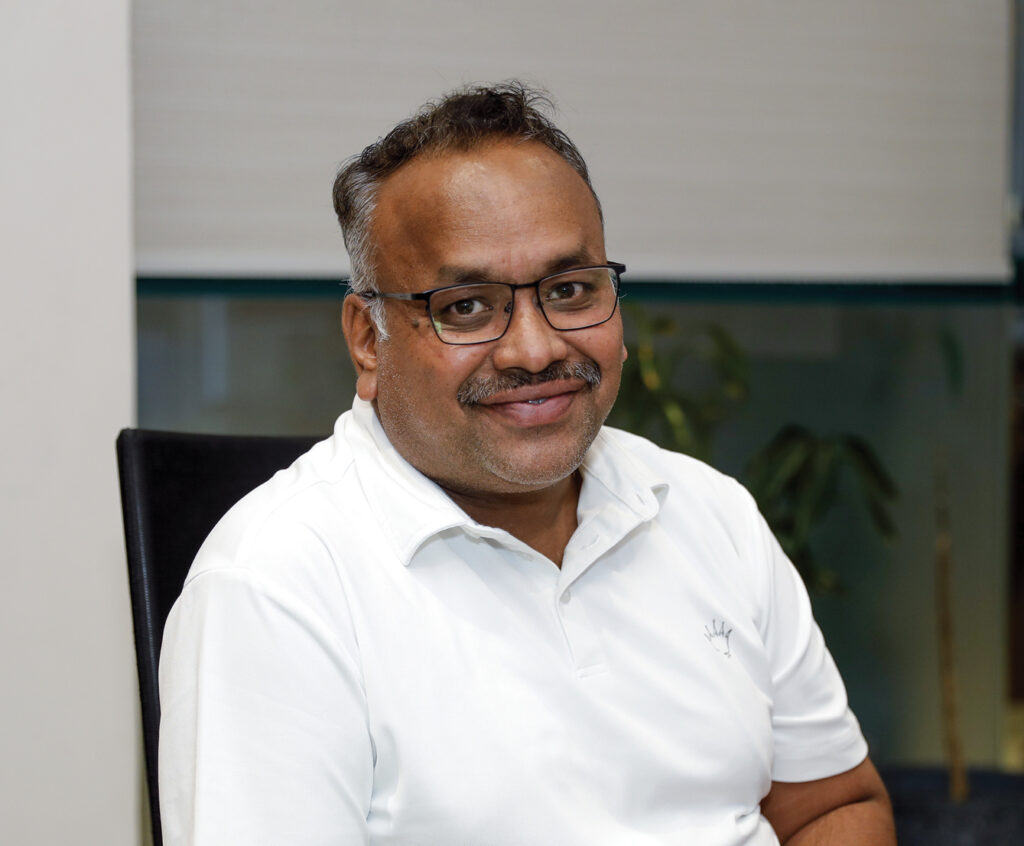
Deepak Agrawal, Executive Director and CEO, Rides Pvt. Ltd. (Yamaha Division)
 My professional journey began in 1997 – quite literally in a classroom, as a school teacher. That was my very first job, and it taught me something I carry to this day: the ability to communicate clearly and inspire people. Shortly after, I stepped into the corporate world as a computer operator at a private firm in Birgunj. The late 1990s were a challenging time – opportunities were limited, technology was just beginning to transform workplaces, and I truly had to earn every step of my growth with my studies. There were no shortcuts. That environment shaped a certain resilience and hunger in me that has stayed through every chapter of my career.
Teaching taught me communication, patience, and the ability to break complex ideas into simple, actionable ones – skills that have proved invaluable in leadership. My early corporate experience as a computer operator gave me a strong grounding in process discipline and attention to detail. But the deeper lesson came from my early years in manufacturing at firms like Aman Elastic Tape Udyog and National Poly Plast, where I was handling everything from purchase and banking to export formalities and labour management almost single-handedly. Those years gave me a full-circle view of how a business actually runs from the ground up.
I’ve had the privilege and the challenge of working across almost every type of business and function. Starting from manufacturing units in Bara, moving into finance, then luxury automobiles with Skoda, commercial vehicles with Volvo, two-wheelers and three-wheelers with TVS, and now leading the Yamaha division – each role added a new dimension. I’ve worked in sole proprietorships, partnerships, private limited companies, and public limited organisations. I’ve handled sales, marketing, operations, finance, HR, administration, and reporting. That breadth doesn’t come from a textbook. It comes from years of rolling up your sleeves and learning on the ground.
My early days in the financial sector
Finance was always my strength and my years at United Finance Limited, where I grew the portfolio from Rs. 570 million to Rs. 2 billion and maintained NPA below 0.5%, gave me a deep sense of what it means to run a tight, disciplined operation. But automobiles were always my passion. My very first ride was a Yamaha, and that emotional connection never left me. When the opportunity came to lead the Skoda division at MAW Enterprises, it felt like bringing together two worlds – the analytical rigour of finance and the energy of the automobile industry. That combination has defined my approach ever since.
Finance is inherently inward-looking. It’s about managing risk, maintaining ratios, and ensuring compliance. The automobile industry, by contrast, is relentlessly outward-facing. Every day, you’re responding to consumer sentiment, market dynamics, competition, and technology shifts. What struck me most was the role of emotion. People don’t just buy vehicles, they buy aspirations, status, and experiences. I also noticed the sheer complexity of distribution, managing 125 dealerships across 65 districts of Nepal, for instance, is a completely different discipline from managing a financial portfolio. Both require rigour, but the skills are very different.
Towards automobile sector
Versatility has been my greatest asset. Because I’ve worked across so many industries and functions – from managing 200 labourers on a factory floor to presenting accounts that won the 1st Runner-Up award from ICAN Nepal – I’ve always been able to see the full picture. I don’t look at a business through just one lens. Beyond that, I’ve always believed in data-driven decision-making, whether it’s MIS and pricing strategy or KRA/KPI frameworks for teams. And I’ve never shied away from building systems, whether it was implementing SAP, setting up a CKD plant, or developing a retail finance portfolio of Rs. 1.7 billion with NPA under 5%. Systems outlast individuals, and that’s what creates lasting value.
The transformation has been nothing short of extraordinary. When I entered the two-wheeler space at Jagdamba Motors in 2014, TVS had a market share of around 5%. Over six years, we took that to 22% in the 2W segment and 60% in three-wheelers and grew turnover from Rs. 50 crores to over Rs. 1,300 crores. That kind of growth reflects how dramatically consumer preferences and market conditions can shift when you combine the right product with the right strategy. More broadly, I’ve seen the rise of digital marketing, connected vehicles, CKD manufacturing entering Nepal, and consumers becoming far more sophisticated and brand-conscious. The JD Power Best Customer Satisfaction Award we received is a testament to how consumer expectations have risen and how the industry has had to rise with them.
Consumer-centric approaches
For me, consumer-centricity means starting with a genuine desire to solve a problem, not just fill a sales target. During my time at Jagdamba Motors, we built the service volume from 3,000 units a month to 50,000 units a month. That kind of growth doesn’t happen by accident. It happens when every touchpoint, from the showroom to the service bay, is designed around the consumer’s experience. I’ve always believed in a 360-degree approach – ATL, BTL, digital, referral, institutional, and channel sales working together. And underpinning all of it is data – MIS, analytics, pricing strategy, and CRM systems that ensure we’re always listening to the consumer, not just talking at them.
Yamaha carries a legacy that very few brands can match and for me, that legacy is personal. My first ride was a Yamaha. So, I understand, from the consumer’s side, what the brand means emotionally. Brand identity gives you the trust and aspiration; consumer relationships give you the loyalty and advocacy. At MAW Group, we work hard to honour both. Every interaction, whether at the dealership, in the service centre, or through our digital channels, is an opportunity to reinforce what Yamaha stands for: performance, reliability, and the joy of riding. When those two elements are aligned, brand strength and consumer relationships feed each other in a virtuous cycle. Customerisation is the Brand DNA of MAW Group
Sustained growth
Our strength lies in the combination of a world-class brand and a deeply local, execution-focused team. We bring global standards to every dimension of the business – product quality, after-sales support, training, and systems – while remaining deeply connected to the Nepali consumer and market. We’ve invested in robust processes: Microsoft BC/SAP-based operations, app-based reporting, structured KRA/KPI frameworks, and a CRM system with a dedicated call centre. These aren’t just tools – they’re the foundation of a consumer-centric culture. And behind all of it is a team that genuinely believes in the brand and the mission.
Major milestones in my career
There are several that stand out. Winning the 1st Runner-Up award for best presented accounts from ICAN Nepal during my time at United Finance was an early validation that discipline and standards matter. Leading the Skoda division and establishing it as a top-of-mind premium brand in Nepal – including a trip to Skoda’s headquarters in Prague for the MIM seminar – was a defining experience. But the most significant milestone was probably at Jagdamba Motors, where we took TVS from a 5% market share to 22% in two-wheelers and grew the business from Rs. 50 crores to over Rs. 1,300 crores in six years. That chapter proved that the right strategy, the right team, and relentless execution can genuinely change the trajectory of a business.
Other than this, I have always switched to different industries and mastered them. My career spans from manufacturing (woven sacks) to banking (United Finance Ltd), four-wheelers (Skoda/Proton), two-wheelers and three-wheelers (TVS), commercial vehicles (Volvo Eicher), and back again to two-wheelers (Yamaha).
The industry never stands still and neither do I. From setting up a CKD plant in Nepal, to managing a retail finance portfolio, to receiving the JD Power Best Customer Satisfaction Award, each chapter has brought new challenges and new learning. What keeps me engaged is the knowledge that there is always more to build, more to improve. My deepest sense of achievement, though, isn’t in the numbers, it’s in the systems and teams I’ve built that continue to perform long after the initial push. And personally, being an automobile enthusiast who gets to live his passion every day at work – that’s something I’m genuinely grateful for.
Career tips to fresh graduates
My first piece of advice: don’t specialise too early. I started as a teacher, moved into manufacturing, then finance, then automobiles and every one of those experiences made me a better marketer and leader. The breadth of perspective you gain from working across functions is irreplaceable. Second: be curious about people. Sales and marketing are, at their core, human disciplines. Understand what motivates people, what they fear, and what they aspire to, and you’ll always find a way to connect. Third: embrace data. Today’s marketing is as much science as it is art. Learn your analytics, your MIS, your digital tools. And finally, build relationships with integrity. In the long run, your reputation is your most valuable asset. Guard it carefully.

