
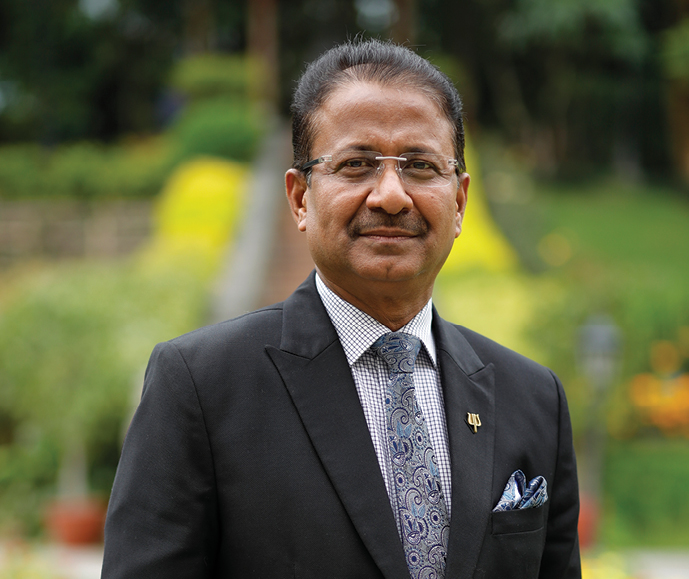
Basab Chakraborty, Director of Finance & Head of HR and Administration at Hotel Yak & Yeti, brings a rare combination of financial expertise and people leadership, with over three decades of experience in the hospitality industry since 1994. His distinguished career spans leading international hospitality brands, including key finance roles at Grand Hyatt properties in Mumbai, Chennai, and Kolkata, as well as contributions to luxury operations at Andaz Goa. Since joining Hotel Yak & Yeti on 25 December 2020, Chakraborty has played a pivotal role in strengthening the hotel’s financial and administrative strategies while fostering a strong organisational culture.
The HRM Nepal caught up with Chakraborty to explore emerging trends and best practices in human resource management and to understand how strategic HR interventions are transforming people management in Nepal’s hospitality sector. Excerpts from the interview are presented below:
Q: What inspired you to pursue a career in Human Resource Management?
A: I was inspired to pursue Human Resources as a profession because it provides an opportunity to work closely with people, support their growth, and contribute to building a positive and productive workplace culture. I believe HR serves as a bridge between employees and management and plays a vital role in employee engagement, motivation, and overall organisational success. My interest in communication, teamwork, problem-solving, and helping individuals grow professionally motivated me to become part of the HR management function.
Q: Do you believe HR should be entrusted with strategic responsibilities such as workforce planning, HR audits, and succession planning, beyond its traditional administrative functions?
A: Yes, I strongly believe HR should be entrusted with a strategic role that extends well beyond traditional administrative responsibilities. Modern Human Resources plays a critical role in workforce planning, HR audits, succession planning, talent management, employee engagement, and organisational development. HR is no longer limited to recruitment and payroll administration. It is about aligning people strategies with business objectives. A strategic HR team helps organisations identify future talent requirements, build leadership pipelines, enhance productivity, ensure compliance, and cultivate a strong organisational culture. This ultimately contributes to long-term business growth and sustainability.
Q: How would you assess the current HRM practices adopted by large corporate hospitality brands such as Hotel Yak & Yeti?
A: I would assess HRM practices in large corporate hospitality brands such as Hotel Yak & Yeti based on key parameters including employee engagement, training and development, talent retention, leadership development, performance management, workplace culture, and employee welfare. In the hospitality industry, employees directly influence guest satisfaction, making strong HR practices essential for maintaining service excellence and protecting the brand’s reputation.
Q: Based on your experience as an HR professional, could you share some reflections on the major milestones achieved by your organisation?
A: Based on my experience as an HR professional, some of the major milestones achieved by the organisation include improving employee engagement, strengthening retention strategies, streamlining recruitment and onboarding processes, and enhancing coordination and communication between management and employees.
Q: How have you shaped HR policies over the years to align with your organisation’s sustainability objectives and long-term growth strategy?
A: Over the years, I have focused on shaping HR policies by aligning them with the organisation’s vision, operational requirements, employee expectations, and long-term business goals. The objective has always been to create policies that support both employee well-being and organisational stability.
I have worked towards strengthening policies related to recruitment, performance management, employee engagement, training and development, workplace discipline, and retention strategies to ensure they remain practical, transparent, and growth-oriented. Regular reviews of HR practices, employee feedback, evolving industry trends, and compliance requirements have also helped make these policies more effective and adaptable.
By reinforcing people-centric strategies and maintaining a balance between organisational objectives and employee satisfaction, HR policies can make a significant contribution to the company’s sustainable growth, productivity, and positive workplace culture.
Q: Human Resource Management has evolved significantly over the years. What innovations do you believe are now required in HR, particularly in ensuring that Gen Z employees feel heard and valued regardless of organisational hierarchy?
A: Over the years, Human Resource Management has evolved from a traditional administrative function into a more strategic and employee-centric discipline. In today’s dynamic work environment, HR innovation is essential to meet the expectations of modern employees, particularly Gen Z professionals.
One of the most important innovations required in HR is the creation of an open and inclusive communication culture where employees feel heard and valued, regardless of organisational hierarchy. Gen Z employees place high importance on transparency, recognition, flexibility, mental well-being, continuous feedback, and active participation in decision-making processes. Organisations should therefore adopt more people-focused HR practices, such as open-door communication, digital engagement platforms, regular feedback mechanisms, flexible work arrangements, and greater accessibility to leadership.
HR should also continue to innovate in areas such as learning and development, employee wellness programmes, diversity and inclusion initiatives, and technology-driven HR practices. Encouraging collaboration, respecting employee perspectives, and fostering a culture of trust and belonging can significantly strengthen employee relations, enhance engagement, and support long-term organisational growth.
Q: Are employee retention challenges becoming more pronounced in Nepal’s hospitality sector, given that local hospitality standards are increasingly comparable to global benchmarks and many professionals seek opportunities abroad with long-term settlement aspirations?
A: Yes, retention remains one of the major challenges facing the hospitality industry, particularly in countries like Nepal, where hospitality standards are increasingly comparable to global benchmarks. Many skilled employees choose to explore opportunities abroad in pursuit of better financial rewards, international exposure, career advancement, and long-term settlement prospects.
This creates an ongoing challenge for organisations seeking to retain trained and experienced professionals. To address this issue, HR departments need to place greater emphasis on employee engagement, career development opportunities, competitive benefits, recognition programmes, training, and the creation of a positive workplace culture. Employees are more likely to remain with an organisation when they feel valued, respected, and able to envision long-term growth within it.
In today’s highly competitive environment, retention strategies should focus not only on compensation but also on work-life balance, supportive leadership, learning and development opportunities, and fostering a strong emotional connection between employees and the organisation.
Q: How challenging is talent acquisition in today’s job market, and in your opinion, what makes recruitment more effective?
A: Acquiring talent from the job market has become increasingly challenging due to intense competition, evolving employee expectations, skill shortages, and changing industry demands. In the hospitality industry, organisations are not only competing for skilled professionals within the local market but also with international employers that often offer higher financial rewards and broader career opportunities.
In my opinion, effective recruitment depends on several important factors, including strong employer branding, clearly defined job expectations, timely hiring processes, professional communication, and the availability of growth opportunities for candidates. Organisations should focus on hiring not only for technical competence but also for attitude, adaptability, teamwork, and cultural fit.
Recruitment becomes more effective when companies create a positive candidate experience, maintain transparency throughout the process, utilise modern recruitment tools, and invest in employee development and retention strategies. A well-structured recruitment process enables organisations to attract the right talent and build a strong workforce for long-term success.
Q: Do you utilise an HRMIS? How open are you to introducing new tools and modern HR practices at Hotel Yak & Yeti, where a large workforce is employed?
A: Yes, HRMIS plays a vital role in modern Human Resource Management, particularly in large organisations such as Hotel Yak & Yeti, where managing a sizeable workforce requires accuracy, efficiency, and effective coordination. HRMIS helps streamline various HR functions, including attendance management, payroll administration, employee records, recruitment, performance tracking, leave management, and reporting systems.
I strongly believe in adopting new tools and modern HR practices that enhance operational efficiency and improve the employee experience. In today’s competitive environment, HR departments must remain flexible and open to technological advancements and innovative HR solutions. The introduction of digital HR systems, employee self-service platforms, data-driven decision-making processes, and automation can significantly enhance productivity and transparency.
However, while implementing new tools, it is equally important to ensure adequate training, employee adaptability, and smooth transition processes so that technology effectively supports both organisational objectives and employee convenience.
Q: How are Key Results aligned with Key Performance Indicators (KPIs)? Is this managed through HR software or through a separate mechanism?
A: Key Results are generally aligned with Key Performance Indicators (KPIs) through a structured performance management framework in which organisational goals, departmental targets, and individual objectives are interconnected.
In many organisations, this alignment is managed through HR software or HRMIS platforms, where goals are assigned, monitored, and reviewed periodically. Such systems facilitate real-time performance tracking, ensure transparency, and generate performance reports for management review.
However, in organisations with large operational workforces, particularly within the hospitality industry, separate mechanisms are often used alongside HR software. These may include departmental review meetings, manual tracking systems, operational scorecards, guest feedback analysis, attendance and productivity reports, and regular discussions between managers and employees.
The most effective approach is typically a combination of both: HR software for centralised tracking and reporting, supported by practical departmental monitoring mechanisms to ensure operational performance remains consistently aligned with business objectives.
Q: Have you implemented any unique people-management practices that have helped deliver better results? Could you briefly share some examples?
A: Yes, over the years we have adopted several people-management practices that have helped improve employee engagement, operational efficiency, and service delivery.
One effective practice has been maintaining open communication across all levels through regular departmental meetings and cross-functional discussions. This helps employees feel involved in decision-making and strengthens coordination between departments.
Another important practice is placing emphasis on employee recognition and appreciation. Even simple recognition initiatives, appreciation notes, or acknowledging good performance during meetings can significantly boost morale and motivation within the hospitality industry.
We also prioritise continuous learning and multi-skilling, encouraging employees to develop capabilities beyond their primary responsibilities. This enhances operational flexibility while supporting individual career growth.
In addition, we focus on employee onboarding and cultural integration to help new team members quickly adapt to the organisation’s standards and values. Employee retention improves when individuals feel connected to the workplace culture from the outset.
Lastly, maintaining a balance between operational discipline and employee well-being has been extremely important. Supporting employees during challenges, listening to their concerns, and fostering a respectful work environment ultimately leads to improved performance and stronger service delivery.
Q: How frequently does your organisation conduct skill-gap assessments or capacity-needs evaluations, and what development initiatives are offered to enhance employee skills and capabilities?
A: Our organisation conducts skill-gap assessments and capacity-needs evaluations periodically through performance reviews, departmental feedback, operational observations, and employee discussions. Formal assessments are generally conducted annually, while ongoing evaluations take place throughout the year based on operational requirements and service standards.
Training and development initiatives are planned regularly to address identified gaps in technical skills, behavioural competencies, leadership development, customer service, compliance, and operational excellence. Depending on organisational requirements, training programmes may be conducted monthly, quarterly, or as part of an annual learning calendar.
In the hospitality industry, continuous learning is essential due to evolving guest expectations and changing operational standards. Therefore, organisations also encourage on-the-job training, cross-functional exposure, refresher sessions, and departmental coaching to strengthen employee capabilities and enhance overall service quality.
Q: How do you nurture workplace culture? What gaps have you identified among employers in creating an enabling work environment that supports employees and drives effective results?
A: We nurture workplace culture by promoting open communication, mutual respect, teamwork, accountability, and employee engagement across all levels of the organisation. Regular interactions between management and employees, recognition initiatives, learning opportunities, and transparent operational practices help create a positive and collaborative work environment.
We also focus on onboarding and cultural integration so that employees clearly understand the organisation’s values, service standards, and expectations from the very beginning. Encouraging cross-functional collaboration and maintaining approachable leadership further strengthen trust and teamwork within the workplace.
At the same time, some common gaps observed across many organisations include communication barriers, limited employee recognition, inconsistent leadership practices, lack of visibility regarding career growth opportunities, resistance to change, and insufficient investment in employee development. In operational industries such as hospitality, work pressures and employee retention challenges can also impact workplace morale and long-term engagement.
To create an enabling environment for effective results, employers must focus not only on operational performance but also on employee well-being, fair workplace practices, continuous learning opportunities, and fostering a culture where employees feel valued, heard, and motivated to contribute towards organisational goals.
Q: Would you like to share any additional insights on Human Resource Management with our valued readers?
A: Human Resource Management in a five-star hotel is not only about policies, recruitment, or performance management. It is about creating an emotional connection between people, service, and the brand experience. In hospitality, guests may forget the luxury of a room, but they will always remember how they were treated by the people serving them. That emotional experience is created by employees who themselves feel respected, motivated, and valued.
Over the years, one important realisation has been that hotel employees do not merely work with systems and procedures, they work with emotions every single day. A smile at the reception, a chef preparing a special meal for a guest, housekeeping staff maintaining standards with pride, or a service associate handling guest concerns with patience and professionalism, these moments define the reputation of a luxury hotel. Behind every memorable guest experience is a dedicated team working with passion and commitment.
In a five-star environment, HR’s responsibility extends far beyond administration. It is about nurturing a culture of dignity, teamwork, discipline, and belonging. Employees perform at their best when leadership genuinely listens to them, supports their growth, and stands beside them during challenging times. Even simple appreciation, personal recognition, and empathy from management can create lasting motivation among hospitality professionals.
One of the most rewarding aspects of hotel HRM is witnessing employees grow within the organisation, from trainees to leaders and from uncertain beginnings to confident professionals. These journeys form the true legacy of a hotel. Technology and systems will continue to evolve, but the human touch will always remain at the heart of luxury hospitality.
For me, the true success of HR in a five-star hotel is measured not only by retention figures or operational efficiency, but by creating a workplace where employees feel proud to represent the hotel’s name, emotionally connected to its values, and inspired to deliver excellence every day.

