
Dr. Sridhar R is a renowned HR Consultant and Professor of Practice at St. Joseph’s Institute of Management in Bangalore, India. As a highly seasoned professional and acclaimed academician, he has made significant contributions to the domain of human resource management through research, innovation, and practice. He delivered a keynote session during the recently held 18th edition of HR Meet in Kathmandu. The HRM Nepal conducted an e-interview with Dr. Sridhar R on various dimensions of human resource management. Excerpts of the interview are provided below.
 Q: How should HR evolve from a support function to a strategic value creator in boardroom decision-making?
A: Growth is the lifeblood of any successful business but achieving growth that is both profitable and sustainable is proving difficult. Most companies do not get strategy design, mobilisation and execution right, especially when uncertainty is high and high uncertainty events have been increasing in frequency and intensity. (How Strategy Champions Win. McKinsey Quarterly, July 14, 2025; Six Strategies for Growth Outperformance. McKinsey & Co. May 15, 2024.)
They tend to consider only “demand side” factors such as external trends, market share, total addressable market, etc. and tend to overlook “supply side” constraints like operating processes, financing, human capital, organisational design, business model, and culture. (How Fast Should Your Company Really Grow? Gary P. Pisano. Harvard Business Review, March-April, 2024.)
HR will become a strategic value creator when it helps the enterprise overcome supply side constraints of human capital, organisational design and culture.
The enterprise should have people who
- are rewarding to work with – committed team players and those who coach others;
- have the ability to do the job and show learning ability and reasoning potential; and
- are willing to work hard
People work to
- “Get ahead” in terms of recognition, growth, power and money;
- “Get along” be it good relationships at work or fun; and
- “Find meaning” be it security and stability at the workplace, application of science in what they do or “beauty” in what they produce.
(The Talent Delusion. Tomas Chamorro-Premuzic, 2017)
HR’s agenda should be to find capable people and motivate them to perform. Most of the companies are aware that without human capital activity and productivity, there is virtually no chance of competing effectively and growing profitably. But they don’t find their HR measuring up. Delivering ROI in human capital is the only way for HR to move from being a support function only to being a strategic value creator.
Q: How do you conceptualise the alignment between business strategy and human capital strategy in economies where informality still dominates?
A: Enterprises in “informal economies” consider people as a cost that has to be minimised. But they have a very narrow view of cost – salaries and benefits and compliance cost. They do not cost poor quality of work, missed opportunities, absenteeism and turnover. Once these costs are factored in enterprises in informal economies incur a huge cost in addition to low people productivity in their operations. HR should present the “total” people cost and suggest investments to lower the total people cost. These investments could be in better salaries and benefits, incentives, and education and training.
Countries will not be able to experience higher economic growth if employment there is largely informal. If employment has to become more formal, firms have to become more productive and grow.
These countries have several barriers that come in the way – government policy in terms of higher taxes and stifling rules and regulations; poor financial infrastructure; and non-existent management practices be it goal setting, training, performance management, and reward management. (To understand why countries grow, look at their firms. The Economist, March 5, 2026)
At the enterprise level, the goal should be to lower total people cost and increase people productivity. At the country level, the objective should be to move up in the ranking of ease of doing business there.
Q: What differentiates high-performing organisations in India from emerging firms in Nepal in terms of HR architecture and leadership pipelines?
A: I am not very familiar with the business enterprises in Nepal. I am listing here some salient features of high-performing organisations in India in terms of HR architecture and leadership pipelines.
HR Architecture
HR architecture can be defined as the overall structure and design of a company’s human resources system. It encompasses the policies, processes, and systems that a company uses to manage its human capital. This includes recruiting, hiring, training and development, performance management, compensation and benefits, and employee relations. HR architecture also considers the unique and valuable elements of the company’s human capital allocation and manages them in a way that maximises value and aligns with the company’s strategic goals.
In high-performing companies, policies, processes, and systems focus on capability building and employee motivation. They welcome technology and quickly adapt to changes.
Skill acquisition, application and retention constitute the key deliverables of the company’s HR architecture. Skill building programmes prepare employees for a technology driven environment. These companies consider diversity and inclusion as critical for innovation, market understanding and competitive advantage.
High employee motivation is largely an outcome of the learning and growth opportunities that these companies provide. Fairness and Consistency are the defining features of Performance Management. Remuneration and Benefits, Work-Life Balance and Employee Wellness programmes are implemented such that they do not become the primary causes for employee attrition.
Leadership Development
Leadership development stands as a pivotal element in the trajectory of organisational growth and prosperity in these companies. It encompasses a broad array of processes and responsibilities, all integral in shaping and honing the skills of potential leaders. This comprehensive approach delves into the best practices across the spectrum of leadership development, detailing each phase and component involved in creating influential and effective leaders within the organisation.
Identification of leadership potential is done through performance evaluations, psychological assessments, and 360-degree feedback. Individualised development plans are made based on the unique strengths, weaknesses, and career aspirations of each potential leader. Various training programmes, including on-the-job training, workshops, and educational courses focused on leadership skills such as decision-making, conflict resolution, and team management are offered to build leadership pipelines. Pairing potential leaders with experienced mentors and coaches to provide guidance, support, and insight into the challenges of leadership is often a key feature of the leadership development programmes in these companies.
Q: With increasing automation and AI, how should organisations in developing economies redesign their workforce strategy to avoid structural unemployment?
A: The future of work will include shifts in demand for occupations, skills upgrades, automation increases, and productivity challenges, further emphasising the need to manage talent proactively. The workforce strategy for an increasingly technology driven workplace will have several elements to it. This strategy will be similar for developed and developing economies.
-> Partner with Educational Institutions. Industry and Educational institutions need to work together to prepare a generation of “ready-to-work” employees. Course design, delivery and evaluation should be done together for a three- to five-year horizon.
→ Prioritise talent investments as much as financial investments. Employees represent both an organisation’s largest investment and its deepest source of value.
→Consider both capacity and capabilities. Once organisations prioritise talent as an important metric for business success, they can identify the specific skills and competencies required for critical roles that drive higher performance and create more value.
→Take an innovative approach to filling talent gaps. HR and business leaders routinely look to external talent to fill open roles, sometimes viewing these hires as a magic solution to skills gaps. But today’s rapidly changing technological landscape means that filling workforce shortfalls through external recruitment at the role level is often not enough. Leaders should instead weigh the time and cost implications of internal versus external hires. Paths include internal redeployments where complementary skills are available, reskilling or upskilling existing talent, acquisitions, and outsourcing.
Embed Strategic Workforce Planning (SWP) into business as usual. As the first four practices show, strategic workforce planning should become a business-as-usual process, not just a one-off exercise in the face of a single threat to an organisation’s talent pipeline or business goals. By embedding SWP into core business operations, companies can better anticipate workforce needs, respond to changing demands, and ensure long-term agility and resilience.
(https://www.mckinsey.com/capabilities/people-and-organizational-performance/our-insights/the-critical-role-of-strategic-workforce-planning-in-the-age-of-ai)
Unemployment is bound to result if
- Educational institutions do not make their students skill-ready to perform current and future jobs.
- Companies do not invest in upskilling and reskilling their employees.
- Employees resist learning new skills and upskilling.
Q: You have emphasised fairness in talent systems. How can organisations move from “meritocracy” to “competence” in practical terms?
A: In his book, The Aristocracy of Talent: How Meritocracy Made the Modern World, Adrian Wooldridge, says the term “meritocracy” was coined by Michael Young, a British sociologist, in a book published in 1958. Young feared that a system that rewarded merit – defined as IQ plus effort – could actually be dystopian because the losers would suffer more than ever. He predicted a revolt against it and that revolt is indeed under way, with powerful challengers saying “why the accident of cognitive skill should yield such status for individuals.” The Economist magazine (The fall of the meritocracy, Oct 20, 2010) writes that “meritocracy is in danger of calcifying into a caste, decorated with a few members from favoured minorities, but cut off from the great mass of the population. The social hierarchy is getting both steeper and harder to climb. Reputed institutions of higher learning are stuffed full of the children of the elite, going out of their way to recruit the offspring of alumni, celebrities, potential donors and the well-connected, and are increasingly out of reach of the economically and socially disadvantaged classes.” Much of Wooldridge’s case is really about the value of getting the right people into the right jobs. It is easier to persuade people that everyone gains if doctors, scientists and journalists are hired based on their aptitude for the role.
Skill-based hiring is fast becoming the norm because organisations in many technical roles are having trouble finding the people that they need. They are doing away with formal job requirements and considering underlying skills to perform jobs. And if those skills don’t require education in elite institutions, then they create opportunities for those who have not had access to these institutions. The view is “If you have the skills, no matter where you learned them, and you can do the work, you should be able to do the work.” These companies create pathways to get the skills they need and provide opportunities for the “not-so-fortunate” people. This also addresses the companies’ inclusivity goal. Specifically:
- Many employers have been trying to partner effectively with higher education to try to really fine-tune what the employer needs and what the higher educational institution is cultivating within their pools of talent.
- Companies focus more on people who are already working for them than external hires. They allow people try out different roles at different times across the organisation till a matching happens. By having more of a skills-based approach they try to find talent where they might not have previously looked for roles in their organisation. This helps the company, and it also helps talent who want to have a more flexible approach to career development.
- A rigorous apprenticeship programme is actioned to create a bank of future employees. For those apprenticeships, there is a very competitive process. Through the application process itself they have a number of assessment steps. For those that are awarded an apprenticeship it is learning on the job. The managers who supervise the apprentices sign off on several individual skills and capabilities that somebody is demonstrating and building over the course of the apprenticeship. So, at the end these apprenticeships, even though they don’t have a college degree, they have been taught the very specific elements that they need to be excellent in that area of work.
- Those companies that are clear strategically about the skills shift that they need to be competitive going forward, recognise the skills that people have that are on that forward-looking vision in the performance review process, and reward people who are investing in developing the skills that are required for the future.
- With skills-based hiring companies are able to fine-tune their learning and development strategy to be more specific in terms of addressing the skills gaps that they have, because they have a much clearer view of what those skills gaps are in the first place.
(https://www.mckinsey.com/capabilities/people-and-organizational-performance/our-insights/right-skills-right-person-right-role)
Companies will continue to follow the employee acquisition policies and practices that value “meritocracy”. But this will be supplemented with skill or competence-based hiring. This is the need of the time.
Q: What operational frameworks can ensure objectivity in hiring, promotion, and performance evaluation in a fair and trusted manner avoiding biases in your opinion?
A: Earlier, the belief was that the content, the “What”, of HR policies, practices and strategies contribute to organisational outcomes. The presupposition was that, what is done is more critical than how it is done. Then came the understanding that “How” policies and practices if implemented contribute equally, if not more, to organisational outcomes. The “How” deals with HR processes, as those aspects of HR practices that send messages to employees about the meaning of HR within the organisation. HR processes are HR system “features” that send signals to employees, which allow them to understand the desired and appropriate responses, and form a collective sense of what is expected. I find Consistency and Fairness as two key features of HR processes.
Consistency
HR practices that exhibit consistency between what they purport to do and what they actually do help create a strong positive situation. Consistency of HR messages has three facets to it. First, there must be congruency between what senior managers say are the organisation’s goals and values, and what employees, based on their perceptions of HRM practices, conclude those goals and values to be. Second, it is important that the HRM practices are internally consistent among themselves. Third, HRM practices need to remain stable over time.
Fairness
A vast body of literature indicates that fairness or justice is an important motivator for people. When individuals perceive a lack of fairness, their morale declines, they become more likely to quit, and they may even react adversely. Fair treatment, by contrast, breeds commitment, intentions to stay on, and helpful citizenship behaviours that go beyond the call of formal duty. In organisations, justice is about the rules and social norms governing the distribution of outcomes (e.g., rewards and punishments); the procedures used for making such distribution decisions (as well as other types of decisions); the interpersonal treatment of people, and the sharing of information with people.
Distributive justice is fostered where outcomes are consistent with implicit norms for allocation, such as equity or equality. The justice of the processes that lead to decision outcomes is termed procedural justice. Interactional justice is fostered when decision makers treat people with respect and sensitivity, and thoroughly explain the rationale for decisions. The explanation aspect of interactional justice might be viewed as an interpersonal facet of procedural justice because explanations often provide the information needed to evaluate structural aspects of the procedure and could be termed informational justice.
People in organisations concerned with improving the effectiveness of their teams should make efforts to foster a favourable justice climate. This can be done in a variety of ways, from providing members more involvement in key decisions, to providing opportunities to appeal decisions, to making decisions consistently and neutrally. Additionally, justice training may be particularly necessary for large teams or teams lacking collective members or unions. Further, informal voice mechanisms serve a fairness-enhancing role as much as formal mechanisms of voice provided to employees by management. Justice literature asserts that employees desire to have voice or input and are motivated to utilise not only formal mechanisms of voice, but informal mechanisms as well. This indicates the importance of ascertaining the effectiveness, on an on-going basis, of voice mechanisms and other organisationally provided structures, such as engagement surveys, that are intended to provide employees with opportunities for increasing their perceptions of fairness.
HRM practices (e.g., hiring, performance appraisal and rewards) that honour the justice principles enable employees to display altruism, courtesy, sportsmanship, conscientiousness and civic virtue. These in turn help customers perceive service to them to be “fair”, honouring “justice principles” in service delivery and service recovery.
The “justice” principles that are required to be followed in employee selection, performance appraisal, remuneration and reward, and conflict management.
Q: What are the most effective models for identifying and nurturing high-potential talent in resource constrained organisations?
A: I put forth a “model” that was considered in the company that I worked for. I leave it to companies whether that would be suitable for them.
Potential Appraisal and Talent Classification
Definition of Potential: Our definition of “high potential” today has changed from only “high performer” to “high performer plus”. However, we need to clarify the “plus” and systematise processes to objectively evaluate and identify high potential managers to suitably develop, reward and retain such talent. Definitions of high potential are several.
“Potential is a person’s ability to succeed in roles with responsibilities of greater scale (larger budget and staff) and scope (more breadth and complexity).”
“The anatomy of a high potential: delivering strong results, credibly and not at others’ expense: mastering expertise beyond the technical; and behaving in ways consistent with the company’s values.”
“The individual demonstrates the intellectual aptitude and leadership capacity to progress through multiple roles of increased responsibility, complexity and scope and is likely to do so at an accelerated pace (at least two new roles in five years).”
Potential is “the ability to adapt to and grow into increasingly complex roles and environments.”
We would like to define potential as “the assessment of an employee’s ability to move in to and succeed in a role at the next responsibility level.”
Throughout much of the 20th century, IQ – verbal, analytical, mathematical, and logical capability – was justifiably seen as an important factor in hiring and promotion processes. In the 1970s, organisations started testing for “competence” rather than just intelligence. Managers, particularly, were evaluated on specific characteristics and skills that helped predict outstanding performance in the roles for which they were being hired or promoted. Jobs were deconstructed into competencies and candidates with the right combination and level of competencies were sought. For leadership roles, we also began to rely on research showing that emotional intelligence (EQ) was even more important than IQ. Today, we appreciate that what makes someone successful in a particular role in the present might not work in the future, if the competitive environment shifts, the company’s strategy changes, or he or she must collaborate with or manage a different group of colleagues. So, it is not just having the right skills and experience that get factored in to the measurement of potential, it is also whether the individual has the potential to learn new skills, is willing to go through new experiences and is able to manage change proactively.
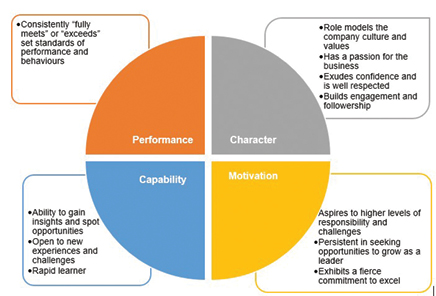
Given these developments, we would suggest that potential be measured using four indicators: past performance; character; capability; and motivation.
Indicators of Potential
Potential is much harder to discern than intelligence or competence. But when indicators such as character and motivation are used in combination with past performance, the predictive accuracy is found to increase.
The first indicator of potential we recommend is consistent superior past performance. The individual should have been rated either “Fully Meets Set Standards” or “Exceeds Set Standards” on performance (results) and behaviours/ competencies.
The second indicator is character. The individual should exhibit a passion for the business. He or she should role model the company culture and core values. The person should judiciously combine emotion and logic, to connect with people and thereby build engagement and followership.
The third indicator is capability – capability in terms of the individual’s ability to gather and make sense of information that suggests new possibilities; and being open to change and learning – seeking out new experiences, knowledge, candid feedback, etc.
The fourth and a very important indicator is motivation. The person should show a fierce commitment to excel in the pursuit of goals; aspire to higher levels of responsibility and challenges; exhibit personal humility; invest in getting better at everything he/she does; and demonstrate the wherewithal to achieve difficult goals despite challenges and to bounce back from adversity.
We believe that individuals are more likely to succeed in higher roles because they are passionate, ambitious, keen learners and fiercely committed and not because they possess a specific set of skills or competencies.
Four Indicators of Potential
Readiness
A second component to determining where an individual is placed on the high potential spectrum is to evaluate the employee’s readiness to take on expanded responsibilities or experience a change in role. Readiness is typically categorised into three stages: (1) Ready Now (less than one year); (2) Ready Soon (one to three years); and (3) Not Ready. Determining readiness can be influenced by many factors outside an employee’s capability including location (within the business versus another business), career stage (early versus late, work-life balance needs) and demographics (gender, age). These influences should be individually assessed on an annual basis through “career conversations” with the employee.
Talent Review: Calibrating High Potential Talent
The most common technique to calibrate potential is the practice of placing candidates on a matrix along two dimensions: performance and potential. Typically, levels and descriptions of performance (Exceeded Set Standards, Fully Met Set Standards, etc.) appear along a vertical axis, while dimensions and descriptions of potential appear along the horizontal axis. Managers use these descriptions to position an individual in a particular quadrant to determine a variety of outcomes such as succession placement, readiness for promotion, and attrition risk. A strong system has specific action steps and requirements defined for each coordinate. During the talent review meeting, an individual’s position is compared to the positioning of others at the same level. Organisations take these discussions seriously and they often result in robust and vehement debates among peers to ensure agreement throughout the team. They recognise what is at stake for the recipients, the differentiated investments in the development of critical talent, the organisation’s reputation and long-term success.
Some of the best practices in high potential calibration include the following.
- Multi-faceted Ratings: Calibration should look at the multiple factors that define “high potential,” and individuals should be rated on each of the following dimensions: potential (performance, character, capability, and motivation) and readiness level (Ready Now, Ready Soon, and Not Ready).
- Multiple Sources of Input: Should require multiple assessments and inputs to calibrate talent with various managers.
- The Calibration Session: The calibration discussion should focus on the extremes of the talent spectrum to allow more time to discuss specific employees in detail. To ensure individual biases do not occur in the talent review processes, managers to be trained to set the stage for an open dialogue, but to not dominate the discussion. During the process, conversations must be rooted in objective metrics and observations of behaviour. Reviewing past performance at the outset of the meeting gives participants a gauge from which to measure an individual’s progress. These discussions should not only focus on who is being added to the high potential list but also on who needs to be taken off the list. Compensation should not be up for discussion during the calibration and assessment phase; rather, compensation decisions are best tabled until a later time.
- Multiple Reviews: Conduct talent reviews and calibration sessions at least once a year.
- Action Plans: Lastly, the calibration and review process should yield an active, individual development plan, with follow-up items established throughout the year. These plans should be simple in design but powerful and purposeful in execution.
Transparency
Many organisations make identified high potential managers aware of their status and are given opportunities to further develop their skills. Formally recognised high potential managers, it is found, tend to stay in the organisation and not look for opportunities elsewhere. We may consider making high potential managers aware of their status, although over the years we have desisted from doing this, so as not to de-motivate the large number of solid citizens that are essential to execution of our strategy. The jury is still out as to which is the better option in this regard, and this aspect needs further discussion within.
Talent reviews could be commonly held by business clusters such as FMCG, hotels, etc. It is recommended that business heads and senior managers be held accountable for identification, assessment and development of their high potential talent for this is a critical facet of planning for the company’s future success.
(Building the right potential pool: How organisations define, assess, and calibrate their critical talent. Aon Hewitt, Jan 2013.)
Q: What operational changes are needed to institutionalise learning and development as continuous process rather than a one-time intervention?
A: Organisations are acutely aware of the importance of learning in today’s business environment. They understand that technology is changing the nature of work and the roles within it. They also understand that the ability of the workforce to learn new skills, model new behaviours, and adapt continuously is key to sustained success. Hence the elevated role of the learning-and-development (L&D) function, which must work together with business leaders to enable an organisation to learn effectively, at speed, and at scale.
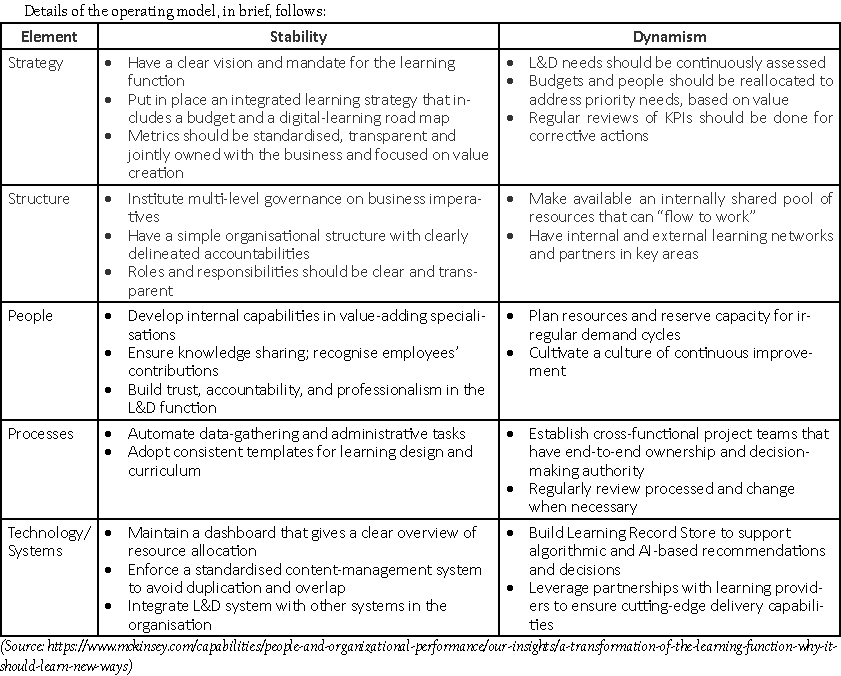
Before considering any operational changes, the organisation should set or review the L&D vision and ensure that it is linked to its strategic priorities. Second, an assessment should be made of the current capabilities and readiness for change of the L&D function to determine appropriate interventions and priorities. Then comes designing the operating model, striking a balance between stability and dynamism, to consider strategy, structure, people, processes, and systems for the L&D function.
Q: What will define the “next generation HR leader” in our region – capabilities, mindset and tools?
A: Leaders have five demands placed on them: Setting and Communicating Direction; Aligning Critical Constituencies; Developing an Executive Temperament; Setting and Living Values; and Growth of Self and Others. These demands are common across managerial levels, the specific tasks, and their intensity, that the leaders will perform will, of course, vary depending on whether it is a junior, middle, or senior level. And the demands are common across functions – HR, Marketing, Finance, Supply Chain, etc.
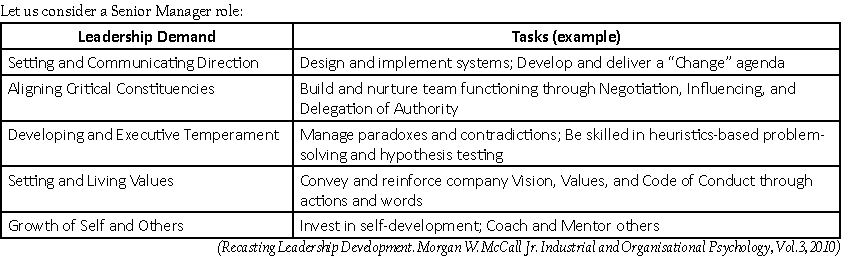 The emerging role of a senior manager, as humans work alongside AI agents, shall require a novel skill mix, particularly in integrative end-to-end thinking and ability to manage AI-first workflows. The manager shall exhibit higher cognitive ability and socioemotional sensitivity. Working with AI agents will be a prerequisite. Further, the manager will be required to apply knowledge across several domains (in the case of HR, the domains could be capability building, employment relations management, and change management).
The next generation HR leader shall:
- Meet the five leadership demands;
- Work with AI agents;
- Exhibit higher cognitive ability and socioemotional sensitivity; and
- Apply knowledge across several HR domains.
Q: How should HR leaders respond to the growing phenomenon of gig work, remote work, and portfolio careers in developing economies?
Gig Work
A: Organisational demands for cost efficiency and higher productivity align with a workforce that values flexible, challenging short-term projects over long-term employment, making gig work a mutually sensible fit.
Firstly, managing gig workers requires navigating complex legal landscapes.
Secondly, misclassifying workers as gig workers can lead to reputational loss apart from significant legal penalties and financial losses, even if the latter is not directly quantifiable.
Thirdly, a lack of access to employer-sponsored benefits like health insurance, retirement plans, and paid leave demotivates gig workers, further complicating talent acquisition and retention for employers. While legal frameworks are underway in many countries to evaluate fair compensation for gig work, for now it is up to companies to develop models to bridge the gap.
Finally, gig workers impact company culture significantly. Learning and skill development in a dispersed workforce require innovation. Addressing these issues begets the need for organisations to prioritise adaptive talent management strategies that are built on the foundation of effective leadership, clear communication, and evolving human resource frameworks.
(https://online.isb.edu/perspectives/article/thriving-in-the-gig-economy-a-blueprint-for-business-talent-management)
Remote Work
Remote work is here to stay but managing a distributed team comes with its own challenges. An effective remote workforce strategy addresses each of these challenges, with an emphasis on team management.
1. Collaboration and Coordination Complexity: Hybrid teams must coordinate work across locations, schedules and asynchronous communication channels.
2. Cultural Disconnection and Weakened Belonging: Physical presence alone does not sustain culture. Leaders must intentionally reinforce purpose, connection and team norms.
3. Trust and Accountability Gaps: Trust increases when managers communicate consistently; clarify performance expectations; hold employees accountable for outcomes; and provide equal feedback and development opportunities
4. Burnout and Boundary Strain: Hybrid work improves work-life balance and autonomy for many employees. However, autonomy without coordination can create new strain. The more say employees have in their hybrid work schedules, the more likely they are to view the arrangement as fair. Yet, employees with fully self-determined hybrid schedules are more likely to report burnout, reduced work-life balance and difficulty meeting customer needs. Flexibility must align with team norms rather than rest entirely on individual discretion.
5. Performance Visibility and Proximity Bias: Distributed work reduces informal visibility into performance. Leaders’ risk defaulting to presence-based judgements rather than outcome-based accountability. Performance management for hybrid environments, should focus on clear expectations; weekly manager-employee conversations; coaching tied to goals and customer value; and accountability for results, not attendance.
Hybrid work raises the bar for management discipline. Organisations that clarify expectations and hold teams accountable for outcomes sustain performance regardless of location.
(Source: https://www.gallup.com/workplace/316313/understanding-and-managing-remote-workers.aspx)
Portfolio Careers
Traditional single-track careers are no longer the only path to success. With the rise of the gig economy, remote work, and digital platforms, many professionals are pursuing portfolio careers. A portfolio career is when a professional earns income from multiple roles rather than one full-time job. Instead of relying on a single employer, individuals work as freelancers, consultants, part-time specialists, or entrepreneurs simultaneously. This approach blends passion with practical earning opportunities while diversifying income sources.
David Lepak and Scott Snell wrote (The Human Resource Architecture: Toward a Theory of Human Capital Allocation and Development. Academy of Management Review, Vol. 24 (1), 1999) that companies need to explore the use of different employment modes to allocate work for both efficiency and flexibility. The characteristics of human capital are two-fold: the value they generate for the company and the uniqueness of the capability for the firm. Companies should consider contracting with portfolio career seekers only for those jobs (tasks) where the capability could be unique in some way but not directly instrumental for creating customer value for the company. Minimal benefit may be gained from having full-time employees for these jobs. For example, a lawyer has unique skills that require years of development to cultivate. Yet, companies may not be able to justify the expense of employing a lawyer full time. Though portfolio careers may be trending, companies should consider such career seekers only for those jobs where the expense of having full-time employees is not justified.
Q: If you were to redesign HR from scratch for a country like Nepal, what three principles would you prioritise?
A: High-performance culture: This principle emphasises excellence, accountability, and continuous improvement. A high-performance culture enables setting ambitious goals, providing regular feedback and recognition, and encouraging employees to take ownership of their work and development.
Fairness and consistency in HR practices: This principle underscores the importance of treating employees in a fair and consistent manner across all HR practices. It ensures that HR decisions are based on objective criteria, such as job performance and skills and not on personal biases or favouritism. Adherence to this principle creates a sense of trust and transparency in HR practices, as employees can expect to be treated equitably and consistently, regardless of their position or personal relationships.
Commitment to employee development and growth: This calls for investing in continuous learning and development of employees. Upholding this principle will provide a range of training and development opportunities, such as workshops, mentoring programmes, and career planning services to help employees acquire new skills, knowledge, and experiences. It will also create a culture of learning and growth, where employees are encouraged to take on new challenges and stretch assignments, and are supported in their career aspirations.

