

Ram Prasad Dhital | Chairperson, Electricity Regulatory Commission
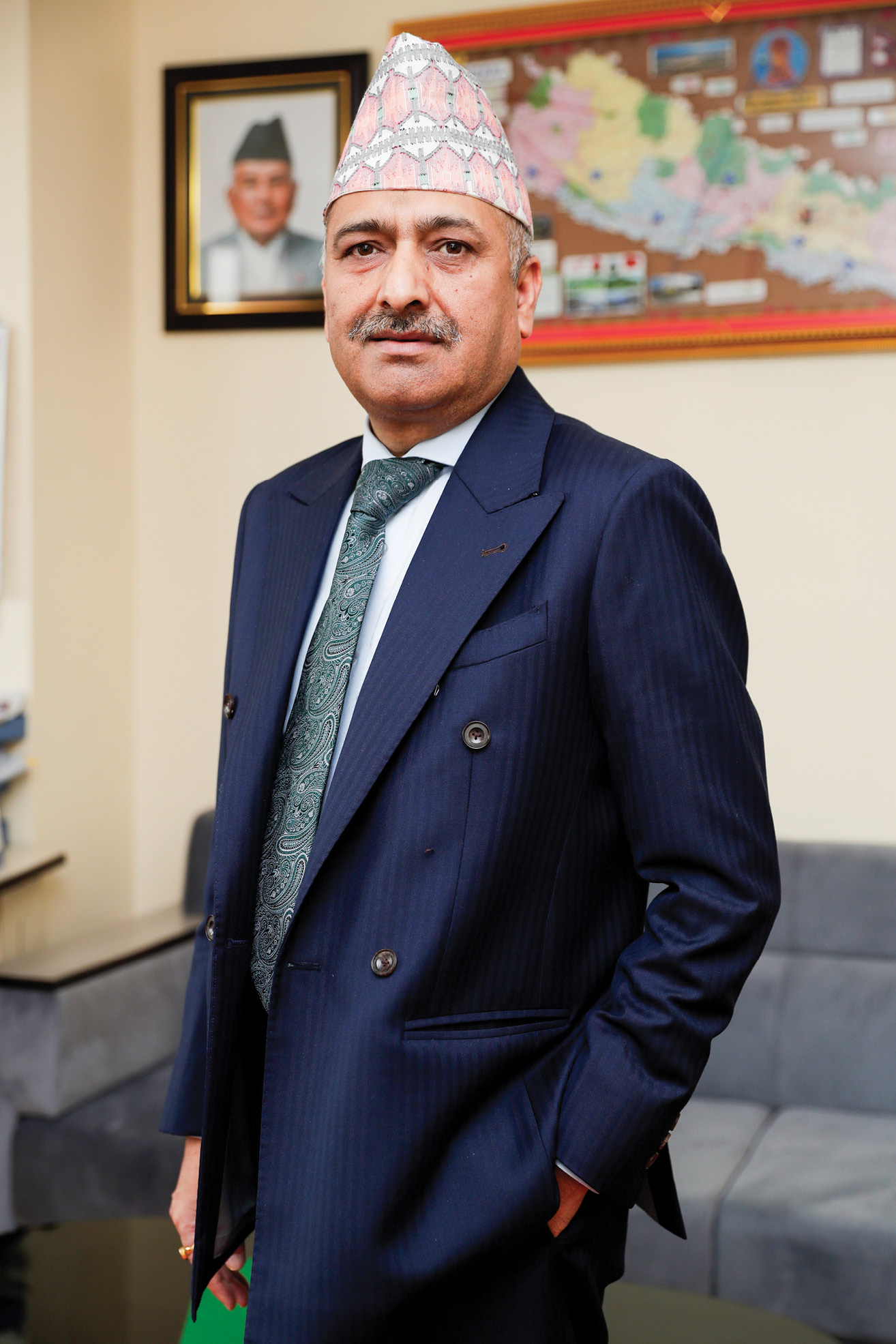 I began my professional journey in January 1988 as an engineer for the Rural Energy Development Programme at the UNDP (United Nations Development Programme). My first assignment was in Parbat district as a technical officer. I finished my Bachelor’s degree in Civil Engineering at the end of 1997 and then completed a three-month training programme with Lamjung Electricity Development Company.
I dedicated nearly three years to the Rural Energy Development Programme until July 2001. Following this, I went to Germany to study Renewable Energy Engineering at the University of Oldenburg, an opportunity made possible by a DAAD fellowship. This allowed me to deepen my understanding of energy, alternative energy sources, and power systems. After completing my studies in Renewable Energy Engineering, I returned to Nepal and started working at the Alternative Energy Promotion Centre (AEPC) from August 2003 to August 2018.
However, during the period from January 2008 to July 2011, I also worked for UNDP Afghanistan and AUSAID (Australian Agency for International Development) in Vanuatu, an island nation in Oceania, for four years. While employed by AEPC, I took unpaid leave to serve in these roles with UNDP and AUSAID.
My career at AEPC began in 2003 as an Energy Officer. I was subsequently promoted to Senior Energy Officer and then Assistant Director. In 2014, I was appointed as the Acting Executive Director, and on May 14, 2014, the government officially assigned me the full responsibilities of Executive Director, a position I held until the end of my term in August 2018.
I kept studying while working. I got my PhD from the Institute of Engineering, Pulchowk Campus, in 2019. I worked as a member of the Electricity Regulatory Commission (ERC) from May 2019 to December 2021. From January 2022 to June 2024, I worked as an electricity regulatory advisor for the Asian Development Bank (ADB) and also taught about the electricity market as a visiting teacher. During this time, I also served as an advisor for the Infrastructure Committee of the Federal Parliament. I was also on the board of the Accounting Standard Board.
At the same time, I worked as a consultant (policy advisor) for UNDP in Yemen and UNDP in Vanuatu. I have given advice to GRID (Green, Resilient and Inclusive Development) at the World Bank, leading the team for Water Resources and Energy. I also provided consulting services to FSSP (Financial Sector Support Programme), which was funded by FCDO in the UK, as a policy and regulatory advisor.
As a consultant, I worked with many different organisations.
At first, I was very involved in promoting energy, starting with small hydropower projects. I worked on promoting energy, studied it, and taught it. Now, I work as a regulator in the energy sector. Early in my career, while working in Parbat and Bajura, I was involved in studying if projects were possible, promoting them, installing them, and managing their operation and maintenance. Over time, I encountered different parts of the energy sector.
While working at AEPC, I dealt with issues that affected different types of energy, mainly solar and hydropower. In Afghanistan, I was assigned to work on hydropower and solar projects that were based in communities, and the same in Vanuatu.
While working as a consultant at ADB, I worked on the Dudhkoshi project, where I dealt with the plans and structure of large projects and how they would be priced.
Energy landscape
Generating energy is now widely accepted and part of the market. Many Independent Power Producers (IPPs) are involved in making electricity. In fact, we should let the market control the electricity generation projects. However, we need to manage how electricity is moved (transmission) and given to people (distribution), where not many private companies are involved. Our goal is to get private companies to participate in transmission and distribution.
On the other hand, the ERC needs to make sure that people get a reliable, continuous, safe, and affordable supply of energy. This is a big challenge because it needs a lot of money. Nepal has a plan to develop 28,500 MW of energy, 18,000 km of transmission lines, and substations that can handle 40,000 MPA. It also aims to provide reliable and affordable energy to everyone, increasing the amount of electricity each person uses from 400 to 1,500 kilowatt-hours by 2035. To achieve this, we need investments of 6.2 trillion rupees.
To make this happen, we need to change laws, simplify procedures, have smart regulations, and make it easier to implement projects. The ERC has a long-term plan to simplify the rules so that projects can be implemented easily and services can be delivered smoothly. Right now, we are focusing on using digital technology.
Among the four main parts of the energy sector – generation, transmission, distribution, and power trade – generation and power trade can be controlled by the market. However, we need to create a good environment for private companies to invest. We are creating guidelines for open access and charges for using transmission lines, similar to how private vehicles can use highways by paying certain fees. This arrangement will allow private power generation projects to sell electricity directly to industries by paying a set fee to Nepal Electricity Authority (NEA) for using their transmission lines. They could also sell half to NEA and half to other industries. This will end NEA’s control of the market, make the market more competitive, and eventually lead to a fully competitive market.
Regulatory role on pressing issues
There’s a discussion happening about whether private companies should be involved in building transmission lines. We think it’s important to share infrastructure and create a good environment to attract private investment in these lines. Similarly, when it comes to buying and selling electricity with other countries, we need to plan carefully. Our neighbour to the south, India, considers electricity to be a very important product. We don’t see electricity like other physical goods that are just transported to the market. It needs a balance between how much is needed and how much is available, as well as a strong network of transmission lines. Also, we can’t store large amounts of electricity, which is why it’s called an ‘instantaneous’ product. Because of this, if private companies want to trade electricity across borders, they will need to meet certain rules. If they have extra electricity, they can sell it to other countries after getting permission from the main government agency, which is currently Nepal Electricity Authority.
ERC has been working as an advisor to the government. It should actively give advice to the government about the future of electricity. Right now, we provide our advice through our yearly report. We are going to celebrate our anniversary soon, and starting this year, we plan to share the necessary changes needed in the electricity sector.
Looking ahead, the ERC is working to make sure of three things: (i) that everyone gets a dependable and affordable supply of electricity, (ii) that electricity is sustainable for everyone, and (iii) that the way we charge for electricity (tariff structure) is changed. It’s a basic right for everyone to have reliable and affordable electricity, and it’s the ERC’s job to make sure this happens through technical rules. However, for this to work, NEA needs to have the right tools and resources. We are developing a system of rewards and penalties to make NEA responsible. Also, to make sustainable electricity available to everyone, if electricity comes from local power sources that are as good as the electricity from the main grid or can easily connect to it, we need rules for power purchase agreements (PPAs). This kind of electricity can be connected to the main grid using a system called net metering.
Furthermore, the way we charge for electricity needs to change so that people use more of it. In the past, we used different ways to discourage people from using too much electricity because we didn’t have enough. The current tariff structure was designed to limit use when we had a shortage. Now that things have changed, we need to update the tariff by giving people reasons to use more electricity. The price of electricity will go down after a certain amount is used to encourage businesses and industries to use more. On top of that, we will have different prices for electricity used during the busiest times (peak hours) and less busy times (off-peak hours), which will help people use more electricity and manage the load on the system.
The problem of power outages and changes in voltage is mainly because we don’t have enough supply and our transmission and distribution systems have limited capacity and are getting old. Again, we need a lot of investment in transmission and distribution, and this money can come from the electricity tariffs. Because of this, electricity tariffs should be set considering what people can afford, and also so that investors can make a reasonable profit from their investments in transmission and distribution. A good tariff structure is key to attracting private companies to invest, as they need to see that it’s a worthwhile investment.
During my time here, my main goals are to make the ERC a respected regulator. To be a respected regulator, we need to be open, make decisions independently, and act professionally. We have already started using digital tools for our decision-making, and we are making our systems stronger and more reliable so we can provide better service. As the regulator, investors should feel safe that their money is protected, consumers should know their rights, and the companies that provide electricity should feel secure about their finances. Also, the government needs to be confident that the ERC is turning its energy plans into action and that this organisation is creating a win-win situation for all these important groups.
Promoting innovation and fresh graduates
To build this organisation properly, we will have a dedicated team of workers who will be hired through the Public Service Commission. Also, we are creating opportunities for new graduates and young talented people from universities through internships, on-the-job training, and by giving awards for their new ideas. We will value new ideas about how the electricity market works, what rules are needed, and other innovative suggestions from young people. We welcome new ideas in all parts of the electricity system – generation, transmission, distribution, and power trade. Young people with different skills, like engineering, economics, law, management, finance, and understanding consumer needs, can help improve the rules and regulations with their innovative ideas.

